Indonesia Opens 138 Energy Blocks to Russian Investors at Vladivostok Forum
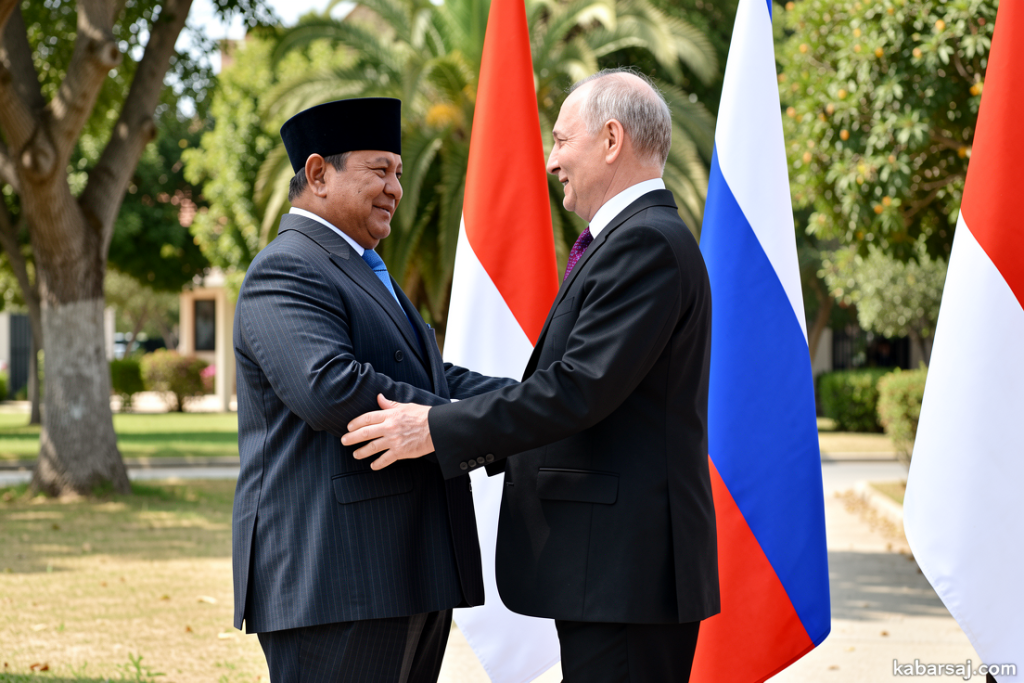
Kabarsaji.com – President Prabowo Subianto used the Eastern Economic Forum in Vladivostok to extend a direct invitation to Russian energy corporations, telling them that Indonesia has made available 138 exploration blocks for development. Speaking on Thursday at the forum, which draws business leaders from across the Asia-Pacific region, Prabowo framed the offer as an opportunity for Russian firms to bring both capital and proprietary technology into Indonesian hydrocarbon and mineral exploration.
“We have just informed our Russian partners that Indonesia has now opened 138 energy exploration blocks, and we invite Russian groups, Russian companies, and their technology to be involved in those 138 blocks.”
The announcement lands at a moment when Jakarta is actively courting a wider circle of energy partners. Indonesia, the world’s largest archipelagic nation, has long relied on a mix of domestic producers and foreign operators to develop its vast offshore and onshore reserves. By explicitly naming Russian technology as a desired input, Prabowo signals that Jakarta views Moscow’s expertise in Arctic drilling, gas processing, and heavy refining as complementary to its own development pipeline rather than competitive with existing Western or East Asian operators already active in the country.
Joint Ventures in Refining and Storage
Beyond raw exploration, the Indonesian leader outlined ongoing discussions with Russian industrial groups about co-developing downstream infrastructure. Specifically, he pointed to refineries and storage terminals as sectors where bilateral cooperation is being explored.
“I think we’re considering all prospects. We’re discussing cooperation with Russian groups to develop joint projects, such as refineries and storage terminals in the energy sector.”
For an economy that imports a significant share of its refined petroleum products despite producing crude domestically, the prospect of additional refining capacity carries real strategic weight. Indonesia’s current refining throughput has struggled to keep pace with domestic demand growth, leaving the country dependent on imported gasoline, diesel, and jet fuel. New joint ventures in this space could reduce that dependency while giving Russian partners a foothold in one of Southeast Asia’s fastest-growing consumer markets.
LNG Abundance and the Limits of Gas Imports
Prabowo was candid about where Russian gas itself fits into Indonesia’s energy equation. He noted that the country already commands a substantial liquefied natural gas supply, meaning that several sectors do not have an immediate need to import Russian gas volumes. Nevertheless, he stressed that Jakarta remains receptive to Russian engineering know-how and to collaborative project development that does not hinge on physical gas deliveries.
This distinction matters. Indonesia’s LNG production, anchored by fields in East Kalimantan and Papua, has made it a net exporter to Japan, South Korea, and increasingly to domestic power plants. The president’s remark effectively narrows the Russian pitch from “sell us gas” to “help us build and operate the infrastructure around gas,” a framing that aligns with Moscow’s own interest in exporting technology and services rather than competing with established LNG supply chains.
Fertilizer: A Gas-Based MoU in the Russian Far East
Energy cooperation is not the only thread in the bilateral tapestry Prabowo described. He disclosed that a memorandum of understanding had been signed between an Indonesian fertilizer producer and one of Russia’s largest business conglomerates. Under the agreement, the two parties will jointly invest in a gas-based fertilizer manufacturing facility located in the Russian Far East.
“So, these projects are going very well and have progressed quite far.”
The arrangement is notable for its direction: Indonesian capital flowing into Russian territory to produce a commodity that will ultimately serve both markets. Fertilizer demand in Southeast Asia remains robust as rice and palm-oil cultivation expands, and securing a reliable supply chain through a joint-venture structure reduces exposure to volatile global potash and urea prices.
Aluminum and Mining: Rusal’s Indonesian Entry
In the metals sector, Prabowo highlighted collaboration with Rusal, the Russian aluminum giant. He stated that the company is preparing a large-scale entry into Indonesia to build refineries in partnership with local industrial groups.
“Rusal will enter Indonesia on a large scale to develop refineries with Indonesian groups.”
Indonesia holds significant bauxite deposits, particularly in Kalimantan and Sulawesi, and has been pushing to move up the value chain from raw-ore export to domestic smelting and refining. A Rusal partnership would bring both the metallurgical expertise and the capital intensity that aluminum refining demands, while giving Indonesian partners equity stakes in a higher-margin segment of the supply chain.
Broader Strategic Context
The Vladivostok pitch sits within a broader recalibration of Indonesia’s foreign economic posture. Jakarta has historically balanced relationships among the United States, Japan, South Korea, China, and the European Union. By actively soliciting Russian industrial participation across energy, fertilizer, and metals, Prabowo is adding another axis to that balance, one that also carries geopolitical signaling value given the current global alignment pressures.
Prabowo closed his remarks by reaffirming openness to further bilateral engagement.
“So, we are still looking forward to more cooperation between Russia and Indonesia.”
Whether the 138-block invitation translates into concrete investment decisions will depend on sanctions architecture, financing channels, and the willingness of Russian state-backed banks to underwrite projects in a jurisdiction that also hosts major Western and East Asian energy majors. For now, the diplomatic overture has been made, and the ball rests with Moscow’s industrial sector to decide how much of Indonesia’s energy frontier it wishes to claim.
Related Reading
Frequently Asked Questions
What is Prabowo Courts Russian Firms to Develop 138?
Prabowo Courts Russian Firms to Develop 138 is the main topic of this guide. The article explains the context, practical details, and next steps readers should understand.
Why does Prabowo Courts Russian Firms to Develop 138 matter?
Prabowo Courts Russian Firms to Develop 138 matters because readers are looking for a useful answer, not just a short summary. Good content should match search intent and help them decide what to do next.