
Vladivostok Forum Becomes Stage for Russia’s Deepest Economic Bet on Asia
Kabarsaji.com – The Pacific coast city of Vladivostok once again served as the focal point for Moscow’s most ambitious economic outreach toward East and Southeast Asia. At the plenary session of the 11th Eastern Economic Forum, held Thursday, Russian President Vladimir Putin framed the Asia-Pacific region not merely as a trading partner but as the central force shaping the tempo of worldwide economic development. His remarks underscored a strategic recalibration that has defined Russian foreign policy since 2022: a deliberate, accelerating pivot away from European markets and toward the economies of the Asian continent.
Putin Positions the Region as the World’s Growth Engine
Addressing delegates from dozens of nations, Putin opened his address by welcoming the assembled business leaders, technical specialists, and policy experts gathered in the capital of Primorye Territory. He singled out the Asian-Pacific bloc for particular emphasis, characterizing it as the mechanism that sets the development pace for the global economy as a whole.
“I welcome the participants and guests of the 11th Eastern Economic Forum. This business event held in the capital of the Primorye Territory traditionally brings together business leaders, professionals and experts from dozens of countries,” Putin said.
“Primarily from the Asian-Pacific region, of course, which is a powerful growth hub setting the development pace for the global economy as a whole,” he continued.
Beyond the rhetorical framing, Putin made concrete commitments. He stated that Russia intends to remain an active participant in trade and investment initiatives spanning the region, and that his administration places equality and mutual respect at the foundation of every bilateral partnership it builds with regional states. The language signals Moscow’s desire to present itself not as a resource supplier extracting rents, but as a co-developer seeking reciprocal industrial and technological exchange.
A Forum Born of Strategic Recalibration
The Eastern Economic Forum has convened annually in Vladivostok since 2015, when the Russian government first designated the city as a permanent venue for showcasing investment opportunities in the country’s Far East. The event was conceived during a period of already-strained relations with Western capitals, but its significance has multiplied dramatically in recent years. With European trade corridors disrupted and sanctions reshaping global supply chains, the forum has evolved from a promotional showcase into a working platform for redirecting energy flows, agricultural exports, and industrial cooperation toward Asian buyers.
This year’s edition ran from September 1 to 4, drawing delegations from across the continent. The timing coincided with a period of intensified diplomatic engagement between Moscow and several Southeast Asian capitals, each seeking to diversify energy imports and deepen manufacturing linkages beyond their traditional Western partners.
Prabowo’s Invitation: Indonesia Opens Its Industrial Doors
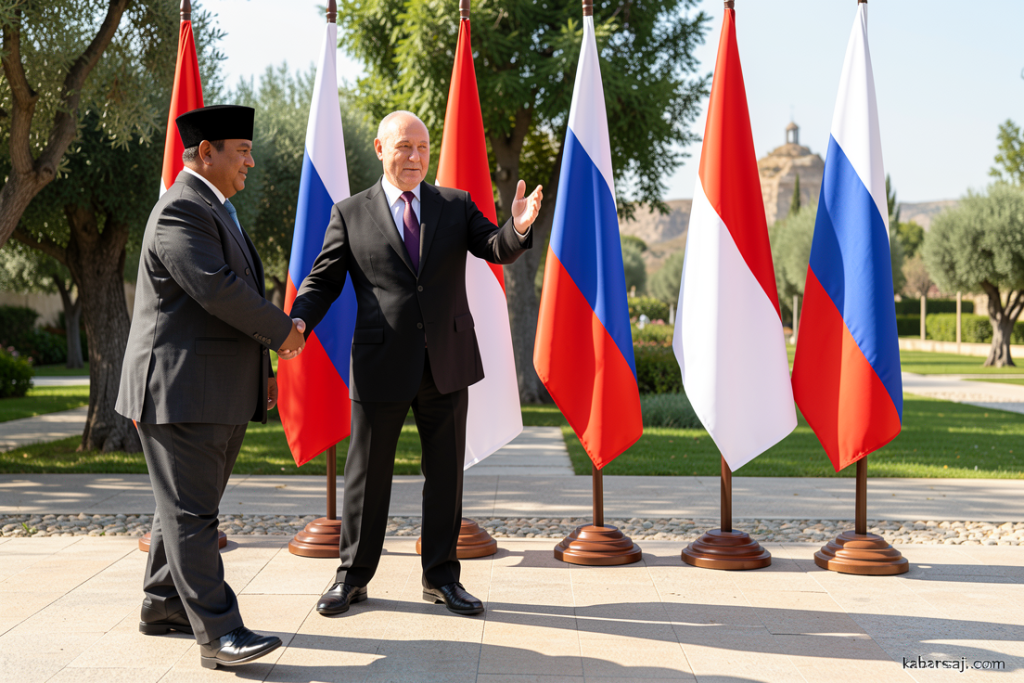
Among the most prominent attendees was Indonesian President Prabowo Subianto, who was received as a guest of honor at the plenary session. His presence carried considerable weight: Indonesia is the largest economy in Southeast Asia, the world’s leading producer of nickel, palm oil, and tin, and a member of the G20. For Moscow, courting Jakarta represents access to a market of over 280 million consumers and a strategic foothold in the maritime archipelago.
Prabowo used the podium to issue a direct solicitation to Russian industrial and commercial actors. He urged them to establish operations on Indonesian soil, form joint ventures, and participate in co-production arrangements.
“I am directly calling on Russian business leaders to enter Indonesia, partner with us, and engage in joint production. Let us build industries together; let us create value together,” Prabowo declared during the EEF plenary session.
The Indonesian president further explained that such bilateral cooperation would serve as a conduit through which Indonesian firms could reach the broader Eurasian market, effectively using Russian logistics corridors and trade agreements as a bridge to Central Asian and Eastern European demand. The framing positions the partnership as mutually enabling rather than extractive, a rhetorical choice designed to reassure domestic audiences that Indonesia is not merely a resource frontier but an equal industrial partner.
Implications for Regional Trade Architecture
The Vladivostok exchanges arrive at a moment when both Moscow and Jakarta are actively restructuring their trade architectures. Russia, constrained by Western sanctions on financial settlements and technology transfers, has been negotiating bilateral currency arrangements and expanding use of non-dollar payment rails with Asian partners. Indonesia, meanwhile, has pursued a “free and active” foreign policy that seeks to balance relationships across competing blocs while securing energy security and industrial upgrading.
The joint-production language invoked by Prabowo points toward sectors where Russian expertise and Indonesian raw-material endowments intersect: petrochemicals, fertilizers, shipbuilding, and energy infrastructure. Whether these intentions translate into signed investment agreements in the months ahead will depend on the resolution of practical obstacles—sanctions-related banking frictions, logistics costs across the Eurasian land bridge, and the competitive pressure of established suppliers from China, Japan, and South Korea.
What the 11th Eastern Economic Forum made unmistakably clear, however, is that the center of gravity for Russian economic diplomacy has settled permanently on the Asian continent. Vladivostok, once a quiet port at the edge of the empire, now functions as the front door through which Moscow sells its energy, its industrial capacity, and its geopolitical ambition to the fastest-growing economies on Earth.
Related Reading
Frequently Asked Questions
What is Putin Hails Asia Pacific as Global?
Putin Hails Asia Pacific as Global is the main topic of this guide. The article explains the context, practical details, and next steps readers should understand.
Why does Putin Hails Asia Pacific as Global matter?
Putin Hails Asia Pacific as Global matters because readers are looking for a useful answer, not just a short summary. Good content should match search intent and help them decide what to do next.