Democratic Party Marks 25 Years of Political Life as AHY Defends Its Shifting Role in Indonesian Governance
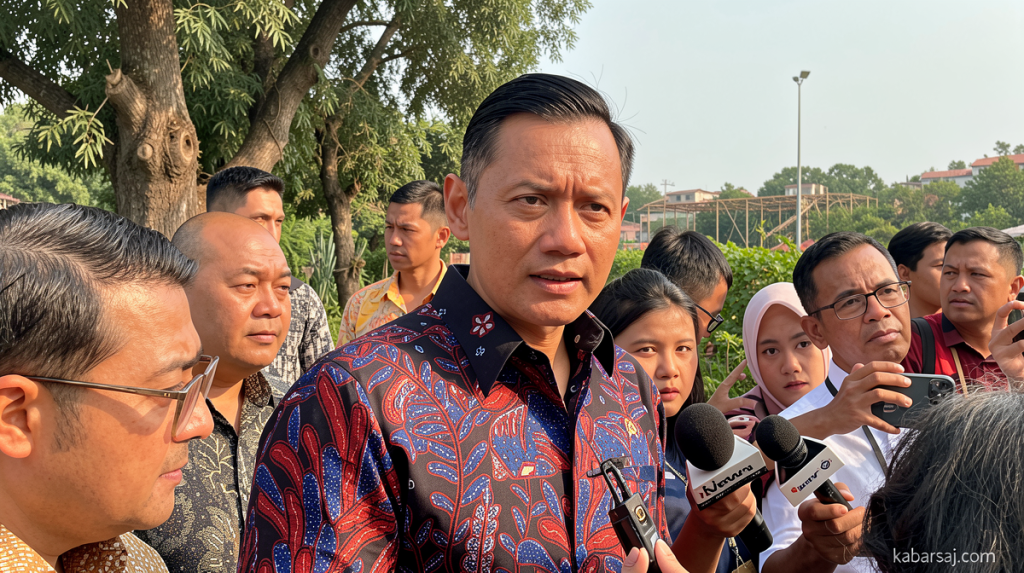
Kabarsaji.com – On a Tuesday evening in early September 2026, the Yudhoyono Auditorium in Jakarta hosted a milestone gathering: the Democratic Party’s 25th anniversary celebration. At the center of the proceedings stood Agus Harimurti Yudhoyono, the party’s General Chairperson and eldest son of former President Susilo Bambang Yudhoyono, who used the occasion to address what he described as the organization’s evolving place within Indonesia’s political landscape. Speaking through a written statement later circulated on Thursday, September 3, 2026, AHY framed the party’s decades-long oscillation between governing power and opposition as a natural feature of democratic competition rather than a sign of inconsistency.
A Decade in Power, Years in Opposition, and a Return to Coalition
The Democratic Party’s trajectory through Indonesian politics since its founding in 2001 has been marked by dramatic shifts in institutional alignment. Under the leadership of Susilo Bambang Yudhoyono, the party anchored two consecutive presidential terms and held executive authority for roughly a decade. Following that period, it moved outside the government apparatus, operating as a principal opposition voice in parliament. Most recently, the party entered President Prabowo Subianto’s cabinet coalition, placing AHY himself in the role of Coordinating Minister for Infrastructure and Regional Development.
AHY acknowledged this pattern openly, telling the anniversary audience that such transitions are embedded in the very logic of multi-party governance. He characterized each phase — whether commanding ministries or scrutinizing them from the opposition benches — as contributing to what he called the maturation of the organization.
“The Democratic Party has gone through various phases in its national political journey, from being part of the government for 10 years, sitting outside the government, to once again joining President Prabowo Subianto’s government. These experiences are part of the maturation process for the Democratic Party.”
Democracy as Instrument, Not Destination
Central to AHY’s remarks was a philosophical distinction he drew between democracy as an end and democracy as a means. In his framing, democratic institutions and practices are not the final objective of political life; they are the mechanism through which Indonesia steers toward economic advancement and social prosperity. This instrumental view, he argued, obliges the party to maintain what he termed “constitutionally grounded, responsible freedom” — a formulation that signals both a commitment to civil liberties and an insistence that those liberties operate within constitutional boundaries.
He further stressed that such freedom must extend to younger Indonesians, creating institutional space for new generations to participate meaningfully in governance. The point, in context, resonates with broader debates in Southeast Asian politics about whether established parties can remain responsive when their leadership cohorts age and their policy vocabularies calcify.
AHY reiterated that upholding democracy remains one of three foundational agendas guiding the party, alongside economic development and the pursuit of justice. These three pillars, he insisted, have not wavered regardless of whether the party occupies ministerial portfolios or challenges them from outside.
Adapting Without Dissolving Identity
Looking beyond the anniversary itself, AHY urged every cadre within the organization to author what he called a fresh chapter. His exhortation carried a clear implication: the party must grow closer to ordinary citizens, stay attuned to contemporary social and technological developments, and expand its tangible contributions to national development. At the same time, he warned against the temptation to shed institutional identity in pursuit of relevance.
“So, positions may change. But our commitment to democracy must not change.”
The anniversary event, in his telling, functioned as a structured moment of institutional reflection — an occasion to extract lessons from two and a half decades of electoral contests, coalition negotiations, and policy failures, then translate those lessons into operational readiness for challenges yet to come. Changing political conditions, he argued, compel continuous adaptation; the question is not whether the party will adjust, but whether it can adjust while retaining the coherence of its founding principles.
Criticism as Operational Input
In a passage that departed from conventional anniversary rhetoric, AHY stated that the Democratic Party does not seek mere validation from the public. What it requires, he said, is constructive criticism — pointed, specific, and actionable — that can serve as a basis for internal evaluation. Such feedback, properly channeled, allows the organization to calibrate its policies against actual public need rather than against the preferences of its own membership base.
“Buildings may change, generations may change, but one thing must not change: the Democratic Party must always be with the people.”
The closing line landed against the backdrop of a party that has, over 25 years, navigated Indonesia’s most turbulent electoral cycles, including the post-Suharto consolidation of multi-party competition and the recent realignment around Prabowo’s coalition. Whether the organization can sustain its stated commitment to democratic accountability while operating inside a governing coalition — a tension AHY himself now inhabits as a coordinating minister — remains the central question his anniversary address left deliberately open.
Related Reading
Frequently Asked Questions
What is AHY Speaks on Democratic Party s Shifting?
AHY Speaks on Democratic Party s Shifting is the main topic of this guide. The article explains the context, practical details, and next steps readers should understand.
Why does AHY Speaks on Democratic Party s Shifting matter?
AHY Speaks on Democratic Party s Shifting matters because readers are looking for a useful answer, not just a short summary. Good content should match search intent and help them decide what to do next.