
Coral Records Offer a Longer View of El Niño’s Growing Extremes
Kabarsaji.com – Warning signs in the Pacific are drawing renewed attention to a question that climate scientists have been trying to answer for decades: are the strongest El Niño events becoming more intense in a warming world?
El Niño is a recurring climate pattern that typically develops every two to seven years, often toward the end of a calendar year. Its strength varies considerably. A strong event is generally identified when sea-surface temperatures off western South America rise more than 1.5 degrees Celsius above normal.
In July, the US National Oceanic and Atmospheric Administration observed warming exceeding three degrees Celsius across parts of the eastern and central Pacific. Germany’s national weather service said the developing pattern could potentially become one of the most powerful El Niño episodes observed since record-keeping began.
Yet the longer-term picture remains difficult to establish. Modern satellite monitoring has provided dependable sea-surface temperature measurements only since the 1980s. That leaves scientists with limited direct evidence of how El Niño behaved before industrial-scale fossil-fuel use transformed the global climate system.
A climate record built into coral skeletons
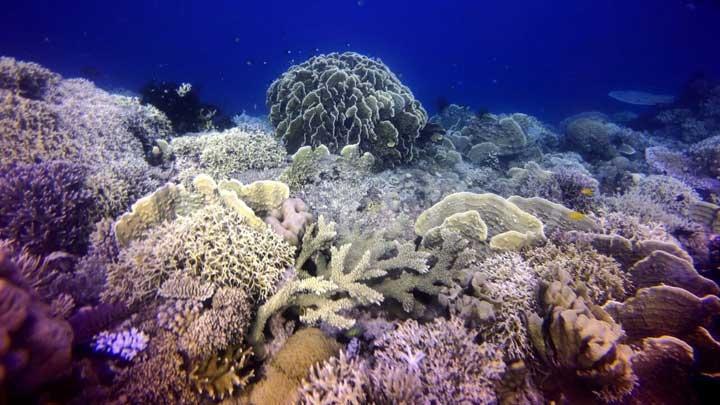
Researchers are turning to an unexpected historical archive: coral reefs. Fossilized and living corals near Ecuador’s Galapagos Islands have helped climate scientist and paleoclimatologist Julia Cole of the University of Michigan and her colleagues reconstruct Pacific temperature changes spanning roughly 1,000 years.
The team’s research, published in Science, indicates that El Niño events in the eastern Pacific have become substantially stronger than they were during the pre-industrial era. The finding supports concerns that recent severe events may not simply reflect normal swings in a natural cycle.
“We’ve known for a long time that the last 40 or 50 years has really strong El Niño events,” Cole says. “It’s been hard to say whether the recent strong El Niño that we’ve had is part of a natural cycle, or if it’s something a little bit unusual related to being in a warmer than normal world.”
Corals are particularly useful because they grow slowly and continuously, typically adding one to two centimeters each year. Like tree rings, their layered skeletons preserve signals from the environment in which they formed. Over time, reefs can retain evidence of ocean conditions across decades and centuries.
As corals build their external skeletons, they deposit calcium carbonate taken from seawater. Small shifts in water temperature affect the amounts of other elements and isotopes that become embedded in this structure. Scientists can then measure those chemical signatures long after the coral was alive.
One important marker is the ratio of strontium to calcium. Cooler water leads coral skeletons to contain relatively more strontium, while warmer conditions leave a different chemical pattern.
“In colder temperatures, it [the skeleton] absorbs more strontium, in warmer temperatures less,” Cole says.
Oxygen isotopes offer another temperature clue. The balance between the rarer oxygen-18 and the more common oxygen-16 changes with the surrounding environment. Corals incorporate more oxygen-18 under colder conditions than during warmer periods, allowing scientists to estimate past changes in sea temperature.
Together, these measurements provide a detailed record at monthly or seasonal scales, making corals especially valuable for studying fluctuations such as El Niño. The Galapagos region is also strategically important because it lies in the eastern Pacific, where major El Niño-driven warming can be particularly pronounced.
What the findings may mean for the coming decades
The study aligns with projections from leading climate models that point to a greater likelihood of extreme eastern-Pacific El Niño events as global temperatures rise. Jens Zinke, a paleobiology professor at the University of Leicester, said the coral evidence is consistent with those expectations.
“These developments correspond to the predictions of the best climate models. They predict a quantifiably higher likelihood of extreme eastern Pacific El Niño events in the 2030s,” Zinke says.
El Niño can affect weather far beyond the Pacific. Changes in tropical ocean temperatures may influence rainfall patterns, drought risk, heat, storms and agricultural conditions in many regions. The precise impacts differ from place to place and from one event to another, which is why a better understanding of intensity matters as much as forecasting whether an event will occur.
A stronger El Niño does not automatically produce identical consequences everywhere. Local geography, other climate patterns and seasonal timing can all shape what communities experience. Still, evidence that extreme events may be changing is important for planning around water supplies, food production, public health and disaster preparedness.
Important limits remain
Scientists caution that coral records are not a final answer to every question about El Niño. Their strength is high temporal detail, but the signals are shaped by local ocean conditions. This creates uncertainty when researchers compare coral chemistry directly with modern instrumental measurements.
Andreas Fink, professor of meteorology at the Institute for Meteorology and Climate Research in Karlsruhe, has emphasized that the study’s geographic focus is a limitation. A record centered on the eastern Pacific cannot, by itself, represent every part of a vast and complex ocean basin.
Cole has also recognized those boundaries. Coral evidence can fill a major gap in the historical climate record, but it works best when considered alongside satellite observations, ocean measurements, climate models and additional paleoclimate archives.
Even with those caveats, the new analysis adds a rare long-term perspective to a subject often judged through only a few decades of direct observations. Corals cannot forecast the next El Niño on their own, but their chemical layers suggest that the strongest events of the modern era stand apart from much of the previous millennium.
Related Reading
Frequently Asked Questions
What is Corals as Climate Archive?
Corals as Climate Archive is the main topic of this guide. The article explains the context, practical details, and next steps readers should understand.
Why does Corals as Climate Archive matter?
Corals as Climate Archive matters because readers are looking for a useful answer, not just a short summary. Good content should match search intent and help them decide what to do next.