
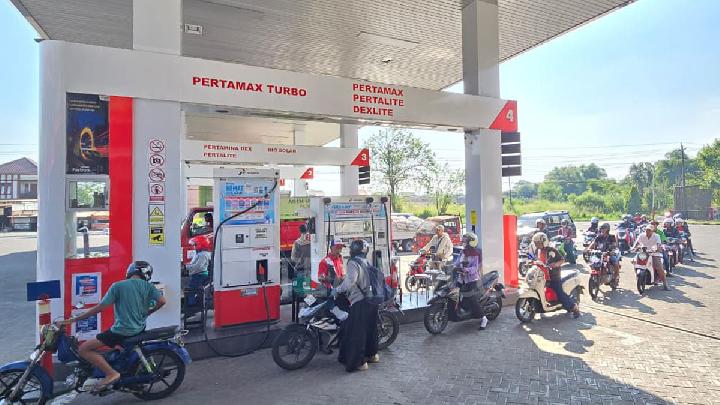
Indonesia Holds Subsidized Fuel Prices Steady Until the Close of 2026
Kabarsaji.com – Indonesia will keep the retail prices of subsidized Pertalite gasoline and Biosolar diesel unchanged through the end of 2026, maintaining a policy aimed at protecting household spending as oil markets and currency movements remain uncertain.
The decision keeps a key element of the country’s energy policy in place for lower- and middle-income consumers, who are especially exposed to higher transport and daily living costs when fuel becomes more expensive. It also means the government will continue absorbing the effects of changes in global crude prices and the rupiah’s exchange rate against the US dollar.
Pertamina Patra Niaga, the state-owned fuel trading company, said it will continue to follow government direction on the pricing of subsidized products. The company is responsible for supporting fuel availability and distribution across the country while implementing the national pricing framework.
“Despite fluctuations in key pricing variables, such as global crude rates and exchange rates, subsidized fuel prices will not increase, in line with government directives through the end of 2026,” Kitty Andhora, Pertamina Patra Niaga’s Vice President of Corporate Communication, said in a statement on Saturday, September 12, 2026.
Protection From Energy-Market Volatility
Fuel prices are sensitive to several variables beyond domestic control. Global crude oil prices can move sharply in response to supply disruptions, production decisions, demand trends, and geopolitical developments. Indonesia’s fuel import costs can also be affected when the rupiah changes in value against the US dollar.
By keeping Pertalite and Biosolar prices fixed, the government is seeking to reduce the immediate impact those shifts could have on consumers. Stable subsidized-fuel prices may help households and small businesses plan their transport expenses with greater certainty, particularly where travel by private vehicle or goods distribution remains closely tied to everyday economic activity.
The policy is also intended to support purchasing power. Energy Minister Bahlil Lahadalia said the government’s choice reflects its focus on protecting lower- and middle-income households from added financial pressure.
President Prabowo Subianto’s administration continues to monitor international oil-price developments while weighing their impact on the national budget. Bahlil acknowledged that holding retail prices down during periods of elevated crude prices can place a substantial burden on state subsidy spending.
That trade-off sits at the center of the policy: consumers receive price stability at the pump, while the government must manage the fiscal cost created when market conditions increase the underlying expense of supplying fuel.
Different Rules for Non-Subsidized Products
The price freeze applies to subsidized fuels, including Pertalite and Biosolar. Other fuel products are governed by a different framework.
Non-subsidized fuel prices will continue to be set under formulas mandated by the government. Public Service Obligation products that do not receive subsidies, known as JBU fuels, will use government-established benchmark pricing arrangements and the applicable regulations.
This distinction is important for motorists and businesses because not every fuel product is affected by the decision in the same way. Prices for non-subsidized options can still reflect the formulas and reference structures that apply to those products, while subsidized fuels remain under the state’s fixed-price policy through December 2026.
Pertamina Patra Niaga said it remains committed to carrying out government policy on both pricing and distribution. Consistent supplies are an essential part of that commitment, since a stable listed price has limited value if fuel is not available where it is needed.
What the Decision Means for Consumers
For consumers using Pertalite and Biosolar, the announcement provides clarity that the official retail price is not scheduled to rise before the end of 2026. This can be particularly relevant for families managing regular commuting costs and for economic activities that depend on diesel-powered transport.
The measure does not eliminate the broader economic effects of international energy volatility. Oil prices and exchange rates can still influence public finances, industry costs, and the pricing of fuel categories outside the subsidy system. However, the government’s approach separates those pressures from the prices paid by users of the designated subsidized products.
Maintaining the freeze also underscores the continuing importance of fuel subsidies in Indonesia’s wider effort to balance energy affordability, supply reliability, and budget discipline. The policy gives priority to limiting the direct impact on consumers, even as authorities face the challenge of managing a potentially larger subsidy bill.
With the price commitment now extending through the remainder of 2026, attention will remain on global oil movements, rupiah exchange-rate conditions, and the government’s ability to sustain fuel supplies while preserving the purchasing power of Indonesian households.
Related Reading
Frequently Asked Questions
What is Pertalite Biodiesel Prices Fixed Through End?
Pertalite Biodiesel Prices Fixed Through End is the main topic of this guide. The article explains the context, practical details, and next steps readers should understand.
Why does Pertalite Biodiesel Prices Fixed Through End matter?
Pertalite Biodiesel Prices Fixed Through End matters because readers are looking for a useful answer, not just a short summary. Good content should match search intent and help them decide what to do next.