
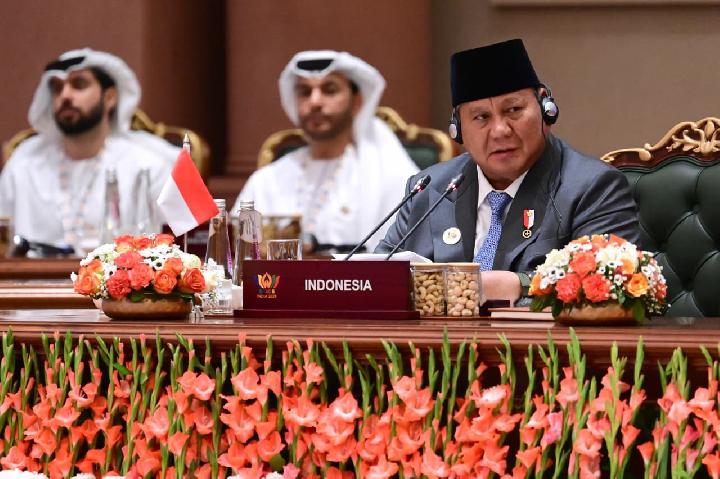
BRICS Leaders Back New Delhi Declaration, With Call for Results Beyond Commitments
Kabarsaji.com – BRICS leaders adopted the New Delhi Declaration at their 2026 summit, setting out a shared framework intended to turn collective pledges into practical outcomes. The declaration was agreed during the meeting at Bharat Mandapam in New Delhi, India, on Saturday, September 12, 2026.
The summit placed renewed attention on the role of cooperation among developing economies at a time when member states are seeking a stronger voice in global decision-making. BRICS, initially formed by Brazil, Russia, India, China and South Africa, has developed into a wider forum for economic, political and security collaboration.
Its full membership now also includes Saudi Arabia, Egypt, Ethiopia, Iran, the United Arab Emirates and Indonesia. The expanded grouping brings together countries with differing national priorities, making the New Delhi Declaration significant as a common statement of direction rather than simply a ceremonial summit document.
Modi Calls for Collective Follow-Through
Indian Prime Minister Narendra Modi described the restricted session of the BRICS 2026 Summit as constructive and meaningful. He said rapid changes in the global environment underline the need to reform international institutions, especially in areas related to representation, responsiveness and the rules governing engagement.
For Modi, the central challenge is ensuring that summit commitments produce measurable benefits instead of remaining broad political intentions. He said the declaration gives member states a basis for joint action, but that the responsibility for delivery now rests with the countries themselves.
“We have to work through partnership and collective action to bridge the gap between commitments and results. The ‘New Delhi Declaration’ adopted today provides a clear direction for our collective resolve. It is now our responsibility to translate these commitments into tangible results,” PM Modi said in New Delhi, India, on Saturday.
The statement reflects a wider expectation surrounding BRICS: that its growing membership and combined influence should translate into practical cooperation on issues important to developing countries. The bloc’s agenda covers more than economic ties, encompassing political dialogue and security-related cooperation as well.
Prabowo: BRICS Strength Must Benefit Society
President Prabowo Subianto used the summit to emphasize that BRICS should direct its collective strength toward outcomes that people can experience in their daily lives. He said the group’s shared capacity must not be limited to written agreements or formal statements.
“But translated into opportunities for our society. A strength that enables the Global South to have a greater voice in shaping its own future,” he said.
Prabowo’s remarks framed BRICS as a platform through which countries of the Global South can participate more actively in determining the international agenda. His focus on opportunities for society placed attention on the practical value of multilateral cooperation, including whether broad commitments can support real development and a more equitable global system.
The Indonesian president also said BRICS should use its combined influence to advance a fairer and more equal international order. He urged member states to make their shared strength meaningful through action.
“Together, we can make our strength count,” said the former Defense Minister under President Joko Widodo’s administration.
Indonesia’s participation carries particular importance because the country is both a major Southeast Asian economy and the newest full member listed within the expanded BRICS grouping. Prabowo’s intervention highlighted Jakarta’s interest in ensuring that the organization’s wider reach creates space for developing nations to shape their own future rather than merely respond to decisions made elsewhere.
Resilience, Innovation and Sustainable Development
The 2026 summit was held under the theme, “Building for Resilience, Innovation, Cooperation, and Sustainability.” The theme reflected the members’ stated aim of strengthening resilience, encouraging innovation, broadening cooperation and supporting sustainable development.
These priorities illustrate the breadth of the BRICS agenda. Resilience can involve the ability of countries to manage economic and political pressures, while innovation and sustainability point to the need for long-term development approaches. Cooperation remains the mechanism intended to connect these goals across a membership spanning several regions.
With its enlarged composition, BRICS must balance the perspectives of countries from Latin America, Africa, the Middle East, Asia and Eurasia. The New Delhi Declaration offers a common reference point for that work, but the summit’s leading messages made clear that its value will depend on follow-through after delegates leave New Delhi.
Wide International Participation
The high-level meeting brought together prominent leaders from BRICS members and other participating countries. Those present included Chinese President Xi Jinping, Russian President Vladimir Putin, Iranian President Masoud Pezeshkian, South African President Cyril Ramaphosa and Egyptian President Abdel Fattah El-Sisi.
Also attending were Malaysian Prime Minister Anwar Ibrahim, Abu Dhabi Crown Prince Sheikh Khaled bin Mohamed bin Zayed Al Nahyan, Ethiopian Prime Minister Abiy Ahmed Ali and Vietnamese Deputy Prime Minister Le Minh Hung.
Other participants included Philippine President Ferdinand Marcos Jr., Burundian President Evariste Ndayishimiye, Kazakh President Kassym-Jomart Tokayev, Brazilian Foreign Minister Mauro Vieira, Thai Deputy Prime Minister Sihasak Phuangketkeow, Uzbek Deputy Prime Minister Jamshid Kuchkarov and Ugandan Vice President Jessica Rose Epel Alupo.
The breadth of attendance underscored the summit’s wider diplomatic reach. As BRICS moves beyond its original five-country structure, its credibility will increasingly be judged by whether common declarations can be converted into durable cooperation and tangible gains for the societies its members represent.
Related Reading
Frequently Asked Questions
What is New Delhi Declaration?
New Delhi Declaration is the main topic of this guide. The article explains the context, practical details, and next steps readers should understand.
Why does New Delhi Declaration matter?
New Delhi Declaration matters because readers are looking for a useful answer, not just a short summary. Good content should match search intent and help them decide what to do next.