
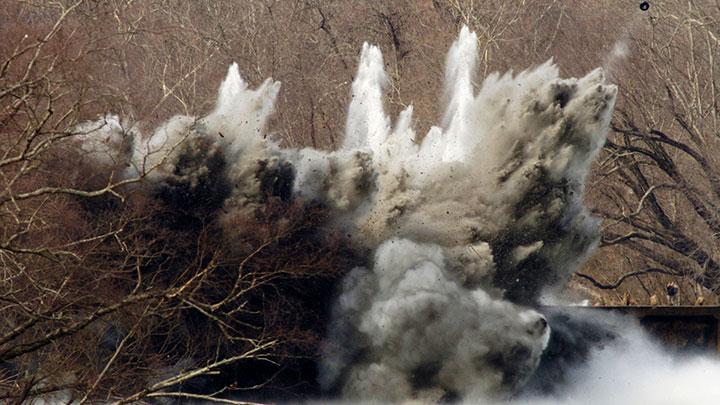
North Korea Rejects Responsibility for DMZ Mine Explosion
Kabarsaji.com – Tensions along the Korean Peninsula’s heavily guarded border intensified after North Korea rejected South Korea’s accusation that Pyongyang was responsible for a landmine explosion in the Demilitarized Zone. The blast injured three South Korean soldiers last week and prompted a military investigation involving South Korean and United Nations Command personnel.
Kim Yo Jong, the sister of North Korean leader Kim Jong Un and one of Pyongyang’s most influential political figures, dismissed Seoul’s findings in a statement released through state media on Wednesday. She portrayed the accusation as fabricated and denounced South Korea’s response in sharply hostile language.
“It is too low and dirty as befitting the tribes of South Korea.”
“Such a farce is by no means new.”
Her remarks were directed at South Korea’s claim that mines laid by North Korea caused the explosion. Seoul has said the incident was not simply an isolated accident but part of activity aimed at reinforcing the border area.
Seoul Signals a Staged Response
South Korean Defense Minister Kang Shin-chul said Tuesday that investigators had determined North Korean mines were responsible for the blast. He said the government would take a corresponding response, while stressing that the military has several available options and would use them gradually.
“Has a range of necessary measures at our disposal, and we will implement them in stages.”
The South Korean military has also demanded that North Korea apologize and take responsibility. An official from Seoul’s Joint Chiefs of Staff urged Pyongyang to end actions that could worsen the security situation near the border.
“North Korea must immediately cease activities that heighten tensions on the Korean Peninsula, …. and we strongly urge an apology and responsible measures.”
The dispute comes at a sensitive time because the DMZ remains one of the world’s most militarized frontiers despite its name. It separates the two Koreas along the Military Demarcation Line, the boundary established after active combat in the Korean War ended in 1953. The war concluded with an armistice rather than a peace treaty, leaving the two sides technically still in a state of conflict.
UN Command Cites Armistice Violation
During a follow-up inspection after the explosion, South Korean and UN investigators located another mine on Tuesday. The discovery strengthened Seoul’s position that the device had crossed into territory on the Republic of Korea side of the military boundary.
The United Nations Command said its investigation identified an active anti-personnel mine from the Democratic People’s Republic of Korea, North Korea’s official name, on the South Korean side of the Military Demarcation Line. It concluded that the presence of the mine constituted a violation of the armistice agreement.
The UN Command is a United States-led multinational force that supervises implementation of the Korean War armistice and administers the southern side of the DMZ. Its assessment gives the incident significance beyond the immediate injuries suffered by the three soldiers, because the armistice provides the framework intended to prevent renewed fighting along the border.
Mine incidents in the DMZ carry particular risks. The area is marked by dense military deployments, surveillance systems and strict restrictions on movement. Even a limited explosion can rapidly become politically charged, especially when each side disputes responsibility and military authorities consider possible retaliatory measures.
A Border Dispute With Wider Consequences
North Korea’s denial ensures that the episode will remain a source of friction between Seoul and Pyongyang. Kim Yo Jong’s statement offered no indication that the North would accept the findings of South Korean or UN investigators, apologize for the blast, or participate in steps to ease the dispute.
For South Korea, the matter combines the safety of troops with the credibility of border controls and the enforcement of the armistice. Officials have framed their investigation as evidence that North Korea planted mines to strengthen its defenses. Pyongyang, however, has characterized that conclusion as an invented pretext.
The opposing accounts underline the absence of trust between the two governments. Communication mechanisms and diplomatic engagement have often been strained, making it difficult to resolve incidents near the border before they feed into broader military and political confrontation.
Attention will now focus on whether South Korea’s promised phased measures lead to further military action or whether the response remains limited to warnings, monitoring and diplomatic pressure. Whatever course Seoul chooses, the blast has again highlighted how quickly an event inside the DMZ can test the already fragile armistice that has governed the peninsula for more than seven decades.
Related Reading
Frequently Asked Questions
What is North Korea Denies South s Claim?
North Korea Denies South s Claim is the main topic of this guide. The article explains the context, practical details, and next steps readers should understand.
Why does North Korea Denies South s Claim matter?
North Korea Denies South s Claim matters because readers are looking for a useful answer, not just a short summary. Good content should match search intent and help them decide what to do next.