
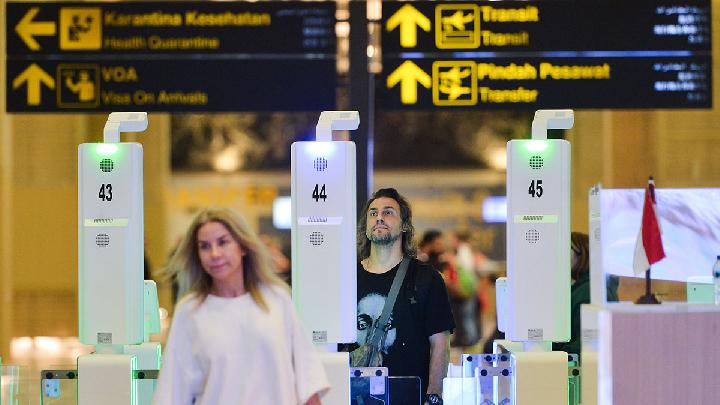
Indonesia’s Skies Clearing After Anak Krakatau Eruption Disrupts Regional Aviation
Kabarsaji.com – Indonesia’s position along the Pacific Ring of Fire means volcanic activity is not an anomaly but a recurring feature of daily life for its 280 million residents and the millions of visitors who flock to the archipelago each year. Yet when Mount Anak Krakatau erupted on Saturday, September 5, sending a dense plume of ash roughly 150 kilometers toward the capital, the scale of disruption was still staggering. Approximately 2,000 flights were grounded across the region, and an estimated 270,000 passengers found themselves stranded at terminals or en route to airports that had shut down operations within hours.
The eruption did not close the country to visitors. Indonesia remains open, and no government — domestic or foreign — has issued a blanket advisory against travel to the archipelago. What has changed is the operational reality at major gateways: Jakarta’s two principal airports, Soekarno-Hatta International and Halim Perdanakusuma, were temporarily sealed off by ash clouds, while facilities in South Sumatra also suspended operations. By Monday, Soekarno-Hatta was scheduled to resume accepting arrivals and departures at 6 p.m., and the South Sumatra airport had already reopened. Six airports across the country had returned to service, though three remained closed as ash monitoring continued.
What Travelers Should Expect in the Coming Days
The reopening of airports does not mean normalcy has returned to flight schedules. Volcanic ash disperses slowly, and even after runways are declared clear, airlines often maintain conservative cancellation and delay policies while ash concentrations remain above safe thresholds. Passengers with tickets booked in the days following the eruption should assume disruption is still possible and check directly with their carrier or travel provider before making the journey to the terminal.
The UK Foreign, Commonwealth & Development Office (FCDO) updated its Indonesia travel guidance following the event, confirming the temporary closures of both Jakarta airports on September 5 and noting that flight disruptions persisted even after reopening. The FCDO specifically cautioned travelers about degraded air quality in the ash-affected zone. Volcanic ash plumes carry fine particulate matter and sulfur compounds that can irritate the respiratory tract. The advisory recommended that visitors wear a properly fitted face mask when outdoors in areas where ash is visible, and that they minimize exposure by remaining indoors with doors and windows sealed when ash levels are elevated. Masks are widely available in Indonesian pharmacies and convenience stores, though travelers may prefer to carry their own familiar fit.
Refunds, Rescheduling, and the Fine Print
A question that surfaces immediately after any major disruption is whether travelers can simply cancel and receive a full refund. Because no government has advised against visiting Indonesia, the default position is that travel companies carry no automatic obligation to issue refunds solely because a passenger chooses to withdraw. Whether a refund, credit, or rebooking is available depends on the individual airline’s fare rules, the hotel’s cancellation policy, or the tour operator’s contract terms. Passengers should contact their provider directly, explain the circumstances, and ask what options exist before assuming any particular outcome.
Why Indonesia’s Volcanic Geography Matters to Visitors
Indonesia sits atop more than 120 active volcanoes, the highest count of any nation on Earth. Eruptions of varying intensity occur regularly, and while most affect only local communities, events near major population centers — particularly Jakarta, which draws millions of tourists annually for its culinary scene, colonial-era architecture, and role as a gateway to Bali and beyond — can ripple through the aviation network within hours. Anak Krakatau itself is a relatively young cone built within the caldera of the original Krakatau, which destroyed the island in the cataclysmic 1883 eruption. Its proximity to the Java–Sumatra shipping lanes and to Jakarta’s airspace makes even moderate eruptions capable of halting thousands of flights simultaneously.
For the traveler planning a trip in the weeks ahead, the practical checklist is straightforward: monitor airport status through official aviation authority channels, confirm flight status with the airline within 24 hours of departure, carry a basic N95 or equivalent mask, and keep travel insurance documents accessible. The country’s infrastructure is resilient, its airports reopen quickly once ash clears, and the broader travel experience — from the markets of Jakarta to the temples of Borobudur to the beaches of the Lesser Sunda Islands — continues uninterrupted for those who arrive.
The eruption disrupted operations, but it did not close the country. Indonesia’s airports are reopening, its tourism infrastructure is intact, and the only real risk to a traveler’s itinerary now is the residual uncertainty in flight schedules as ash monitoring continues.
Those already in Indonesia during the ash event should follow local authority guidance, limit outdoor activity when visibility drops, and hydrate regularly. The volcanic episode, while disruptive, is expected to fade from operational impact within days, restoring the full schedule across the archipelago’s airport network.
Related Reading
Frequently Asked Questions
What is Is It Safe to Travel to Indonesia?
Is It Safe to Travel to Indonesia is the main topic of this guide. The article explains the context, practical details, and next steps readers should understand.
Why does Is It Safe to Travel to Indonesia matter?
Is It Safe to Travel to Indonesia matters because readers are looking for a useful answer, not just a short summary. Good content should match search intent and help them decide what to do next.