Indonesia’s Poverty Measurement Faces a Fundamental Overhaul as BPS Signals Methodological Reform
Kabarsaji.com – The way Indonesia counts its poor is about to change — and the implications stretch far beyond a single statistic. Statistics Indonesia (BPS), the government agency tasked with producing the nation’s official poverty figures, confirmed on September 8, 2026 that it is deep into a comprehensive reworking of how the poverty line is constructed. The agency emphasized that the exercise goes well beyond simply nudging the nominal threshold upward. Instead, BPS is re-examining the entire measurement architecture so that it aligns with how Indonesians actually consume goods and services today, and with the socio-economic realities of a country that has shifted dramatically over the past two decades.
“The refinement being studied is not just about raising the nominal poverty line, but is an evaluation of the overall method of measurement to be more relevant to the development of consumption patterns and the socio-economic conditions of the Indonesian society.”
That statement, delivered in a written response to a media inquiry, marks a notable departure from the incremental adjustments BPS has made in prior revision cycles. The poverty line functions as the backbone for dozens of government programs — from conditional cash transfers to regional development budgets — so any recalibration ripples through fiscal planning, social-welfare targeting, and international comparisons. A higher or differently constructed line could reclassify millions of households, alter the geographic distribution of poverty, and reshape the narrative around President Prabowo’s stated goal of eliminating extreme poverty by 2045.
Food Components Under Scrutiny
The food dimension of the poverty basket has historically anchored Indonesia’s poverty calculation. BPS disclosed that it is reviewing every determinant on that side: the base year from which price data are anchored, the reference population used to calibrate consumption norms, the composition of the commodity basket itself, the pricing methodology, the quantities of food assumed adequate, and the caloric sufficiency threshold.
Among the alternatives on the table, BPS named several concrete options. One proposal would shift the base year to 2024, pulling the price anchor closer to current market conditions and reducing the distortion that accumulates when an outdated reference year is used. Another would expand the food basket from its present 52 items to 57, capturing additional staples and processed foods that have entered everyday Indonesian diets. A third would lock in a fixed energy sufficiency threshold of 2,100 kilocalories per person per day, replacing whatever variable caloric standard has been applied previously.
Pricing methodology also features prominently. BPS is weighing the use of median prices rather than mean or modal prices, a choice designed to make the basket cost less vulnerable to outliers and regional price spikes. For a country of more than 17,000 islands with widely varying food costs, that robustness question is not academic — it determines whether a household in Papua or a household in Java is measured against a realistic cost of living.
Non-Food Needs and the Calculation Formula
The non-food side of the basket — covering housing, education, health, transport, and other essentials — is equally under review. BPS is studying how to adjust the non-food commodity list and, more fundamentally, which mathematical approach to employ when converting that list into a monetary value. Two candidate routes were identified: a direct method that prices each non-food item independently, and an indirect method that derives the non-food component from a food share and total household expenditure ratio. Each carries different sensitivities to data gaps and regional heterogeneity.
Equally important is the question of how the poverty line will be updated in future periods. BPS is examining mechanisms that would allow the threshold to track inflation and structural economic shifts without requiring a full methodological overhaul every few years. The agency stressed that the final formula, its parameters, and the implementation timetable remain undecided.
“Any changes in the future need to consider empirical evidence, statistical principles, data comparability between periods, as well as input from experts and stakeholders.”
Expert Criticism: The Line Measures Survival, Not Dignity
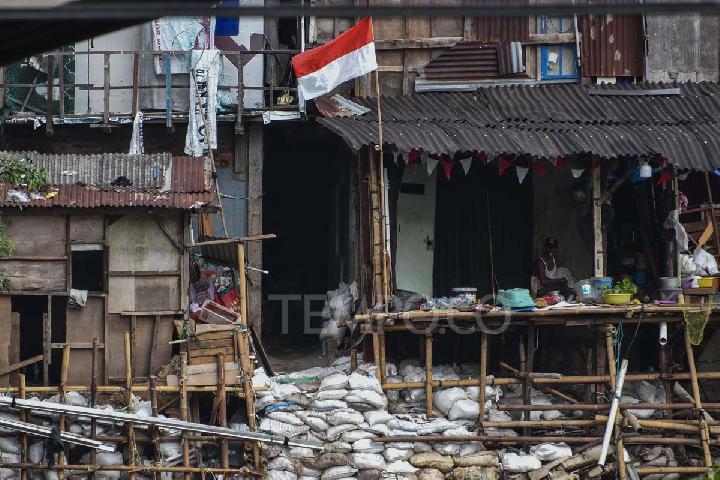
The current national poverty line stands at Rp3,091,866 per household per month — a figure that, critics argue, captures only the bare minimum needed to avoid starvation and destitution. Deni Friawan, an economist and researcher at the Centre for Strategic and International Studies (CSIS), told reporters on September 7, 2026, that the existing standard is too low and fails to reflect what a decent quality of life actually costs in different parts of the archipelago.
“So it’s not just about measuring the minimum standard of living to survive, but how much is the standard of living decent for the people of Indonesia in their respective regions.”
Friawan’s point touches a long-running debate in Indonesian development economics. A poverty line calibrated to caloric intake and a narrow basket of essentials will always understate deprivation in urban areas where housing rents, school fees, and transport costs dominate household budgets. Conversely, a line calibrated to urban consumption patterns may overstate hardship in rural communities where subsistence agriculture still plays a role. BPS’s stated aim of making the methodology “more relevant to the development of consumption patterns” suggests the agency is attempting to thread that needle — producing a single national figure that remains meaningful across Java’s cities and Papua’s remote villages alike.
What Comes Next
No timeline for adoption of a revised methodology has been announced. BPS indicated that empirical validation, statistical integrity, cross-period comparability, and stakeholder consultation all must be satisfied before any new formula takes effect. Until then, the Rp3,091,866 threshold continues to govern official poverty counts, program eligibility, and the country’s reporting to international bodies such as the World Bank and UNDP. The coming months of study, therefore, will determine whether Indonesia’s next poverty statistic tells a more honest story about who is left behind — and by how much.
Related Reading
Frequently Asked Questions
What is How Far Has BPS Progressed in Revising?
How Far Has BPS Progressed in Revising is the main topic of this guide. The article explains the context, practical details, and next steps readers should understand.
Why does How Far Has BPS Progressed in Revising matter?
How Far Has BPS Progressed in Revising matters because readers are looking for a useful answer, not just a short summary. Good content should match search intent and help them decide what to do next.