
Will Bank Indonesia Hike Rate to 6.5% This Year? Expert Weighs In
Will Bank Indonesia Hike Rate to 6.5% This Year? Expert Weighs In Will Bank Indonesia Hike Rate to 6 - As economic uncertainty looms over Southeast Asia, the
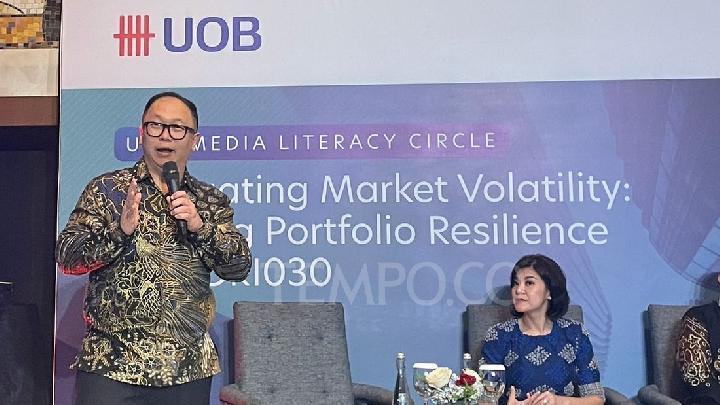
Will Bank Indonesia Hike Rate to 6.5% This Year? Expert Weighs In
Will Bank Indonesia Hike Rate to 6 – As economic uncertainty looms over Southeast Asia, the question of whether Bank Indonesia (BI) will hike interest rates to 6.5% this year has sparked widespread speculation. Enrico Tanuwidjaja, an ASEAN economist at United Overseas Bank Limited (UOB), has provided a detailed analysis, suggesting that BI’s central bank could continue raising rates to maintain the rupiah’s value. This forecast comes amid growing concerns about inflation, external debt, and the region’s financial stability, prompting investors and analysts to closely monitor the institution’s next moves.
Projected Rate Hikes and Economic Context
According to Enrico, the potential rate hike by BI is part of a broader strategy to stabilize Indonesia’s currency and curb inflationary pressures. His assessment indicates that the central bank may implement three additional increases this year, bringing the benchmark rate from its current 5.75% to 6.5%. This projection aligns with the central bank’s historical pattern of tightening monetary policy in response to economic volatility, particularly in the wake of global events such as the ongoing inflationary trends and geopolitical tensions.
“The three-step rate hike plan proposed by UOB suggests that Bank Indonesia will incrementally raise interest rates by 25 basis points each time, starting from the present level of 5.75% and targeting a final rate of 6.5% by year-end,” Enrico explained during a Jakarta press conference on July 16, 2026.
The expert emphasized that these adjustments are necessary to counterbalance the influx of foreign capital and prevent the rupiah from depreciating further against major currencies like the US dollar and euro.
Capital Flows and Monetary Policy Tightening
Enrico’s analysis also highlights the role of foreign capital movements in shaping BI’s decisions. While the bond market has seen a notable inflow of US$470 million as of July 8, 2026, the stock market remains a net outflow of US$4.39 billion over the same period. This divergence suggests that investors are favoring fixed-income assets, likely due to the anticipated rate hikes and their impact on returns. The expert noted that the central bank’s ability to raise rates is contingent on the continued stability of these capital flows and the broader economic environment.
“The recent surge in foreign capital into the bond market reflects confidence in Indonesia’s ability to manage inflation, but the stock market’s outflows indicate lingering caution among investors,” Enrico remarked, underscoring the need for balanced policy measures.
BI’s current rate of 5.75% is part of a series of increases since May 2026, with each adjustment aimed at reinforcing the rupiah’s resilience. Governor Perry Warjiyo has defended these steps as essential to navigating the challenges posed by global economic uncertainty and maintaining investor trust.
Global Trends and Sectoral Implications
The anticipated rate hike by BI mirrors the tightening cycle observed in other major economies, including the United States and Europe. Enrico pointed out that while higher rates may initially slow down economic growth, they are expected to stabilize inflation and attract foreign investment. He also highlighted that the liquidity ratio of 25% remains strong, providing BI with the flexibility to implement further rate increases without causing significant disruptions.
“Aligning with global central banks, BI’s rate hike strategy is designed to balance inflation control with growth support, ensuring long-term financial stability,” Enrico added, drawing parallels to the Federal Reserve’s approach in recent months.
This alignment suggests that Indonesia’s monetary policy is increasingly influenced by international trends, which could have cascading effects on domestic sectors. Enrico recommended that financial institutions focus on lending to high-impact industries, such as manufacturing, food and beverage, and accommodation, to drive economic recovery.
Historical Context and Policy Challenges
Bank Indonesia’s decision to raise rates to 6.5% this year is not without precedent. Since May, the central bank has already implemented three rate hikes, reflecting its proactive stance in addressing inflationary risks. These adjustments have been a key component of BI’s strategy to stabilize the rupiah, which has faced pressure from global factors such as rising commodity prices and currency fluctuations.
Enrico acknowledged that the rate hike trajectory presents both opportunities and challenges. While higher rates can help curb inflation and strengthen the currency, they may also affect consumer spending and business investment. The expert warned that sectors heavily reliant on external financing, such as real estate and consumer goods, could face tighter credit conditions, necessitating careful monitoring by policymakers and market participants.
Expert Predictions and Market Reactions
Enrico’s forecast has generated mixed reactions in the financial markets. Some analysts view the projected rate hikes as a necessary measure to safeguard Indonesia’s economic health, while others caution against over-reliance on monetary policy tightening. The upcoming rate decisions will be closely watched, as they could influence investor sentiment and market behavior in the months ahead.
“If BI follows through with its rate hike plan, it could signal a shift toward more aggressive monetary tightening, which may have both positive and negative implications for different sectors of the economy,” Enrico concluded.
As the central bank continues to navigate the delicate balance between inflation control and growth, the focus keyword “Will Bank Indonesia Hike Rate” remains central to the ongoing discussion. The next steps will depend on economic data, global conditions, and BI’s strategic priorities for the remainder of the year.