Nickel, Batteries, and the Next Chapter in Indonesia–South Korea Economic Ties
Kabarsaji.com – The race to build electric vehicle supply chains across Southeast Asia has turned Indonesia’s vast nickel reserves into a strategic asset that foreign governments are now courting with policy incentives. South Korea, already deeply embedded in the Indonesian automotive landscape, is pushing for regulatory frameworks that would make nickel-based battery chemistry viable at scale within the archipelago’s emerging EV sector. The diplomatic push is not hypothetical: both governments are actively negotiating the shape of those incentives, according to senior embassy officials who spoke publicly in late August 2026.
A Diplomatic Signal at a Journalist Workshop
Uhm Taeho, Political Section Chief and Counselor at the South Korean Embassy in Jakarta, laid out the details during the Indonesian Next Generation Journalist Network on Korea (IKJN) workshop held on August 26, 2026. The session was organized jointly by the Foreign Policy Community of Indonesia (FPCI) and the Korea Foundation, giving the discussion a dual audience of Indonesian media professionals and Korean cultural-diplomatic stakeholders.
“Incentives and regulatory facilitation for nickel-based batteries will also benefit Indonesia,” Taeho told the assembled journalists, framing the policy conversation as a two-way gain rather than a concession extracted from one side.
The remark was notable for its explicit acknowledgment that Jakarta stands to profit from the arrangement, not merely Seoul. In practice, the incentives under discussion would lower the effective cost of nickel-based cells, making them competitive against lithium-ion alternatives already dominating global EV markets.
Why Nickel, Why Now
Nickel-based battery chemistries carry two structural advantages that appeal to policymakers: they are comparatively straightforward to recycle at end-of-life, and their manufacturing footprint is lighter on the environment than several competing technologies. Indonesia, which controls a substantial share of global nickel output, already possesses the raw-material advantage. What it lacks, in the eyes of Seoul’s diplomats, is the regulatory scaffolding to convert that advantage into finished battery cells.
Taeho was candid about the principal obstacle: nickel-based cells remain pricier than their lithium-ion counterparts. His stated position was that the price gap is a policy problem, not a physics problem, and that targeted government support—subsidies, tax credits, streamlined permitting—could compress costs to market-competitive levels within a reasonable timeframe.
Hyundai as the Anchor Tenant
The diplomatic conversation does not exist in a vacuum. South Korea’s interest in Indonesian nickel batteries is anchored by Hyundai Motor Group’s multi-billion-dollar commitment to building an integrated electric-vehicle ecosystem on Indonesian soil. Hyundai is constructing manufacturing facilities in Cikarang, West Java, within the Delta Mas industrial zone, and is simultaneously recruiting and training a local workforce to staff those plants. The company’s investment in vehicle manufacturing alone is estimated at roughly US$1.55 billion.
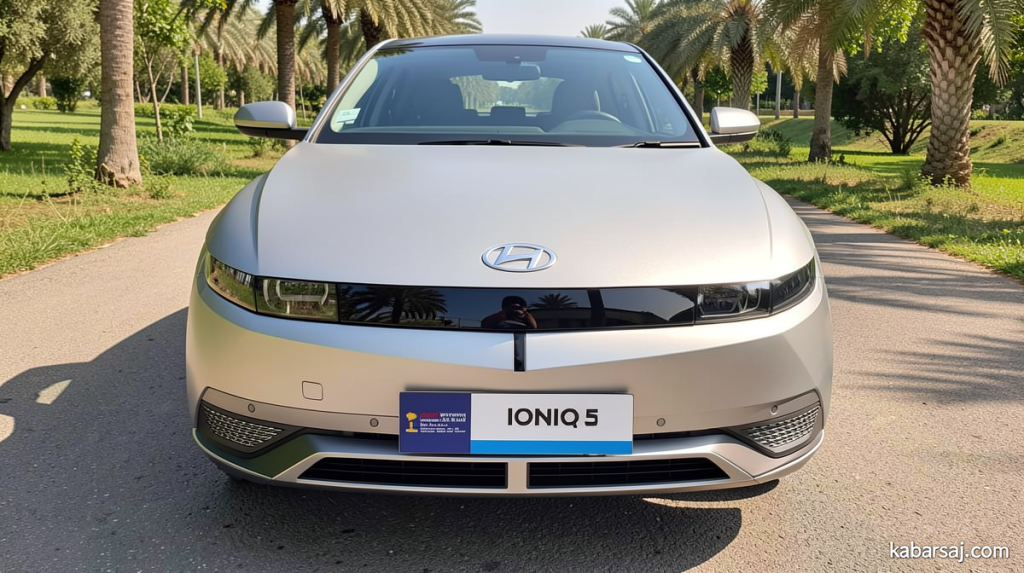
Crucially, Hyundai is not operating in isolation. Through collaboration with LG, the automaker is developing a battery supply chain inside Indonesia, meaning that cell production is being planned alongside vehicle assembly rather than imported from Korean or Chinese factories. The Hyundai IONIQ 5, the group’s first EV to be produced locally in Indonesia, is slated to launch alongside the ramp-up of those battery cell facilities.
In total, Hyundai Motor Group has committed up to US$3 billion to establish what it describes as an integrated electric fleet ecosystem in the country, spanning vehicle manufacturing, battery production, and upstream nickel processing.
A Spillover Effect: EcoPro and the Nickel Smelting Boom
Hyundai’s footprint has functioned as a gravitational pull for other Korean capital. Taeho cited EcoPro, a Korean firm that has poured more than US$1 billion into nickel smelting operations in Indonesia, as evidence that the initial Hyundai commitment unlocked a broader wave of sector-specific investment.
“This truly demonstrates how comprehensive our partnership is. They see potential for collaboration in Indonesia,” Taeho observed, pointing to the clustering of Korean firms across the value chain—from ore to cell to finished vehicle.
The Longer Arc of Korean Investment
Mina Ryu, Director of Southeast Asia Division 1 at the South Korean Ministry of Foreign Affairs, used the same event to place the current nickel-and-battery conversation within a longer historical trajectory. Korean capital in Indonesia began in textiles, migrated through electronics, steel, and petrochemicals, passed through biotechnology, and has now arrived at electric vehicles and their power sources.
“Contributing to the development of an integrated EV ecosystem,” Ryu summarized the present phase, underscoring that economic cooperation remains the foundational pillar of the bilateral relationship.
The evolution Ryu outlined mirrors a broader pattern in which Korean firms have progressively moved up the value chain in Southeast Asian host economies, shifting from labor-intensive assembly toward capital- and technology-intensive manufacturing. Indonesia’s position as both a nickel producer and a large consumer market makes it a natural destination for the next stage of that trajectory.
What Stakes the Negotiation
For Jakarta, the incentive package under discussion is an opportunity to capture higher-value manufacturing rents from a commodity it already mines. For Seoul, it is a way to secure a reliable, geographically proximate supply of battery inputs while deepening an industrial partnership that has already attracted billions in Korean capital. The August 2026 workshop made clear that neither side views the conversation as settled; the regulatory architecture remains under active negotiation, and the shape of any final package will determine whether Indonesia’s nickel advantage translates into domestic battery-cell production or remains confined to upstream ore exports.
Related Reading
Frequently Asked Questions
What is Why South Korea Awaits Indonesia s Nickel?
Why South Korea Awaits Indonesia s Nickel is the main topic of this guide. The article explains the context, practical details, and next steps readers should understand.
Why does Why South Korea Awaits Indonesia s Nickel matter?
Why South Korea Awaits Indonesia s Nickel matters because readers are looking for a useful answer, not just a short summary. Good content should match search intent and help them decide what to do next.