
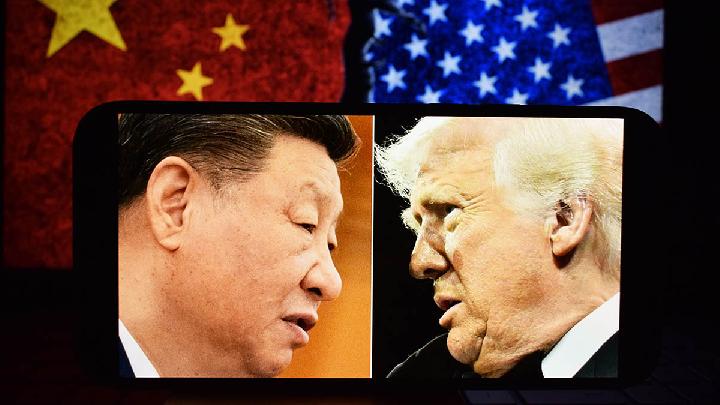
Trump Urges Beijing and Tokyo to Ease Tensions
Kabarsaji.com – US President Donald Trump has pressed Chinese President Xi Jinping to take steps toward repairing China’s strained relationship with Japan, linking the dispute to the interests of American industry and the wider US-China trade relationship.
During talks in Washington in September, Trump raised concerns over Chinese export restrictions affecting goods bound for Japan, including rare earth metals. The measures have become a significant point of friction because Japanese suppliers play an important role in manufacturing chains used by US companies.
Rare earth materials are essential inputs for a broad range of high-technology products. When their trade is disrupted, the effects can extend well beyond the countries directly involved, especially where manufacturers rely on components and materials sourced through Japanese firms.
Trump’s message to Xi was that the restrictions could threaten US industries dependent on Japanese supply networks. He also characterized the measures as conflicting indirectly with the US-China trade truce reached in South Korea in October 2025.
A Push for Direct Dialogue
Trump also encouraged Xi to meet Japanese Prime Minister Sanae Takaichi in an effort to contain the diplomatic dispute. Beijing did not fully embrace that proposal during the Washington summit.
Xi’s position was that the tensions between China and Japan should be handled separately and should not spill into China’s relationship with the United States. He also voiced concern about what he described as the risk of expanding Japanese militarism.
The differing responses underline the difficulty of separating trade, security, and diplomacy in East Asia. Washington has an interest in stable supply chains and in close cooperation with Tokyo, while Beijing views Japan’s defense policy and its approach to Taiwan as central concerns rather than side issues.
Taiwan Remarks Deepen the Rift
Relations between China and Japan worsened sharply after Takaichi said that a Chinese attack on Taiwan could prompt Japan’s defense forces to respond in support of the United States.
Beijing reacted angrily to the comments and increased political and economic pressure on Japan. That response has included restrictions involving rare earth metals, materials used in the production of many advanced technologies.
China has also criticized the Takaichi administration’s efforts to strengthen Japan’s defenses, arguing that the country is experiencing a revival of militaristic thinking.
“neo-militarism” is on the rise in the country.
For Japan, defense policy has become increasingly tied to the regional security environment, particularly the possibility of conflict involving Taiwan. For China, references to Japanese military involvement near Taiwan carry historical and strategic weight, making compromise more difficult.
APEC Meeting Efforts Stall
Japan has sought an opportunity for Takaichi and Xi to hold talks during the Asia-Pacific Economic Cooperation Forum summit scheduled for November in Shenzhen, China. Beijing rejected that request.
China instead proposed a meeting between Takaichi and Premier Li Qiang. Japan indicated that such an arrangement was not acceptable, leaving the prospect of a top-level meeting unresolved.
The disagreement over whom Takaichi should meet is more than a matter of protocol. A discussion with Xi would signal engagement between the two governments at the highest political level, while a meeting with Li would carry a different diplomatic meaning. Tokyo’s response suggests it sees direct contact between the two leaders as necessary if relations are to improve.
Why the Dispute Matters Beyond China and Japan
Trump’s intervention reflects the extent to which the China-Japan dispute has implications for the United States. Japan is a major US partner, and supply links involving Japanese companies connect closely with American manufacturing and technology sectors.
Export restrictions on rare earth metals can therefore become a wider economic concern. The issue is not limited to the movement of raw materials; it also affects planning, production schedules, supplier relationships, and confidence among businesses that depend on predictable cross-border trade.
At the same time, the dispute shows how economic measures can overlap with security disagreements. China’s pressure on Japan followed statements related to Taiwan, while Trump’s appeal to Xi focused on the commercial consequences for US-linked industries. Each government is viewing the same dispute through a different set of priorities.
Whether direct talks between Xi and Takaichi eventually take place remains uncertain. For now, Beijing and Tokyo remain divided over Taiwan, defense policy, diplomatic engagement, and trade restrictions. Trump’s effort to encourage a reset demonstrates that the tension is no longer viewed as a strictly bilateral matter.
Related Reading
Frequently Asked Questions
What is Why Does Trump Push China to Mend?
Why Does Trump Push China to Mend is the main topic of this guide. The article explains the context, practical details, and next steps readers should understand.
Why does Why Does Trump Push China to Mend matter?
Why Does Trump Push China to Mend matters because readers are looking for a useful answer, not just a short summary. Good content should match search intent and help them decide what to do next.