Why Artjog 2026 Is Marred by Controversy, Protests
Artjog 2026 Faces Criticism Amid Controversy and Protests Why Artjog 2026 Is Marred by Controversy has become a focal point of discussion in Indonesia’s art
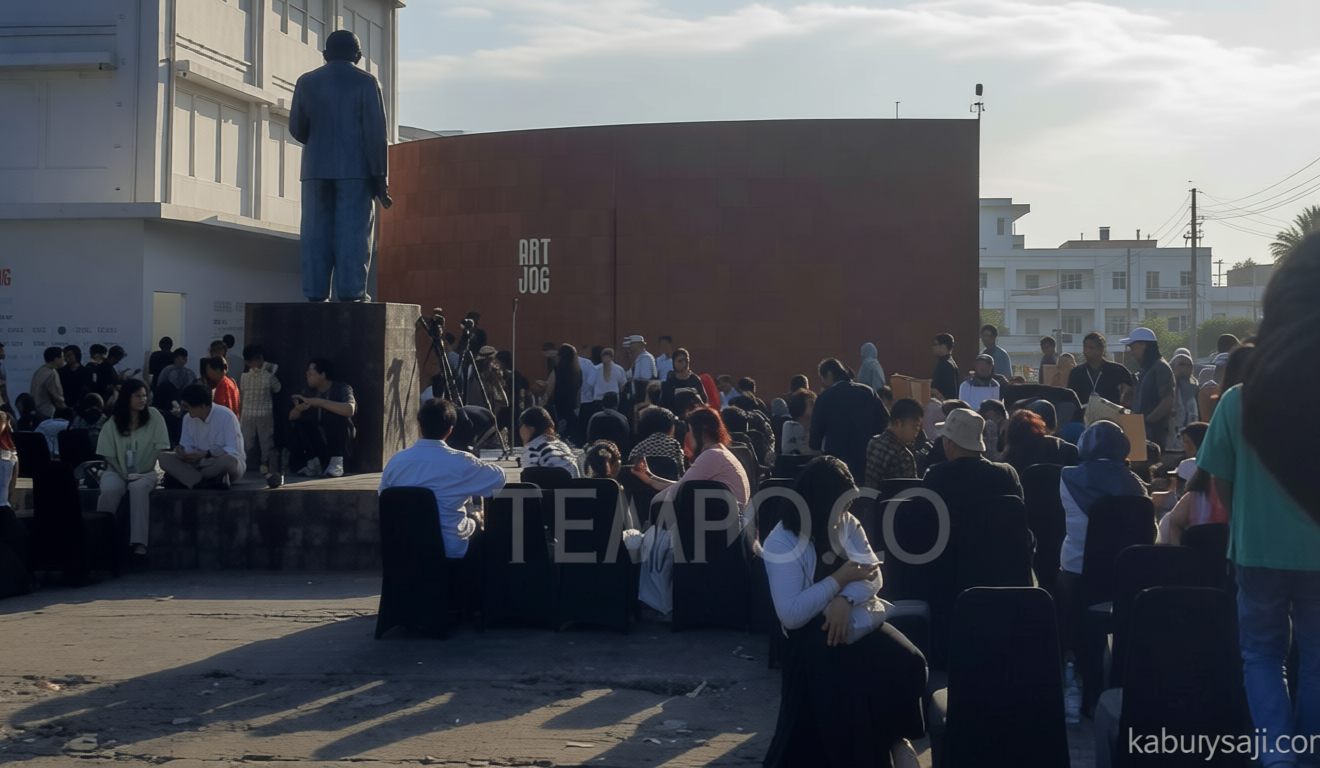
Artjog 2026 Faces Criticism Amid Controversy and Protests
Why Artjog 2026 Is Marred by Controversy has become a focal point of discussion in Indonesia’s art community. The 2026 edition of Artjog, Yogyakarta’s annual contemporary art festival, ignited debates after the opening ceremony was unexpectedly led by GKR Bendara, head of the Cultural and Heritage Department at the Yogyakarta Palace (KHP Nitya Budaya Keraton), instead of Didit Hediprasetyo, son of President Prabowo. This decision, made just days before the event, created an immediate ripple of discontent among artists and collaborators, many of whom felt that the Didit Hediprasetyo Foundation’s role in the exhibition was overshadowed by the new leadership.
Social Media Outcry and Poster Changes
The controversy reached a fever pitch on social media platforms as critics questioned the sudden shift in leadership. Art enthusiasts and industry professionals took to Twitter and Instagram to voice their concerns, with some accusing the foundation of exerting undue influence over the event’s direction. A digital announcement promoting Didit’s participation was hastily removed, replaced by a poster featuring GKR Bendara. This change, seen as symbolic of a broader political alignment, sparked outrage, with artists and cultural advocates fearing a dilution of the festival’s artistic mission.
“Artjog has always been a platform for unfiltered creativity, but now it feels like a political spectacle,” remarked Rudi Surya, an independent curator. The decision to replace Didit with GKR Bendara not only raised questions about transparency but also highlighted the tension between cultural expression and institutional control.
Exhibition Overview and Artistic Discontent
Artjog 2026, themed “Ars Longa Generatio,” was designed to celebrate the enduring legacy of Indonesia’s artistic heritage. Curated by Farah Wardani, the exhibition featured 96 artists across a range of mediums, including painting, sculpture, and digital installations. However, the controversy over leadership overshadowed the artistic contributions, with some participants expressing disillusionment over the festival’s direction. The theme, which translates to “Art is Long, Life is Short,” was seen by critics as a poignant contrast to the event’s recent political shifts.
Despite the tensions, the exhibition itself remained a vibrant showcase of local talent. Works like those of Roby Dwi Antono, whose piece was painted over during the opening night, were celebrated for their innovative approach. Yet, the presence of the Didit Hediprasetyo Foundation’s financial support raised eyebrows, with artists arguing that the collaboration could compromise the festival’s independence.
Protest Escalates at Opening Night
The unrest reached its peak on the opening night of Artjog 2026, as demonstrators took to the Jogja National Museum courtyard to voice their dissent. Protesters splashed red paint onto Antono’s artwork, symbolizing the bloodshed of artistic freedom, while others scattered flowers in a gesture reminiscent of a funeral. These actions, though symbolic, drew sharp reactions from both supporters and detractors, with some viewing them as passionate expressions of protest, and others as disruptive.
“We are not just fighting for one artist but for the entire ecosystem of creativity in Yogyakarta,” said Lina Paramita, a participant in the protests. The demonstrations highlighted a growing divide between the festival’s traditional roots and its evolving political affiliations, leaving audiences divided on the merits of the changes.
Management’s Defense and Institutional Justifications
Artjog Program Director Gading Paksi defended the leadership change, stating that the collaboration with GKR Bendara was essential for securing the event’s funding and public support. “We cannot ignore the broader cultural significance of this partnership,” he argued, while acknowledging the need for greater transparency. However, some critics countered that the foundation’s involvement had gone beyond financial support, influencing curation and artistic choices in ways that were not clearly communicated.
The protests also led to physical confrontations, with security officers detaining participants and using force to maintain order. While the management claimed these actions were necessary to prevent chaos, the demonstrators viewed them as an overreach, further intensifying their frustration. The incident underscored the growing challenges of balancing artistic integrity with institutional power during large-scale cultural events.
Artist and Business Withdrawals
The controversy prompted several high-profile artists and sponsors to withdraw their support from Artjog 2026. Irene Agrivina, founder of Honf—a digital art lab focused on new media and technology—publicly criticized the decision to exclude Didit, arguing that it weakened the festival’s credibility. “Artjog has become a battleground for political agendas, not a space for pure creativity,” she wrote on Instagram, adding that Honf had planned to block access to its space if Didit attended, but revised their strategy after his last-minute absence.
Business partners like ViaVia Restaurant also distanced themselves from the event. Janti Wignjopranoto, the restaurant’s manager, cited principles of independence and diversity as key reasons for ending the partnership. “Artjog should remain a neutral platform for all voices, not just those aligned with a single figure,” she stated, reflecting a broader sentiment among cultural stakeholders.
Heri Pemad’s Explanation and Broader Implications
Artjog CEO Heri Pemad explained the collaboration with the Didit Hediprasetyo Foundation as a strategic move to strengthen the festival’s financial backing. He emphasized that the foundation had no authority over the creative or curatorial decisions, asserting that the exhibition’s artistic vision remained intact. However, the exact amount of funding provided by the foundation remained undisclosed, fueling suspicions about the extent of its influence.
As the dust settles, the controversy surrounding Artjog 2026 continues to shape discussions about the role of politics in cultural institutions. While the festival remains a major event in Yogyakarta, the protests have sparked a deeper reflection on how such partnerships can impact the independence and authenticity of artistic endeavors. The future of Artjog 2026 now hinges on its ability to reconcile these competing interests and restore trust among its supporters.