U.S. Forces Hit Five Iranian Oil Tankers Amid Escalating Regional Tensions
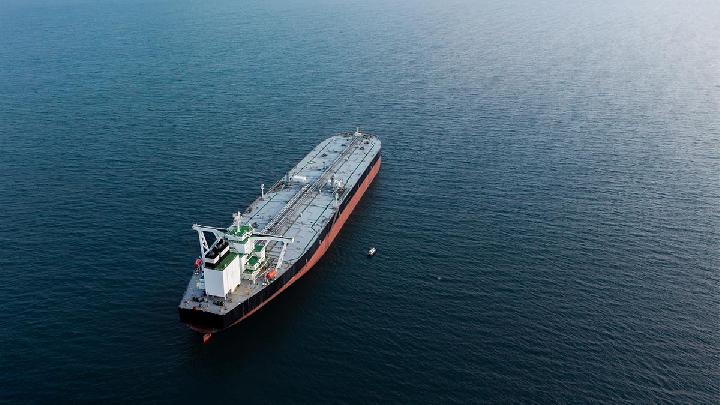
Kabarsaji.com – U.S. military forces carried out strikes against five Iranian oil tankers on Tuesday, intensifying a confrontation that has spread from naval patrols to vital energy-shipping routes near Iran.
U.S. Central Command said the operation followed two ballistic-missile attacks by Iran’s Islamic Revolutionary Guard Corps, or IRGC, against a U.S. Navy warship during the previous two days. The American vessel avoided both attempted attacks and remained on patrol in regional waters, CENTCOM said. No U.S. personnel were injured.
“The U.S. warship successfully evaded the attempted Iranian attacks and continued to patrol regional waters. No American personnel were harmed.”
Before carrying out the strikes, U.S. forces instructed the crews aboard the targeted ships to leave their vessels. No immediate information was available on possible casualties.
Tankers Targeted in Gulf of Oman and Strait of Hormuz
Four of the vessels were attacked in the Gulf of Oman: the M/T Kaviz, M/T Charminar, M/T Horizon 1, and M/T Riesco. A fifth ship, the M/T Derya, was struck near Kharg Island in the Strait of Hormuz.
The locations are especially sensitive because they sit close to Iran’s principal oil-export infrastructure and some of the world’s most consequential maritime transit routes. Explosions were heard near Jask, a southern Iranian port, as well as on Kharg Island, a major hub for the country’s oil exports.
Shipping through the Gulf of Oman and the Strait of Hormuz connects oil-producing states in the Persian Gulf with international markets. Any military activity in these waters can raise concerns for commercial crews, port operations, insurers, and energy buyers, even when the immediate targets are limited to specific vessels.
CENTCOM said the five tankers were connected to the IRGC and described them as part of a financial network used to support the force and allied groups in the region.
“Iran has used the tankers as part of a multibillion-dollar shadow network that funds the IRGC and its regional proxies,” CENTCOM said.
“Iran has no means by which to defend these vessels.”
The reference to a “shadow network” points to shipping arrangements that can be used to move oil while obscuring ownership, cargo origins, or commercial links. Such networks have long been a focus of sanctions enforcement and maritime-security monitoring, particularly when tankers operate in politically contested waters.
Iran Signals Retaliation Beyond Its Coastline
The strikes were followed by fresh Iranian missile activity directed toward U.S. targets in Jordan. Jordanian armed forces said Wednesday that their air-defense systems engaged 20 ballistic missiles launched toward Jordanian territory.
Of those missiles, 18 were intercepted and destroyed, while two landed in unpopulated areas, the Jordanian army said. Jordan is a U.S. ally and hosts an American military facility, placing it directly within the wider security picture surrounding the confrontation.
The IRGC also said it had attacked two U.S. vessels and eight oil tankers. The claims highlighted the risk that military exchanges could affect both government assets and commercial shipping operating near the Gulf.
Earlier Wednesday, the IRGC issued a warning aimed specifically at tankers located at ports in Kuwait and Bahrain. It said vessels should be evacuated because they could be targeted whether anchored offshore or docked in port.
“We warn all oil tankers in the Kuwaiti and Bahraini ports… whether they are anchored or docked — we warn them to leave their vessels because they will be targeted,” the IRGC said.
Why the Maritime Threat Matters
The latest developments place commercial shipping at the center of a rapidly worsening regional dispute. Tankers are civilian commercial assets, but their role in moving petroleum makes them strategically important during periods of conflict. Threats against them can disrupt normal shipping decisions even without a broad closure of waterways or ports.
For seafarers, the immediate issue is safety: vessel crews must respond to warnings, potential missile activity, and sudden changes in navigation risks. For regional governments, attacks and threats near ports may require tighter air defense, maritime patrols, and security coordination. For global markets, the concern is whether repeated incidents will complicate the flow of oil from the Gulf.
The U.S. strikes and Iran’s stated retaliation demonstrate how quickly a naval confrontation can reach beyond a single warship or coastline. The involvement of waters near Jask, Kharg Island, Bahrain, Kuwait, Jordan, and the Strait of Hormuz shows that the consequences may extend across several countries and major shipping lanes.
With both sides describing further military actions, the situation remains volatile. The next phase will depend on whether attacks, missile launches, or warnings against commercial vessels continue—and on how regional authorities and international shipping operators respond to the growing threat.
Related Reading
Frequently Asked Questions
What is US Strikes Oil Tankers Off Coast?
US Strikes Oil Tankers Off Coast is the main topic of this guide. The article explains the context, practical details, and next steps readers should understand.
Why does US Strikes Oil Tankers Off Coast matter?
US Strikes Oil Tankers Off Coast matters because readers are looking for a useful answer, not just a short summary. Good content should match search intent and help them decide what to do next.