
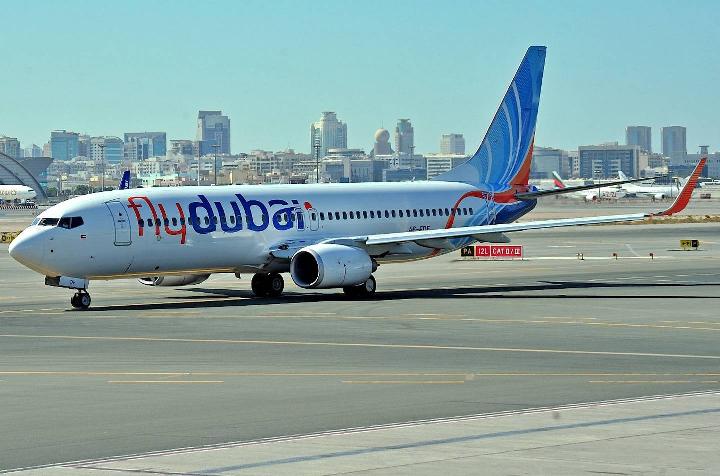
UAE Says Flydubai Co-Pilot Intended to Turn Tel Aviv Flight Into Suicide Attack
Kabarsaji.com – UAE – United Arab Emirates prosecutors say an Omani co-pilot who assaulted the captain of a Flydubai service bound for Tel Aviv had prepared to crash the aircraft into Israel’s main international airport in what authorities describe as a planned suicide attack.
The incident occurred on September 30 during a flight from Dubai to Tel Aviv. The captain, an Indian national, was injured after being attacked with an ax inside the cockpit. The aircraft later made an emergency landing in Saudi Arabia after passengers and crew intervened.
Prosecutors Detail Alleged Plan
Attorney General Hamad Saif al Shamsi said the alleged plot was modeled on the September 11, 2001 attacks in the United States and was intended to produce the highest possible number of casualties.
“None of the procedures revealed any indications of his extremist views or his intention to carry out a terrorist plot.”
The prosecutor’s statement said investigators concluded that the co-pilot had previously flown to Tel Aviv twice to study the route and become familiar with the airport. Authorities believe those earlier journeys formed part of his preparation for the alleged attack.
Tel Aviv’s international airport, Ben Gurion Airport, is the country’s principal aviation gateway and handles a large share of Israel’s international passenger traffic. An attack involving a commercial aircraft near the facility could have placed travelers, aviation personnel and people on the ground at serious risk.
Employment and Security Checks
The co-pilot had worked for several airlines in different countries before joining Flydubai in January 2026. His earlier employment included positions connected to Oman Air and Royal Air Maroc.
UAE prosecutors said he satisfied the professional and security conditions required for his role. These included holding a valid pilot’s license, presenting a certificate of good conduct and completing background-screening procedures.
The findings did not indicate wrongdoing by Flydubai. The public statement emphasized that the standard checks completed before his employment did not uncover evidence of extremist beliefs or plans for violence.
The case highlights a difficult challenge for aviation authorities and airlines: pilots occupy positions that require exceptional trust, while warning signs may not always be apparent through routine licensing, employment and security reviews. Aviation safety systems therefore depend not only on pre-employment screening but also on cockpit security, crew training and the ability of passengers and staff to respond during an emergency.
Passengers and Crew Stopped the Attack
The captain reportedly opened the cockpit door during the struggle, allowing people in the cabin to enter and help restrain the attacker. Crew members and passengers then worked together to regain control of the situation before the aircraft was diverted to Saudi Arabia.
Passengers described a sudden descent of roughly 5,000 meters, or 17,000 feet, as the confrontation unfolded. Such a sharp change in altitude can create intense fear inside an aircraft, particularly when travelers do not immediately know what is happening in the cockpit.
Most of those aboard were Israeli passengers. Their actions have drawn praise in Israel, where they have been described as heroes for helping prevent a potentially catastrophic outcome.
The captain’s survival and the emergency diversion prevented the event from escalating further. The episode also underlines why access to the flight deck remains one of the most sensitive areas of commercial aviation security, especially on international routes involving destinations with heightened security concerns.
Investigation Continues to Shape Security Debate
The UAE’s account presents the attack as a deliberate terrorist plot rather than an isolated assault between crew members. Its description of advance route familiarization suggests investigators are examining how the suspect prepared, what he may have intended to do after reaching Israeli airspace, and whether anyone else had knowledge of the plan.
For airlines, the incident reinforces the importance of reviewing security procedures throughout a pilot’s employment, not solely at the point of hiring. It also draws attention to the role of cockpit-door protocols and coordination between pilots, cabin crew and passengers when an immediate threat emerges.
Authorities have not linked Flydubai to the alleged plot, and the official statement instead focuses on the suspect’s conduct and preparations. The investigation’s findings are likely to remain closely watched because the case combines aviation security, international travel and an alleged plan targeting one of the region’s busiest airports.
Related Reading
Frequently Asked Questions
What is UAE?
UAE is the main topic of this guide. The article explains the context, practical details, and next steps readers should understand.
Why does UAE matter?
UAE matters because readers are looking for a useful answer, not just a short summary. Good content should match search intent and help them decide what to do next.