Trump Links South Korean Tariffs to Alaska LNG Investment
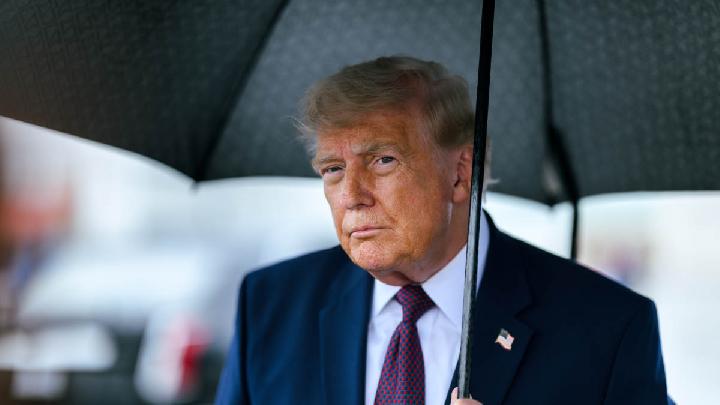
Kabarsaji.com – President Donald Trump has warned that South Korean exports could face steeper U.S. tariffs if Seoul does not move ahead with an investment tied to a major liquefied natural gas development in Alaska, adding pressure to an already delicate trade relationship between the two allies.
The dispute centers on a proposed $54 billion Alaska LNG venture that Trump presented this week as a central part of South Korea’s broader investment commitment in the United States. Seoul, however, has indicated that its participation depends on whether the project can demonstrate commercial viability.
That qualification prompted a pointed response from Trump on Friday. He suggested that South Korea’s reluctance to commit unconditionally could bring trade consequences.
If they don’t want to do it, that’s OK with me — I’ll just charge them more.
The president’s language echoed previous tariff threats directed at foreign governments during trade negotiations. It remains uncertain, though, whether he can independently increase duties on South Korean products as retaliation, particularly after the U.S. Supreme Court narrowed his tariff authority earlier this year.
Investment Commitment Under Scrutiny
Washington and Seoul have spent months discussing where South Korea’s promised U.S. investments would be directed. The commitment, worth hundreds of billions of dollars, was included in a trade agreement reached last year. The Alaska LNG plan has become one of the most prominent projects associated with that framework.
For South Korea, the key question is not simply whether the project has political value in Washington, but whether it can produce a financially sound return. Large-scale LNG projects require extensive infrastructure, including facilities to process gas, pipelines and shipping arrangements. A project of this size can also depend on long-term demand, construction costs and the ability to deliver fuel competitively to overseas buyers.
Trump rejected the suggestion that he had announced the Alaska project before Seoul had fully signed off on it.
I didn’t jump the gun. I mean, they were there.
No South Korean government representative attended Trump’s Oval Office announcement on Wednesday. A representative from Glenfarne Group, the privately held company developing the LNG project, was present.
The absence of South Korean officials underscored the gap between the administration’s public presentation of the project and Seoul’s more cautious stance. South Korea has not ruled out involvement, but its government has stressed that any final commitment must be justified economically.
Political Stakes in Alaska
The Alaska development also has domestic political importance for Trump and the Republican Party. The project would be located in a state where a closely contested Senate race is scheduled for November’s midterm elections. A large energy investment could carry regional significance by focusing attention on employment, infrastructure and resource development.
The proposed venture fits Trump’s wider effort to promote U.S. energy production and encourage foreign investment in American industrial projects. Supporters of LNG exports often view them as a way to connect U.S. natural gas supply with overseas markets, while opponents and investors alike may question the costs, timing and long-term economics of building new export capacity.
Trump also stated Friday that the U.S.-South Korea trade arrangement included $8.4 billion for a separate effort to raise crude oil output from an aging oilfield. That assertion surprised an official from Seoul’s industry ministry, who said the agreement covered projects identified in a joint fact sheet released by the two governments in November 2025.
The disagreement over which projects are formally included could complicate future talks. South Korea is an important U.S. trading partner and security ally, so a public clash over investment obligations risks extending beyond a single energy proposal.
Trade and Security Tensions
The LNG disagreement comes as Washington and Seoul manage several overlapping issues involving commerce, regional security and North Korea. Although the United States and South Korea have long worked together closely, negotiations over tariffs and investment can expose different economic priorities.
Trump’s overtures toward North Korean leader Kim Jong Un may create another source of uncertainty for Seoul. He has sought an in-person meeting with Kim, but North Korea has so far rejected the proposal.
On Thursday, Trump appeared during a campaign trip with former basketball player Dennis Rodman, who has made several visits to North Korea. The appearance renewed speculation that Rodman could be involved in efforts to reopen channels of communication with Kim.
For South Korea, developments involving North Korea are closely linked to its security environment. Any direct diplomacy between Washington and Pyongyang can carry significant implications for Seoul, which has historically sought close consultation with the United States on matters involving the Korean Peninsula.
The immediate dispute, however, remains focused on Alaska LNG and the scope of South Korea’s investment promise. Trump’s tariff warning raises the stakes for Seoul as it evaluates the project’s financial prospects. It also leaves businesses in both countries watching for clarification on whether the investment plan will advance, how any commitments will be documented and whether trade measures could become part of the negotiations.
Related Reading
Frequently Asked Questions
What is Trump Threatens Higher Tariffs if S Korea?
Trump Threatens Higher Tariffs if S Korea is the main topic of this guide. The article explains the context, practical details, and next steps readers should understand.
Why does Trump Threatens Higher Tariffs if S Korea matter?
Trump Threatens Higher Tariffs if S Korea matters because readers are looking for a useful answer, not just a short summary. Good content should match search intent and help them decide what to do next.