Thousands of Students Arrive at DPR Building to Join Friday Protest
Thousands of Students Arrive at DPR Building to Join Friday Protest Thousands of Students Arrive at DPR Building - On June 19, 2026, a significant
Thousands of Students Arrive at DPR Building to Join Friday Protest
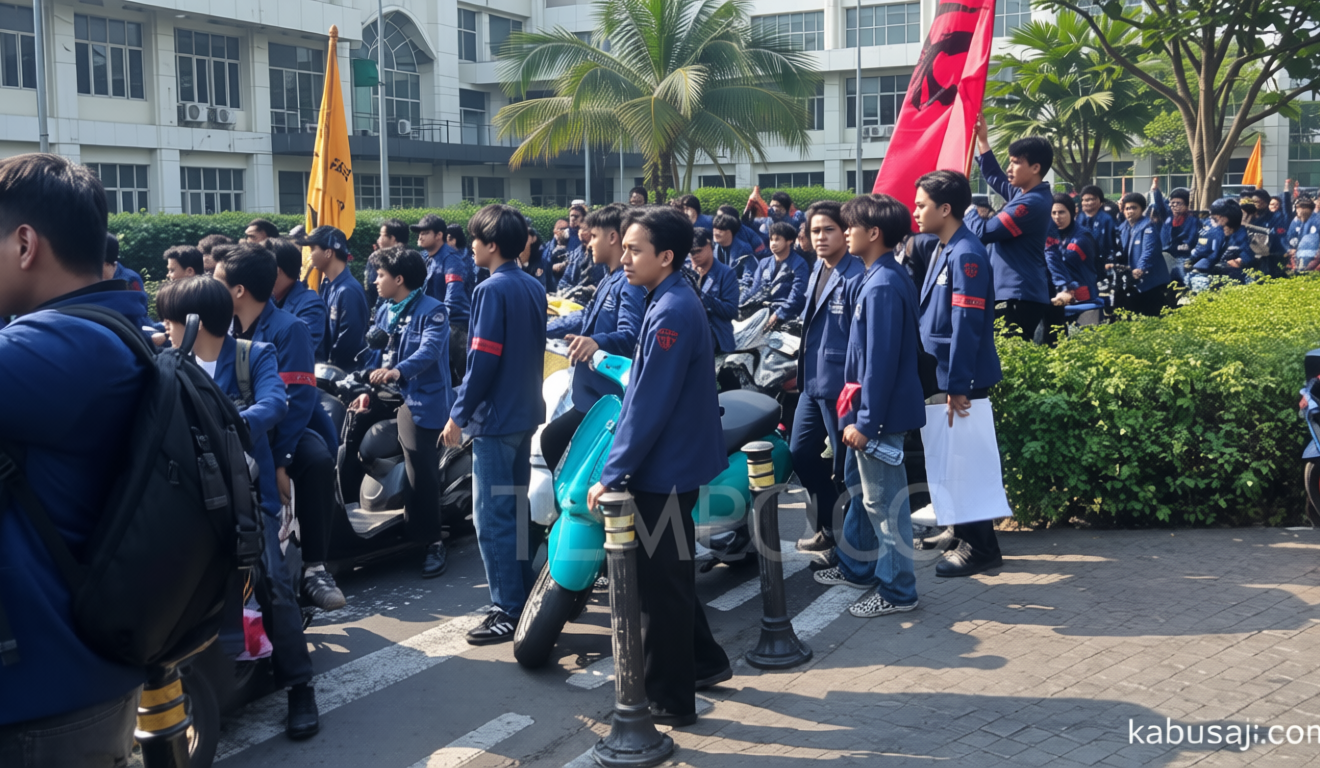
Thousands of Students Arrive at DPR Building – On June 19, 2026, a significant demonstration took place at the DPR (People’s Representative Council) building in Central Jakarta, as thousands of students from Trisakti and Esa Unggul universities converged on the site to participate in a planned protest. This event marked a pivotal moment in the ongoing political discourse, with young activists demanding systemic change and expressing frustration over recent government policies. The gathering was preceded by smaller groups of demonstrators from the Islamic Students Association (HMI) and Mercubuana University, who had arrived earlier in the day to set up the protest area and prepare for the large-scale demonstration.
The Protest’s Organizational Framework
The students’ arrival at the DPR building was not a spontaneous act but the result of meticulous coordination. Dressed in their signature blue blazers, the protesters organized themselves into a defensive ‘fortress’ formation as they marched down Gatot Subroto Street, a symbolic route to the parliamentary complex. Their chants echoed through the city, highlighting demands for accountability and transparency in governance. The protest, which began at approximately 04:00 p.m. local time, was a culmination of weeks of preparation, with organizers emphasizing the importance of unity and strategic planning in amplifying their message.
Key Demands and Public Sentiment
Once at the demonstration site, the unified student group engaged in speeches and public discourse, focusing on issues such as civilian supremacy and the perceived encroachment of the military into political affairs. The activists framed their demands as a response to growing public discontent, particularly in light of recent economic challenges and political scandals. Their call for the military to “return to the barracks” resonated with many citizens, reflecting a broader movement against the influence of armed forces in shaping national policies.
“We have been preparing for about two days, starting with consolidation efforts, identifying key issues, and strategizing how public frustration could evolve into a significant movement,” stated Arief Rizquna, a student representative from Trisakti University, prior to the protest. His remarks underscored the students’ commitment to addressing systemic challenges through organized action.
The rally was organized to tackle three primary objectives: economic and political recovery, the removal of ineffective state officials, and the restoration of civilian leadership. These themes were not only central to the students’ agenda but also mirrored the concerns of the wider public, who had grown weary of stagnation and corruption. Arief emphasized the need for a holistic approach to governance, grouping demands into these categories to create a cohesive narrative and ensure their message reached a broader audience.
Historical Context and Broader Implications
This protest was part of a larger wave of student-led movements that have increasingly shaped Indonesia’s political landscape in recent years. The involvement of Trisakti and Esa Unggul universities highlighted the growing influence of academic institutions in advocating for policy reforms. Historically, students have played a critical role in mobilizing public opinion and holding the government accountable, as seen in previous demonstrations over issues like corruption and human rights.
Moreover, the protest demonstrated the strategic importance of the DPR building as a focal point for political engagement. Located in the heart of Jakarta, the site symbolizes the intersection of legislative power and public dissent. By choosing this location, the students aimed to draw attention to the nation’s legislative processes and challenge the status quo. The event also showcased the diverse coalition of participants, with representatives from different universities and student groups uniting under a common cause.
As the protest unfolded, it attracted media coverage and public support, with many citizens expressing solidarity through social media and on-the-ground participation. The energy of the demonstrators, combined with their well-defined objectives, created a powerful statement about the urgency of reform. While the protest was peaceful, it underscored the intensity of the demands, with students calling for immediate action to address the nation’s most pressing issues.