
The Flawed Logic of State Threats
t Societal Biases The Flawed Logic of State Threats - In recent years, the concept of state threats has been increasingly tied to the inclusion of LGBTQ
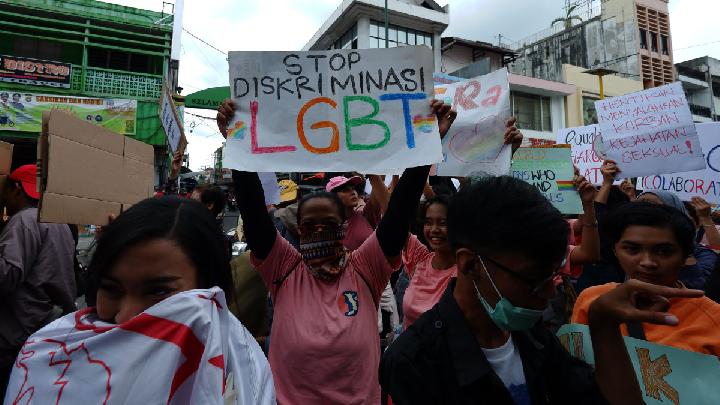
The Flawed Logic of State Threats: How Policies Reflect Societal Biases
The Flawed Logic of State Threats – In recent years, the concept of state threats has been increasingly tied to the inclusion of LGBTQ communities within national security frameworks. The Flawed Logic of State Threats has become a focal point in debates about how governments classify individuals as risks to stability. While traditional threats like terrorism or cyberattacks are often clearly defined, the categorization of LGBTQ people as non-military threats introduces a more subjective and culturally influenced approach. This shift has sparked significant discussion, particularly in Indonesia, where state policies are now being scrutinized for their alignment with societal prejudices and their potential impact on minority rights.
State Policies and the Expansion of Threat Definitions
The Flawed Logic of State Threats is evident in the 2025-2029 General State Defense Policy, which redefines threats to include cultural and moral dimensions. This expansion raises questions about the consistency of threat assessment, as it blurs the line between individual behavior and collective security. While physical and economic threats are typically grounded in measurable risks, the inclusion of LGBTQ culture as a potential threat hinges on ideological interpretations rather than empirical evidence. Critics argue that this redefinition not only oversimplifies complex social dynamics but also serves to legitimize existing biases under the guise of national defense.
For example, the Indonesian government’s recent classification of LGBTQ individuals as non-military threats has drawn attention to how state narratives can reinforce conservative values. This decision aligns with the advocacy of institutions like the Indonesian Ulema Council (MUI), which has used the policy to justify stricter social norms. However, the link between LGBTQ identity and national security remains tenuous. When a group that has long faced systemic discrimination is now framed as a threat, it highlights a broader trend of using policy to address societal anxieties rather than tackle root causes of conflict.
Historical Context and Societal Underpinnings
Historically, state threats have been defined by power structures that prioritize conformity and stability. The Flawed Logic of State Threats reflects this legacy, where marginalized groups are often labeled as risks to the social order. In Indonesia, this logic is deeply rooted in religious and traditional frameworks, which have shaped public perception of LGBTQ individuals for decades. By incorporating these social attitudes into defense policies, the state not only legitimizes prejudice but also shifts the focus from tangible security concerns to abstract cultural fears.
Moreover, the Flawed Logic of State Threats has been amplified by political agendas that seek to unify public opinion. In times of economic hardship or social unrest, governments may leverage such classifications to rally support for conservative policies. This strategy, while effective in maintaining legitimacy, risks perpetuating cycles of discrimination by conflating individual identity with collective security threats. The result is a framework that prioritizes ideological alignment over evidence-based reasoning, setting a precedent for future classifications.
Local governments in Indonesia have played a critical role in this process, enacting at least 45 discriminatory laws targeting LGBTQ individuals since 2023. These laws often reflect broader societal pressures, with state policies amplifying their reach and influence. The Flawed Logic of State Threats thus becomes a tool for systemic exclusion, where the state’s narrative shapes public discourse and legal actions. This has led to a situation where LGBTQ communities are not only stigmatized but also actively perceived as threats to national identity.
Ultimately, the Flawed Logic of State Threats raises important questions about the balance between security and inclusivity. By framing LGBTQ culture as a risk to stability, the state risks overshadowing the real challenges faced by these communities. The need for a more nuanced approach to threat assessment becomes clear, one that acknowledges the complexities of social change while ensuring that policies do not disproportionately target vulnerable groups. As the debate continues, the criteria for future state threats will likely shape the trajectory of minority rights in the years to come.
Read the Complete Story in Tempo English Magazine