Public Survey Finds Deep Anxiety Over Government Policies
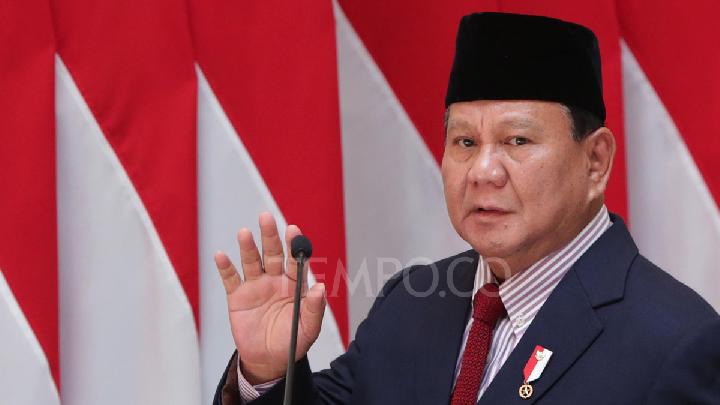
Kabarsaji.com – Survey – A nationwide survey has found that many Indonesians feel pressure from policies introduced during President Prabowo Subianto’s administration, with three-quarters of respondents saying government decisions have caused them stress.
The study, conducted by the Center of Economic and Law Studies (Celios) together with its Shadow Cabinet team, was presented on Sunday, October 11, 2026, during an evaluation of the Prabowo-Gibran administration’s first two years. It gathered views from 1,142 members of the public and 129 experts in different parts of Indonesia.
Among public respondents, 75 percent said government policies had made them feel stressed. A further 67 percent said they experienced stress related specifically to Prabowo’s behavior as president.
“The question was asked to the general public, with 1,142 respondents. The answers showed that 75 percent felt stressed by government policies, while specifically, 67 percent felt stressed by Prabowo Subianto’s behavior,” Bhima said during an online presentation.
Bhima Yudhistira, Celios executive director and the Shadow Cabinet’s finance and budget governance minister, said the results reflected broad concern about the direction of public policy and its everyday effects.
Low Marks From the Public and Experts
The research also asked respondents to assess the performance of Indonesia’s president and vice president. Prabowo received an average rating of 4.6 out of 10 from the public group, while the expert respondents gave him 2.8 out of 10.
Vice President Gibran Rakabuming Raka received a slightly higher public rating of 4.9, but experts gave him an average score of 2.2. Both figures remained below the midpoint of the 10-point scale.
“Both received scores below five,” said Bhima, who also serves as finance and budget governance minister in the Shadow Cabinet.
The difference between public and expert scores is notable. While neither group offered a passing assessment on the scale used in the survey, the expert panel was more critical of the administration than the wider public sample. The findings offer a snapshot of sentiment rather than an election forecast, but they point to a difficult political environment if dissatisfaction continues to affect household expectations.
Household Finances Dominate Concerns
Economic conditions were central to the survey’s negative assessments. Eighty-two percent of respondents described taxes and government levies as too heavy, making this the most widely shared concern recorded in the household economy section.
Rising prices for basic necessities were also a major source of anxiety, cited by 78 percent of those surveyed. For many households, the cost of food and other essential items is an immediate measure of whether economic conditions are improving or deteriorating.
More than half of the public respondents, or 53 percent, said their family’s financial circumstances were worse than a year earlier. Another 31 percent felt their situation had not changed, while 16 percent said their household economy had improved.
“As a result, 53 percent of the public consider their household’s economic condition worse than it was a year ago,” Bhima said.
These responses show that concerns over taxation, levies and daily living costs are closely connected to broader views of the administration. When households feel less secure financially, perceptions of government performance can be shaped by experiences such as paying bills, purchasing necessities and managing monthly expenses.
Questions Over Future Electoral Support
The survey also examined whether people who backed Prabowo in the 2024 presidential election would be willing to support him again. Within that voter group, 55 percent said they would not choose him in the next presidential contest.
Only 27 percent said they would vote for Prabowo again, while 19 percent had not reached a decision. The result suggests that support from past voters cannot automatically be treated as secure, especially when economic dissatisfaction remains prominent in public opinion.
Such survey results do not establish how Indonesians will vote in a future election. They do, however, provide an indication of how current policy concerns may influence political loyalty. Undecided voters and dissatisfied former supporters could become important audiences for future government communication and policy responses.
How the Research Was Conducted
Celios researcher Wahyu Media Askar said the latest study followed earlier assessments of the administration’s first 100 days and first year. The project took three months to complete, including the development of questionnaires, the collection of responses and the preparation of the final report.
Media Askar said the research was carried out independently and did not receive financial support from outside institutions or donors.
“We were not funded by any institution or donor. This is solely an academic contribution to evaluating the Prabowo-Gibran administration,” said Media Askar, who serves as economy minister in the Shadow Cabinet.
He stressed that the survey figures represented the opinions of the participants rather than the personal judgment of the researchers.
“Every figure produced by this study is not a figure from us as researchers, but an expression of the public and the experts involved,” he said.
Celios researcher Isnawati Hidayah said the public survey reached participants in provinces across Indonesia. Researchers recruited the 1,142 respondents through Meta Ads using non-probability sampling, then applied weighting intended to align the results with the population aged over 17.
The expert survey included 129 participants from academic and professional backgrounds and used snowball sampling. The research team tested the questionnaires through Cronbach’s alpha, the Kaiser-Meyer-Olkin measure and Bartlett’s test.
“The test results consistently show that the survey instruments are reliable and valid for addressing the research objectives,” Isnawati said.
For ministerial performance rankings, the researchers adapted Borda count theory through a positional scoring approach. The method resembles the system used for the Ballon d’Or awards, giving greater value to ministers who repeatedly receive high rankings from respondents.
Related Reading
Frequently Asked Questions
What is Survey?
Survey is the main topic of this guide. The article explains the context, practical details, and next steps readers should understand.
Why does Survey matter?
Survey matters because readers are looking for a useful answer, not just a short summary. Good content should match search intent and help them decide what to do next.