
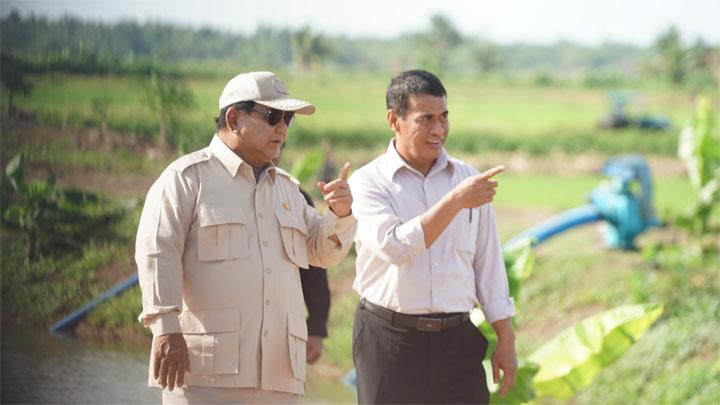
Merauke Food Estate Fires Raise Alarms Over Environmental and Social Costs
Kabarsaji.com – Forest and land fires sweeping through South Papua have exposed the growing risks surrounding the food self-sufficiency project in Merauke. Rather than strengthening regional resilience, large-scale land clearing linked to the program may be leaving the area more exposed to drought, smoke, ecological damage, and conflict over customary land.
By August 20, 2026, the indicative burned area across South Papua had reached 95,000 hectares, an assessment by the Madani Berkelanjutan Foundation found. That represents roughly 30 percent of all forest and land burned in Indonesia through that date. About half of the affected land lay inside the Merauke food self-sufficiency project area.
The fires have brought smoke pollution and health concerns for nearby communities. They have also intensified deforestation already associated with preparations for the project, which began in 2024. The government has planned to clear as much as 2 million hectares for the National Food, Energy, and Water Self-Sufficiency Area.
A National Goal With Local Consequences
Food security is an important public objective, but it cannot be separated from the condition of the land and the safety of people living around it. A project intended to support national self-sufficiency should not create a landscape that is increasingly prone to destructive fire.
The Merauke fires demand a response equal to their scale. National attention has been concentrated on fires in Kalimantan and Sumatra, where President Prabowo Subianto made visits from August 22 to 24. Merauke, despite the extent of the burned area and its connection to a flagship state program, has not received comparable presidential attention.
This imbalance matters. South Papua should not be treated as a peripheral concern when fires there are affecting forests, communities, and a major government development agenda. Emergency action, public accountability, and protection for residents must apply consistently across the country.
Questions Over the Cause of the Fires
Authorities need to establish what started the fires and how they spread. Deliberate burning remains one possibility. Hot, dry conditions are another, particularly during a dry season accompanied by a strengthening El Niño since June 2026. Each possibility requires a serious response.
If criminal activity played a role, investigators must pursue it as such. If dry weather was the main trigger, the explanation cannot end there. Drought alone does not answer why an area undergoing extensive land conversion became so combustible, nor does it remove the responsibility to examine whether development practices worsened the danger.
Forest loss can reshape water flows, reduce moisture retention, and change local ecological balances. When natural cover is removed, land may become more vulnerable during dry months. These changes can also affect conditions in the rainy season, demonstrating that the consequences of clearing extend beyond a single fire event.
Residents have described fires near Kilometer 55 on the access road to the rice-field development area. Their testimony alleges that the blaze began in wood from cleared land that had been stacked along the roadside before spreading into trees still standing around the project site.
Land clearing has at least created conditions that allowed the fire to spread and magnified its impact.
If that account is substantiated, the disaster cannot be framed simply as an unavoidable result of dry weather. The handling of cleared timber, the design of the project area, and the broader conversion of forest land would all require scrutiny. Development policy carries responsibility when it changes a landscape in ways that raise foreseeable risks.
Customary Land and Community Rights
The fire crisis has arrived on top of existing disputes over the Merauke food estate. Much of the territory targeted for food production is customary land. Indigenous communities have opposed the project because of concerns that it threatens the places where they live and sustain their livelihoods.
These objections are not separate from the environmental issues. Forests and customary territories are closely connected to community life, local knowledge, and access to natural resources. Clearing them can produce ecological losses while also deepening uncertainty for people whose rights and daily security depend on those landscapes.
Disaster risk is therefore not only a matter of weather. It can be shaped by policy choices, land-use changes, and the exclusion of communities from decisions affecting their territory. A project that generates agrarian tension while increasing exposure to fire carries costs that cannot be measured only through planned crop output.
A Necessary Pause for Review
The government should suspend further rice-field development and forest clearance in Merauke until a thorough assessment of ecological and social consequences has been completed. Such a review should address the causes of the fires, the treatment of cleared vegetation, changes to water systems, risks from prolonged dry conditions, and the rights of Indigenous communities.
Food self-sufficiency requires durable foundations. It cannot rest on policies that sacrifice forests, customary land, or public safety. Protecting food supplies and protecting ecosystems should be complementary goals, especially in a region where large-scale conversion is already affecting both people and the environment.
Merauke offers a clear warning: national development targets must be tested against their real effects on the ground. A self-sufficiency strategy that leaves communities breathing smoke and landscapes vulnerable to repeated fire is not delivering the security it promises.
Related Reading
Frequently Asked Questions
What is Self Sufficiency Project Brings Disaster?
Self Sufficiency Project Brings Disaster is the main topic of this guide. The article explains the context, practical details, and next steps readers should understand.
Why does Self Sufficiency Project Brings Disaster matter?
Self Sufficiency Project Brings Disaster matters because readers are looking for a useful answer, not just a short summary. Good content should match search intent and help them decide what to do next.