High-Speed Rail Debt Raises New Questions Over Public Accountability
Kabarsaji.com – Indonesia’s effort to resolve the debt surrounding the Whoosh high-speed rail project is moving toward a decision that could shift financial responsibility away from the most visible channels of state budgeting. While the government considers ways to restructure the obligation, the central concern is not simply where the debt will be placed, but whether the public will still be able to clearly scrutinize the cost.
The Jakarta-Bandung high-speed rail has become a major financial and policy challenge. Its difficulties extend beyond the size of the loans involved. The project continues to generate operating losses while the companies connected to it face long-term repayment obligations to China, creating pressure for the government to find a workable arrangement without directly worsening the state’s finances.
Losses and Long-Term Repayments
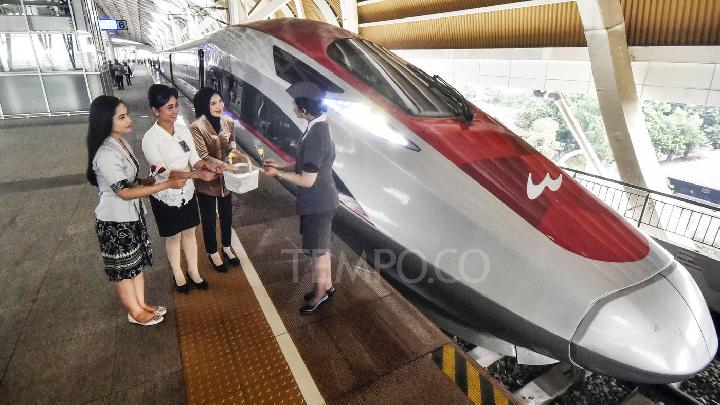
Whoosh has operated for three years, yet passenger traffic remains below the level needed to support its business model. The service is estimated to be losing between Rp4 trillion and Rp5 trillion annually. Daily ridership has reached only about half of the stated ideal level of 31,000 passengers.
The limited demand reflects the practical realities of travel between Jakarta and Bandung. The distance is relatively short, and travelers can choose from less expensive transport options. Within both cities, passengers also need to consider the time and cost required to reach stations and complete their journeys, factors that affect the rail service’s overall appeal.
Those operational deficits are only one part of the problem. The consortium linked to the project must also meet annual loan installments estimated at Rp2 trillion. The debt was provided by the Chinese government, and repayments are scheduled over an 80-year period.
Kereta Api Indonesia and three other companies in the Pilar Sinergi BUMN Indonesia, or PSBI, consortium own shares in Kereta Cepat Indonesia China, the company operating the Whoosh service. Their financial exposure has made the search for a restructuring plan increasingly urgent.
Three Paths Under Consideration
The Ministry of Finance is examining three possible structures for taking over PSBI’s ownership stake. Each approach may move the burden to a different institution, but none removes the underlying cost of the high-speed rail project.
The first proposal would transfer PSBI’s shares to the Indonesia Investment Authority, or INA. As the state investment agency, INA manages funds intended for investment purposes. Placing the Whoosh obligation within INA could mean that investors associated with the agency would also carry exposure to the rail project’s debts.
A second proposal involves a new joint venture between INA and Sarana Multi Infrastruktur, known as SMI. SMI is a state-owned enterprise under the Ministry of Finance that provides infrastructure financing for regional projects. If it assumes part of the high-speed rail burden, money generated through its regular business activities could be drawn into covering the project’s liabilities.
The third option would place responsibility with Danantara, the holding company for state-owned enterprises. This could reorganize the debt within the state-enterprise sector, but it would still leave the government dealing with the same fundamental financial obligations.
A Burden That Does Not Disappear
Changing the institution responsible for the shares does not erase the losses, the repayment schedule, or the broader public exposure. INA, SMI, and Danantara all handle resources connected to the state. Their funds ultimately originate from public finances and the State Budget.
The concern is that the proposed arrangements could move the issue into a quasi-fiscal area: an obligation that is still connected to government resources but is less directly addressed through the ordinary budget process. In that setting, the financial impact may remain real while parliamentary oversight becomes less immediate.
Public accountability matters especially when a project has implications lasting decades. Decisions involving state assets, state-owned companies, and public investment institutions should not make it harder for citizens and lawmakers to understand who bears the risk, how much money is involved, and what commitments are being made.
A restructuring package may be necessary to prevent wider disruption among the companies involved. But the solution should not be designed merely to make the problem less visible. Transparency is essential because the consequences will continue long after any administrative transfer of shares has been completed.
The Original Policy Decision Still Matters
The debt debate also returns attention to the political origins of the project. Joko Widodo, during his presidency, backed the Jakarta-Bandung route after the earlier Jakarta-Surabaya high-speed rail plan was changed. The project was advanced with the assurance that it would not place a burden on state finances.
That assurance now appears difficult to reconcile with the current situation. The project’s operating losses and long-term debt exposure have brought the financial risk back into the orbit of the State Budget. Critics argue that the original planning did not adequately account for commercial viability, demand, and the public risks that would emerge if projected revenue failed to materialize.
The Jakarta-Bandung route was presented as a landmark infrastructure undertaking. Yet large projects require more than ambition and symbolic value. They require credible feasibility studies, realistic passenger forecasts, clear funding arrangements, and an honest assessment of what happens if expected returns do not arrive.
The government’s immediate task is to prevent the debt issue from damaging other public institutions. Its larger obligation is to ensure that the restructuring process remains open to public examination. Transferring liabilities among state-linked bodies cannot substitute for a transparent accounting of the costs.
Accountability Beyond Restructuring
The Whoosh case should also prompt scrutiny of how the project was approved and implemented. State authorities should examine whether decisions were made with sufficient care, whether commitments to protect public finances were met, and whether any legal responsibility arises from the project’s development.
Without meaningful accountability, future administrations could be tempted to pursue similarly expensive ventures for prestige or legacy while leaving financial consequences to their successors. The lesson from the high-speed rail debt is clear: public funds must remain subject to public oversight, regardless of the institution assigned to carry the burden.
Related Reading
Frequently Asked Questions
What is Quasi Fiscal Burden of High Speed?
Quasi Fiscal Burden of High Speed is the main topic of this guide. The article explains the context, practical details, and next steps readers should understand.
Why does Quasi Fiscal Burden of High Speed matter?
Quasi Fiscal Burden of High Speed matters because readers are looking for a useful answer, not just a short summary. Good content should match search intent and help them decide what to do next.