
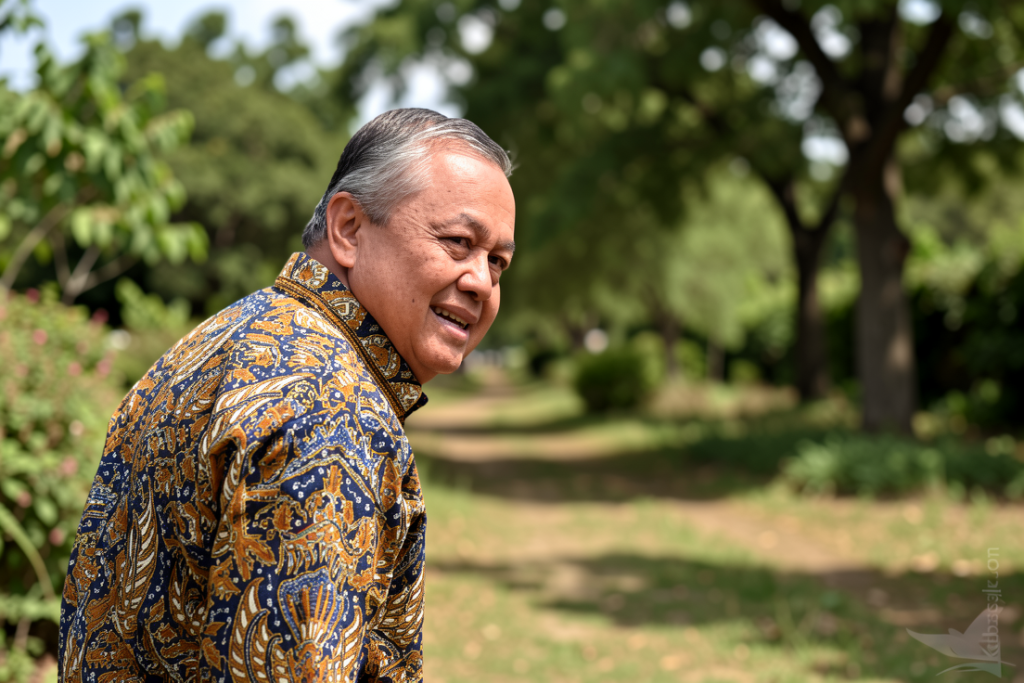
Outgoing BI Chief Sends Farewell Words as Destry Damayanti Takes the Helm
Kabarsaji.com – The leadership transition at Indonesia’s central bank reached its final formal stage on Tuesday, September 1, 2026, when the House of Representatives (DPR) plenary session voted to confirm Destry Damayanti as the new Governor of Bank Indonesia. Hours after the parliamentary approval, Perry Warjiyo — the man who had led the institution until late July — broke his post-departure silence with a written statement addressed to his successor and the incoming Board of Governors.
A First Public Voice Since Stepping Down
Warjiyo had announced his voluntary resignation on Monday, July 27, 2026, attributing the decision to personal reasons. His departure left a brief vacuum at the top of the central bank, filled temporarily by Destry Damayanti in an acting capacity. That interim period ended once President Prabowo Subianto formally nominated Destry as the sole candidate for the governorship and the DPR completed its confirmation process.
The written statement released on September 1 represents Warjiyo’s first public communication since he relinquished the central bank’s leadership. In it, the former governor extended congratulations to Destry on her appointment for the 2026–2031 term, and simultaneously acknowledged the two other members joining the new Board: Aida S. Budiman, designated Senior Deputy Governor, and Solikin M. Juhro, designated Deputy Governor.
“I hope the new Board of Governors can strengthen Bank Indonesia’s mandate to preserve stability and support sustainable economic growth amid ongoing global turbulence,” Perry stated on Tuesday, September 1, 2026.
What the Transition Means for Monetary Policy
Bank Indonesia occupies a singular position in the Indonesian economy: it sets the benchmark interest rate, manages the rupiah exchange rate, oversees the payment system, and acts as lender of last resort to the banking sector. A change at the governor’s chair therefore carries immediate implications for market expectations, foreign investor confidence, and the trajectory of monetary policy through the remainder of the decade.
The phrase “ongoing global turbulence” in Warjiyo’s remark points to a well-documented environment of elevated policy-rate uncertainty in major advanced economies, periodic capital-flow volatility into emerging markets, and commodity-price swings that affect Indonesia’s trade balance. For a country whose rupiah has experienced episodic pressure in recent years, continuity of a credible inflation-anchoring framework is arguably the single most important signal the new board can send to domestic and international markets.
Destry Damayanti’s appointment follows a standard constitutional pathway: presidential nomination, DPR hearing and vote, and formal installation. Her prior service as acting governor during the weeks between Warjiyo’s exit and the parliamentary confirmation gave her a direct operational handover, reducing the risk of a policy discontinuity that sometimes accompanies abrupt leadership changes at central banks.
Warjiyo’s Tenure in Brief
Perry Warjiyo served as Bank Indonesia Governor from 2019 through late July 2026. His tenure spanned the post-pandemic recovery phase, a period of aggressive global monetary tightening, and Indonesia’s own efforts to balance growth targets with inflation containment. He had previously held senior roles within the central bank before assuming the governorship, giving him deep institutional knowledge of the agency’s internal architecture.
In his farewell words, Warjiyo also expressed gratitude for what he described as the trust placed in him throughout his years at the central bank — a conventional but pointed acknowledgment of the political and institutional support required to carry out independent monetary decisions in a developing-market context.
“May Almighty God continually grant grace and protection to Bank Indonesia in fulfilling its mandate for the progress of the national economy,” Perry added.
The Broader Political Context
The confirmation took place under President Prabowo Subianto’s administration, which had earlier submitted Destry Damayanti as the exclusive nominee for the governorship. The single-candidate approach, while legally permissible under Indonesia’s central-bank governance framework, narrows the DPR’s deliberative role to a confirmation vote rather than a comparative selection. Critics of such practices have long argued that competitive nomination strengthens institutional independence by insulating the governor from the perception of owing the seat to a single political patron. Supporters counter that a streamlined process accelerates continuity and avoids the uncertainty that multi-candidate contests can introduce into currency markets.
Regardless of the procedural debate, the practical effect of Tuesday’s vote is clear: Bank Indonesia now enters the final stretch of the 2026–2031 policy cycle under a new leadership team. The incoming board inherits a rupiah that has shown resilience but remains sensitive to external shocks, an inflation trajectory that the agency has kept within its target band, and a global macro environment that continues to shift with each major central bank’s rate decision. How Destry Damayanti, Budiman, and Juhro navigate those conditions over the coming five years will define the next chapter of Indonesian monetary policy.
Related Reading
Frequently Asked Questions
What is Perry Warjiyo s Message to New Bank?
Perry Warjiyo s Message to New Bank is the main topic of this guide. The article explains the context, practical details, and next steps readers should understand.
Why does Perry Warjiyo s Message to New Bank matter?
Perry Warjiyo s Message to New Bank matters because readers are looking for a useful answer, not just a short summary. Good content should match search intent and help them decide what to do next.