
Papua Rights Group Urges Prabowo to Review Troop Deployment
Papua Rights Group Urges Prabowo to Review Troop Deployment Papua Rights Group Urges Prabowo to Review - On July 6, 2026, the Papua Human Rights and Justice
Papua Rights Group Urges Prabowo to Review Troop Deployment
Papua Rights Group Urges Prabowo to Review – On July 6, 2026, the Papua Human Rights and Justice Foundation (YKKMP), a key advocacy group representing the rights of indigenous Papuan communities, issued a formal appeal to Indonesian President Prabowo Subianto. The group emphasized that the current military deployment in Papua has intensified ethnic tensions and raised concerns about the disproportionate impact on civilian populations. By urging Prabowo to reassess the strategic use of non-organic forces, the YKKMP seeks to address the ongoing humanitarian crisis and promote a more inclusive approach to conflict resolution in the region.
Context of the Conflict and Military Strategy
The call for review comes amid heightened unrest in Papua, a region long marked by disputes over autonomy and cultural preservation. The YKKMP, which has been actively documenting human rights violations since its establishment, argues that the recent surge in military personnel—now totaling 83,177 combined TNI and Polri forces—has not led to improved security but rather to increased civilian casualties and displacement. The group highlights that the deployment strategy prioritizes force over dialogue, undermining efforts to achieve long-term peace and self-governance.
The Incident in Sobaham District
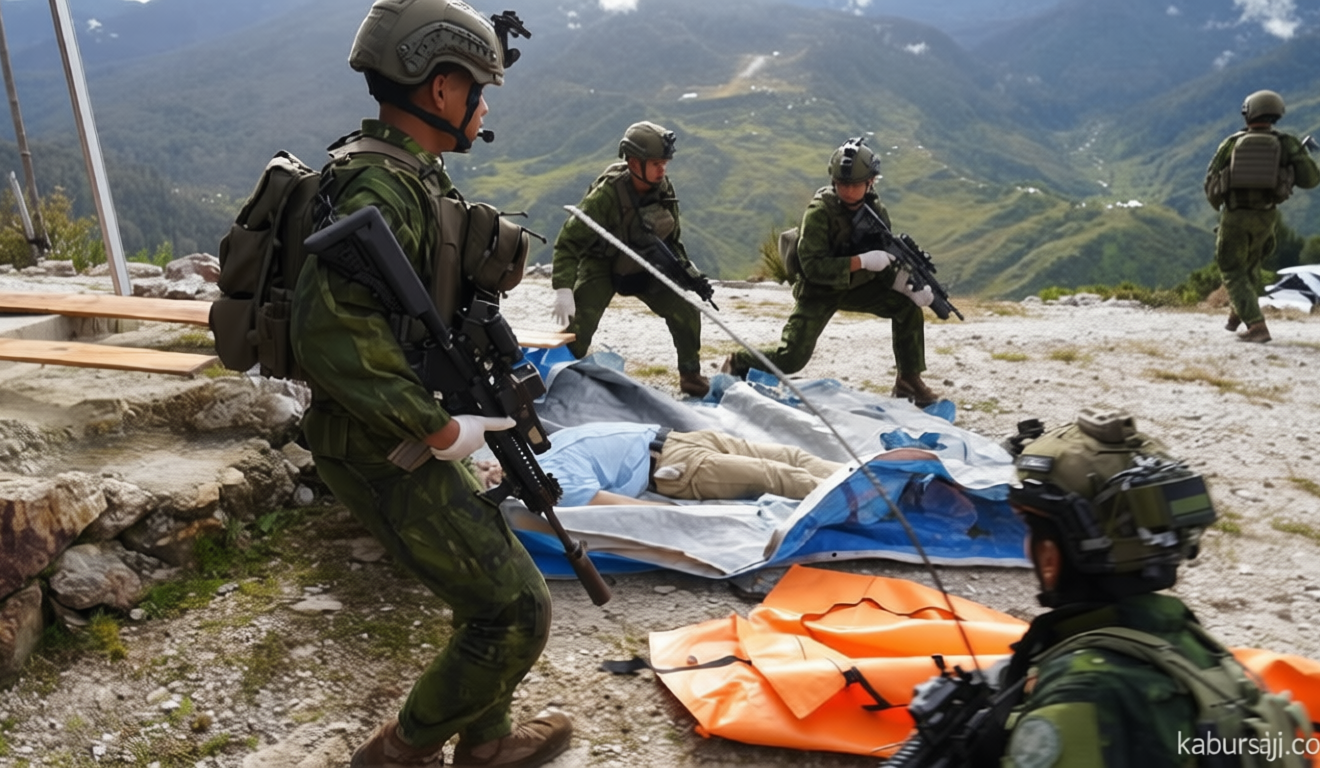
On July 2, 2026, a tragic event unfolded in Sobaham District, Yahukimo Regency, when American pilot Nicholas F. Goselin was killed by the West Papua National Liberation Army-Free Papua Organization (TPNPB-OPM). The group claimed that the aircraft was transporting supplies for the Indonesian National Armed Forces (TNI), a statement that has fueled debates about the legitimacy of military operations in the area. Theo Hesegem, the YKKMP’s executive director, used this incident to underscore the urgent need for Prabowo to reevaluate the region’s security posture.
“The security approach leads to civilian casualties, forced displacement, and worsening humanitarian conditions across Papua,” Theo stated in his written remarks. This incident exemplifies how military actions, even those targeting perceived threats, can have devastating consequences for the local population. The YKKMP has consistently urged Prabowo to adopt a more balanced strategy that accounts for both security and human rights.”
Humanitarian and Operational Concerns
Civilian pilots play a critical role in maintaining the flow of humanitarian aid and essential services in Papua’s remote and rugged terrain. Theo stressed that these individuals are not only vital to transporting medical supplies and food but also to supporting education and community projects. The recent attack on Goselin has disrupted this vital network, with the YKKMP warning that the continued presence of non-organic troops threatens the safety of those working to improve living conditions in the region.
Legal and Ethical Implications
Under international humanitarian law, civilian pilots are classified as non-combatants unless directly involved in hostilities. The YKKMP points to this legal framework as a basis for their demands, arguing that the Indonesian government must ensure the protection of such individuals. The attack on Goselin raises questions about the adherence to these principles, particularly in a region where the conflict has persisted for decades. Theo called on Prabowo to review the troop deployment to align with global standards for conflict resolution.
Government and Military Responses
Coordinating Minister for Political, Legal, and Security Affairs Djamari Chaniago defended the government’s decision, stating that the military presence is necessary to maintain stability. “The shooting has disrupted daily life, as air transport is critical for the people of Papua,” he said. However, the YKKMP remains critical, citing the involvement of the Kodap XVI Yahukimo militia under Elkius Kobak as evidence of the complex dynamics at play. The group’s spokesperson, Sebby Sambom, noted that the attack was justified by the belief that the aircraft was carrying TNI logistics, a claim that has sparked further scrutiny of the military’s operations.
As of 2025, Project Multatuli reported that 83,177 personnel from the TNI and National Police (Polri) are stationed in Papua. This figure includes 56,517 TNI soldiers and 26,660 Polri officers, highlighting the scale of the military’s involvement. The YKKMP argues that this deployment has created a cycle of violence, with each escalation prompting renewed calls for Prabowo to prioritize civilian protection and engage in meaningful dialogue with Papuan representatives.
Call for Dialogue and Future Implications
Tempo attempted to contact Minister of State Secretary Prasetyo Hadi for further clarification but received no response. The YKKMP’s appeal to Prabowo is part of a broader movement advocating for peace in Papua, where the conflict has claimed countless lives and disrupted local economies. The group’s repeated emphasis on the need for the president to review troop deployment underscores their belief that a more nuanced approach is essential to achieving lasting reconciliation. As the situation in Papua continues to evolve, the urgency of this call remains undiminished.