
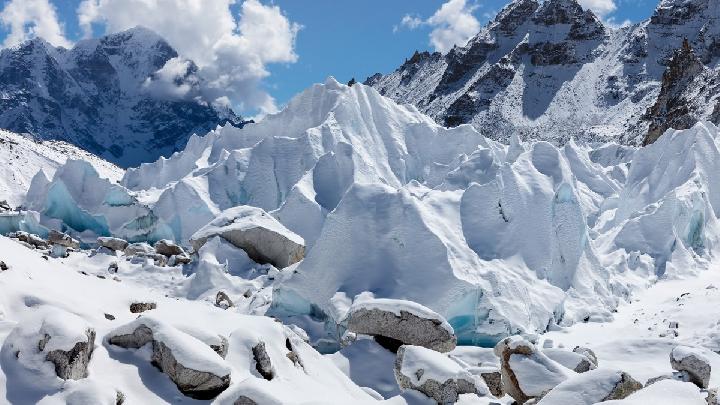
Avalanche Strikes Himlung Himal Base Camp in Nepal
Kabarsaji.com – An avalanche at the base camp of Himlung Himal in Nepal has killed two climbing guides and left at least 14 expedition workers unaccounted for, as severe weather continues to affect mountain regions across the country.
The incident occurred on Sunday morning at the 7,126-meter Himlung Himal, near Nepal’s border with Tibet. Heavy rain and snowfall had swept through the region for several days before the avalanche, creating dangerous conditions for people working at high altitude.
Those caught in the disaster were not visiting climbers. They were guides and support workers employed by Nepalese expedition companies, preparing the base camp before paying customers arrived to attempt the mountain.
Guides Found Dead as Search Continues
The Nepal National Mountain Guide Association said the missing group included kitchen workers and climbing guides from more than one company. Two guides were later located, but neither survived.
“There were a total of 14 kitchen staff members and two climbing guides from different companies who were missing,” the Nepal National Mountain Guide Association said. “The two climbing guides have been found, but sadly, both were found deceased.”
It remained unclear how many people were at the camp when the avalanche struck. Local police placed the number at no fewer than 22, while details from the remote site were still incomplete because communications had been disrupted.
Search and rescue teams have begun operations in the affected area. Bibhuti Chand Thakur, who heads the trekking company Himalayan Holidays Nepal, said rescuers were working under difficult conditions and that a final count of survivors and missing workers was not yet available.
“The chance of survival remains high because of fresh snow,” Thakur said.
Fresh snow can sometimes preserve air spaces around people buried in an avalanche, but it also complicates rescue work. Teams must move quickly while dealing with unstable snow, poor access routes, harsh weather, and limited communication from isolated camps.
Weather Disrupts Mountain Travel
Authorities had already issued warnings for severe weather across Nepal over the weekend. Rainfall had affected broad areas of the country since Thursday, while higher northern districts received snow. The weather interrupted road travel and trekking routes, and officials suspended climbing and trekking activity on several mountains.
For expeditions in the Himalayas, base camps are essential operational hubs. Before climbers arrive, staff transport supplies, establish tents, prepare food areas, arrange equipment, and support acclimatization plans. The work is often carried out in exposed terrain where conditions can change rapidly.
The Himlung Himal emergency highlights the risks faced by the guides, cooks, porters, and logistical workers whose labor supports Nepal’s mountaineering industry. Their responsibilities frequently begin well before clients enter the mountains and continue through periods of unpredictable weather.
Nepal holds eight of the world’s 14 peaks above 8,000 meters. Trekking and mountaineering draw international visitors and provide an important source of income for communities, tourism businesses, guides, and expedition operators. At the same time, the country’s mountain economy depends on safe access to trails, roads, camps, and high-altitude routes.
Remote Terrain Slows Confirmation Efforts
In a disaster at a remote Himalayan base camp, early figures can change as rescue teams reach new areas and companies account for their workers. Differences in the initial estimates may reflect the difficulty of establishing contact with camps scattered across challenging terrain.
Emergency operations will need to determine who was present, locate those still missing, and assess whether further avalanche danger could threaten rescue personnel. Continued snowfall and poor conditions can make helicopter flights, ground travel, and communication more difficult.
The avalanche comes while Nepal is still recovering from destructive flooding in August that killed more than 1,400 people and left thousands missing. The recent floods and the latest mountain emergency underscore how extreme weather can disrupt communities and transport links across both lowland and high-altitude parts of the country.
Families of the missing workers and expedition companies are awaiting clearer information as the search proceeds. For now, authorities and rescue teams face a race against time in one of the world’s most demanding mountain environments.
Related Reading
Frequently Asked Questions
What is Nepal Avalanche Kills at Least 2 Leaves?
Nepal Avalanche Kills at Least 2 Leaves is the main topic of this guide. The article explains the context, practical details, and next steps readers should understand.
Why does Nepal Avalanche Kills at Least 2 Leaves matter?
Nepal Avalanche Kills at Least 2 Leaves matters because readers are looking for a useful answer, not just a short summary. Good content should match search intent and help them decide what to do next.