Iran Supreme Leader Mojtaba Khamenei Vows Revenge for Father’s Death
Iran Supreme Leader Mojtaba Khamenei Vows Revenge for Father's Death Iran Supreme Leader Mojtaba Khamenei Vows - The Iran Supreme Leader Mojtaba Khamenei has
Iran Supreme Leader Mojtaba Khamenei Vows Revenge for Father’s Death
Iran Supreme Leader Mojtaba Khamenei Vows – The Iran Supreme Leader Mojtaba Khamenei has formally announced his commitment to exact vengeance following the tragic assassination of his father, Ayatollah Ali Khamenei. This declaration, made in a solemn address, underscores the deep emotional and political resonance of the event within Iran’s leadership structure. The attack, which took place on February 28, 2024, has reignited tensions between the Islamic Republic and its regional rivals, particularly the United States and Israel. As the Iran Supreme Leader Mojtaba Khamenei speaks out, his message has been interpreted as a call to arms for the nation, reflecting a strategic shift in the country’s approach to retaliatory actions. The incident not only marks a personal loss for the family but also signals a potential escalation in Iran’s military and diplomatic posture against perceived aggressors.
A Political and Personal Legacy
Ayatollah Ali Khamenei, who served as the Iran Supreme Leader for over three decades, was a central figure in shaping Iran’s post-revolutionary policies. His assassination, which targeted both his life and his ideological influence, has been widely seen as a calculated strike to destabilize the regime. The Iran Supreme Leader Mojtaba Khamenei, now stepping into the role of his father, has emphasized that the attack is not just a personal grievance but a symbolic blow to Iran’s sovereignty. In a statement released by state media, he asserted that the international community, particularly the United States and Israel, must be held accountable for the loss of his father. This sentiment has been echoed by senior Iranian officials, who have framed the attack as an act of aggression against the nation’s spiritual and political core.
Global Reactions and Strategic Implications
The assassination of Ayatollah Ali Khamenei has drawn immediate reactions from global leaders and international organizations. The United Nations expressed concern over the incident, calling it a “grave threat to regional stability.” Meanwhile, European nations have urged diplomatic restraint, emphasizing the need for dialogue to prevent further escalation. The Iran Supreme Leader Mojtaba Khamenei, however, has remained resolute, vowing to pursue justice through targeted strikes and strengthened alliances. His leadership has been instrumental in maintaining Iran’s strategic position in the Middle East, and the assassination is expected to reinforce his authority as he consolidates power in the aftermath of the tragedy.
Analysts suggest that the attack could have long-term implications for U.S.-Iran relations, particularly in the context of ongoing negotiations over the Joint Comprehensive Plan of Action (JCPOA). The Iran Supreme Leader Mojtaba Khamenei’s focus on retaliation may shift the discourse from diplomatic concessions to a more confrontational stance. Additionally, the involvement of Israel in the attack has raised questions about the extent of its collaboration with the United States in targeting Iran’s leadership. These geopolitical dynamics are likely to influence the next phase of Iran’s foreign policy, with the leader’s determination to avenge his father serving as a key driver of strategic decisions.
Historical Precedents of Revenge in Iranian Leadership
Historically, the theme of revenge has been a defining element in Iran’s leadership. Ayatollah Ali Khamenei himself was known for his unyielding stance against perceived enemies of the Islamic Republic, a legacy that his son now inherits. The assassination of a supreme leader’s father is not an isolated incident; it echoes past events where familial ties have been leveraged to unify the nation against common foes. For instance, the death of Iran’s founder, Ayatollah Ruhollah Khomeini, in 1989 galvanized the country’s revolutionary spirit and shaped the policies of his successors. This pattern of using personal loss to rally national support is likely to be a significant factor in the Iran Supreme Leader Mojtaba Khamenei’s strategy moving forward.
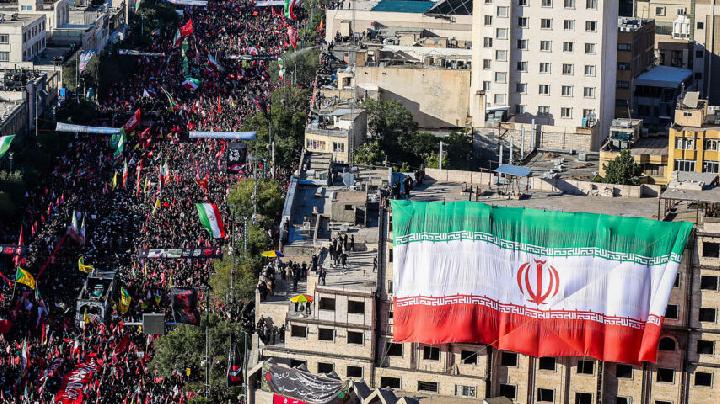
Within the Islamic Republic, the Khamenei family has long been a symbol of continuity and ideological strength. Mojtaba Khamenei’s ascension to the role of Iran Supreme Leader Mojtaba Khamenei has been marked by a mix of reverence and political calculation. His declaration of revenge has been met with widespread support among the Iranian populace, who view it as a necessary response to the attack. The state media has played a crucial role in amplifying this message, broadcasting continuous coverage of the funeral processions and the leader’s speeches to maintain public morale. This coordinated narrative has been essential in ensuring that the nation remains united in its resolve to counter the perceived threats to its leadership.
International Community’s Response
The international community has reacted with a mix of alarm and caution to the Iran Supreme Leader Mojtaba Khamenei’s vow of revenge. While some nations have condemned the attack, others have expressed concern about the potential for a broader conflict. The United States, which was implicated in the assassination, has faced criticism for its role in the operation, though it has defended its actions as part of a broader campaign to weaken Iran’s influence in the region. Meanwhile, Russia and China have called for restraint, urging the Iran Supreme Leader Mojtaba Khamenei to pursue diplomacy rather than military escalation. This divergence in responses highlights the complex web of alliances and rivalries that define current international relations.
Regional leaders, including those in Iraq and Lebanon, have also weighed in on the situation. They view the assassination as a strategic blow to Iran’s influence in the Middle East, particularly in its support for militant groups like Hezbollah and the Islamic Revolutionary Guard Corps (IRGC). The Iran Supreme Leader Mojtaba Khamenei’s emphasis on retaliation has been seen as a way to reaffirm Iran’s commitment to its allies and deter further attacks. As the funeral of Ayatollah Ali Khamenei continues, the nation is poised to enter a new era of assertiveness, with the leader’s resolve to seek vengeance serving as a unifying force in the face of global uncertainty.