
Indonesia Tests Brazilian Fire Suppressant as Peatland Response Intensifies
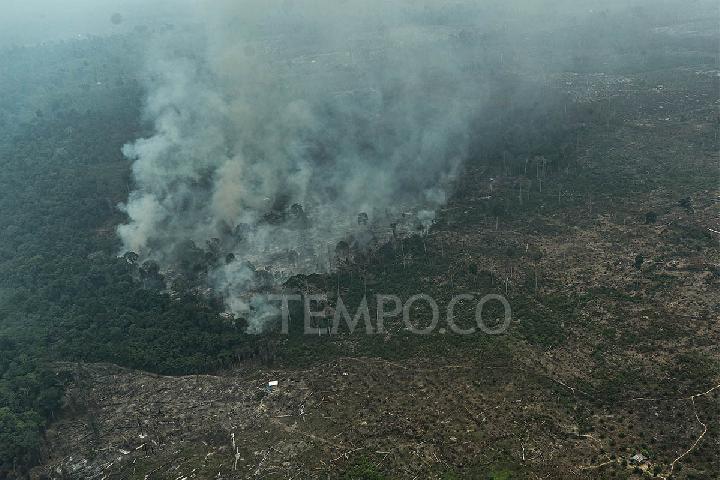
Kabarsaji.com – Indonesia is broadening its response to forest and land fires by testing a Brazilian-made extinguishing liquid in fire-prone areas of South Sumatra, while aerial and ground operations continue in several regions.
The trial is part of a wider effort to contain fires quickly, particularly where peatland conditions can allow flames and smoke to spread across difficult terrain. Authorities are combining helicopter operations with personnel-led work on the ground as they assess which methods can most effectively limit the damage.
Coordinating Minister for Political and Security Affairs Dudung Abdurachman said Brazil had provided a sprayable liquid designed to settle over burning areas and help put out flames. The material has already undergone testing in South Sumatra and Kalimantan.
“Hopefully, this effort will continue so that the fires can be extinguished quickly,” Dudung said.
The Brazilian product, identified as Realiza Anti Chamas, is supplied as a powder that is mixed with water before being sprayed onto a fire. Its use was tested in Banyuasin, South Sumatra, where peatland fires have been a major concern. The intended purpose is not only to suppress active flames but also to reduce the risk of a fire expanding beyond its initial area.
Air and Ground Teams Remain Central to Operations
Dudung said he planned to visit areas affected by the fires, including South Sumatra, to review the progress of field operations. The government’s immediate strategy relies on more than one form of intervention because conditions can differ greatly between locations.
Helicopters are being used for firefighting from the air, while deployed personnel are undertaking manual work at ground level. Air operations can reach remote or inaccessible sites, while teams on the ground can respond directly to hotspots and help prevent flames from moving into nearby areas.
“By air, using helicopters. Manual operations will also be carried out by the personnel who will be involved,” Dudung said.
The use of a new extinguishing agent reflects an attempt to strengthen the available toolkit rather than replace existing firefighting methods. Water-based aerial drops, ground crews, local coordination, and prevention measures remain part of the larger response.
Peatland fires present a particular challenge because burning can persist below the surface even when visible flames appear to have weakened. This makes continued monitoring important after an initial suppression effort, especially in areas where dry conditions can support renewed fire activity.
President Calls for Coordinated Action
Presidential Chief of Staff Listyo Sigit Prabowo said the government is continuing to monitor the situation and evaluate steps that could accelerate firefighting efforts. President Prabowo Subianto has directed the Indonesian Military, National Police, regional administrations, relevant ministries, and the Forestry Ministry’s Manggala Agni fire-control force to maintain their response.
The instruction places responsibility across national and local institutions, recognizing that fire management involves emergency action, coordination in affected districts, public communication, and longer-term prevention work.
“Everything is being ramped up, from air and ground task forces to public outreach, education, and regulatory improvements,” Listyo said.
Authorities are also increasing public outreach and education efforts. These measures are intended to help communities understand fire risks and support prevention before small incidents develop into broader emergencies. Regulatory improvements are under review as part of the same effort to reduce future impacts.
Listyo said this includes plans connected to the former Peatland Restoration Agency, with the goal of creating a more flexible body able to respond to and prevent forest fires. Such an approach would place emergency suppression alongside prevention and peatland protection, rather than treating each fire only as an isolated event.
Why the Trial Matters
The South Sumatra test will help authorities determine whether the Brazilian-made material can provide practical support in Indonesian firefighting operations. Its value will depend on how it performs under local conditions, how it can be deployed alongside existing equipment, and whether it helps slow the spread of fire in vulnerable landscapes.
Indonesia’s current approach emphasizes speed, coordination, and the use of multiple methods. Aerial teams can support large-scale operations, while personnel on the ground can address fires closer to affected communities and work through areas that aircraft may not fully reach.
For residents in areas exposed to haze and land fires, the response carries consequences beyond the immediate flames. Faster containment can help reduce disruption to daily life, protect surrounding land, and limit the broader effects of prolonged smoke. The government’s testing of additional firefighting resources signals that authorities are seeking options that can reinforce their existing capacity during active fire periods.
As operations continue in South Sumatra, Kalimantan, and other affected regions, officials are expected to keep reviewing the effectiveness of aerial drops, ground deployment, public awareness programs, and the newly tested extinguishing agent. The immediate objective remains bringing active fires under control while strengthening measures intended to prevent future outbreaks.
Related Reading
Frequently Asked Questions
What is Indonesia Considers Brazilian Made Liquid to Fight?
Indonesia Considers Brazilian Made Liquid to Fight is the main topic of this guide. The article explains the context, practical details, and next steps readers should understand.
Why does Indonesia Considers Brazilian Made Liquid to Fight matter?
Indonesia Considers Brazilian Made Liquid to Fight matters because readers are looking for a useful answer, not just a short summary. Good content should match search intent and help them decide what to do next.