Indonesia’s Stock Exchange Pushes Rp1 Minimum Share Price, Eyes Global Index Buy-in
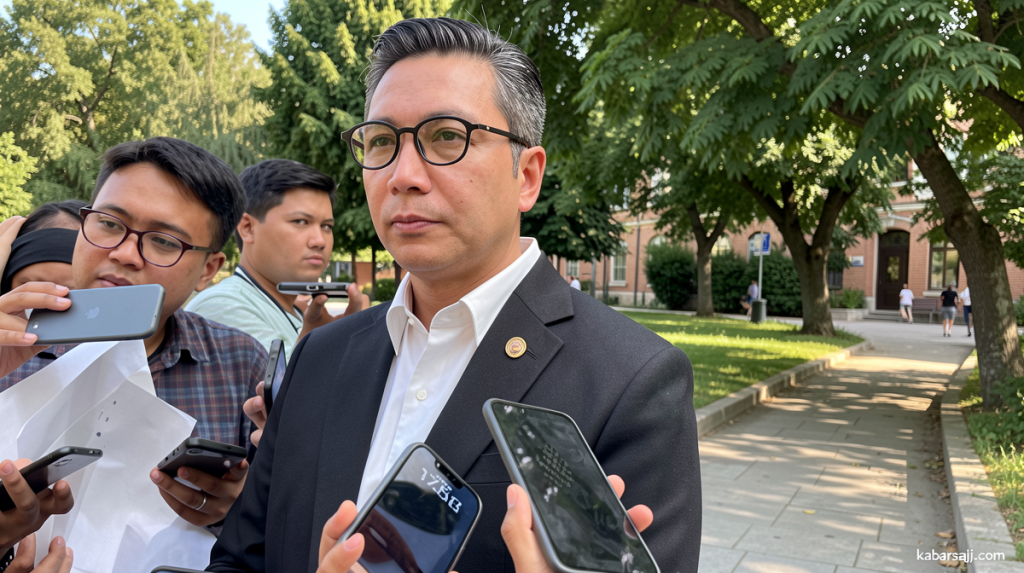
Kabarsaji.com – The Indonesia Stock Exchange (IDX) is moving to slash the floor price for listed equities from the current Rp50 per share down to just Rp1, a structural change that would widen the tradable price band for thousands of small-cap and micro-cap stocks. President Director Jeffrey Hendrik told reporters at the IDX headquarters in Jakarta on Tuesday that the exchange expects the move to be received favorably by the two dominant global index compilers, MSCI and FTSE, whose inclusion decisions drive billions of dollars in passive foreign inflows into Indonesian equities.
Stakeholder Feedback Fuels Optimism
Hendrik’s confidence rests on the reaction of domestic market participants during two rounds of socialization and live testing carried out on August 22 and August 29, 2026. The exchange first convened focus group discussions, then broadened outreach to a wider circle of stakeholders. The response, in his words, was overwhelmingly positive.
“Starting with our focus group discussions (FGDs), we then conducted outreach to stakeholders, and the feedback we received was very positive. This means that if the feedback from stakeholders is very positive, we certainly hope that MSCI, FTSE, and other global index providers will also respond positively.”
The remark, relayed through ANTARA, signals the exchange’s strategy: build domestic consensus first, then let the credibility of that consensus carry weight with overseas index committees that periodically review whether Indonesia’s market microstructure meets their methodological thresholds.
What the Rp1 Floor Actually Changes
Under the existing Rp50 minimum, a share priced at exactly Rp50 can only trade within a narrow band before hitting the floor. Dropping the floor to Rp1 effectively removes that constraint for the lowest-priced listings, permitting a far broader range of tick sizes and giving market makers more room to quote two-way prices. For stocks that have languished near the old floor, the change could restore meaningful bid-ask spreads and reduce the frequency of one-sided, illiquid prints.
The trial also introduced a new “auto-rejection” classification, a mechanism that automatically rejects orders falling outside permissible parameters, tightening execution quality at the very bottom of the price spectrum.
Index-Provider Communication Gap
Notably, Hendrik acknowledged that the specific regulatory tweak to the minimum price limit was not formally communicated to MSCI or FTSE as a standalone item. Instead, the exchange had earlier tabled a broader package: eight Action Plans aimed at accelerating Indonesian capital-market reform. Those plans addressed transparency, governance, liquidity, and price discovery in a single framework.
“But now, of course, we’re already implementing market reforms, not just to address MSCI’s concerns, but also to do what’s best for our market. We’re not just providing transparency and good governance, but also liquidity and, of course, good price discovery.”
The distinction matters. By framing the Rp1 adjustment as one component of a wider reform agenda rather than a reactive concession to index methodology, the IDX positions itself as a market-structure modernizer rather than a rule-changer chasing foreign flows. That framing is designed to resonate with index committees that penalize markets they perceive as gaming inclusion criteria.
Trial Results and the September Go-Live Target
The August trial involved 91 Exchange Members (ABs) in total. Of those, 83 confirmed readiness to operate under the revised minimum price limit, while eight opted not to participate. Hendrik said the exchange is now in intensive dialogue with the eight holdouts, offering technical and operational assistance to bring them up to speed.
“So, we are currently in intensive communication with Exchange Members who are not yet ready, and we will provide them with assistance. We are aiming for ‘going live’ in the third or fourth week of September (2026). We will be waiting for all Exchange Members to be ready.”
The stated goal is full implementation by late September 2026, contingent on every registered broker completing its systems migration. Until that threshold is met, the old Rp50 floor remains in force.
Projected Liquidity Upside
Beyond the immediate price-band widening, the IDX estimates that transaction frequency and notional value could multiply by roughly two to three times once shares currently parked on the Special Monitoring Board—traded only through periodic “call auctions”—are permitted to migrate into the continuous-auction regular market. That migration would convert thinly traded, once-a-day price prints into continuous two-way quoting, a change that index providers weigh heavily when assessing market depth and investability.
For foreign portfolio managers tracking MSCI and FTSE index reviews, the combination of a lower price floor, expanded continuous-trading eligibility, and the broader eight-point reform agenda represents a tangible shift in Indonesia’s market microstructure. Whether that shift is sufficient to alter index methodology scores remains a question for the next review cycle, but the exchange’s stated intent is clear: make the domestic market deeper, more liquid, and structurally closer to the standards that gatekeep global passive capital.
Related Reading
Frequently Asked Questions
What is IDX Confident MSCI FTSE Will Welcome?
IDX Confident MSCI FTSE Will Welcome is the main topic of this guide. The article explains the context, practical details, and next steps readers should understand.
Why does IDX Confident MSCI FTSE Will Welcome matter?
IDX Confident MSCI FTSE Will Welcome matters because readers are looking for a useful answer, not just a short summary. Good content should match search intent and help them decide what to do next.