
How a BRIN Scientist Captures Star Trail at Timau National Observatory
How a BRIN Scientist Captures Star Trail at Timau National Observatory How a BRIN Scientist Captures Star - TEMPO.CO, Jakarta – Thomas Djamaluddin, an
How a BRIN Scientist Captures Star Trail at Timau National Observatory
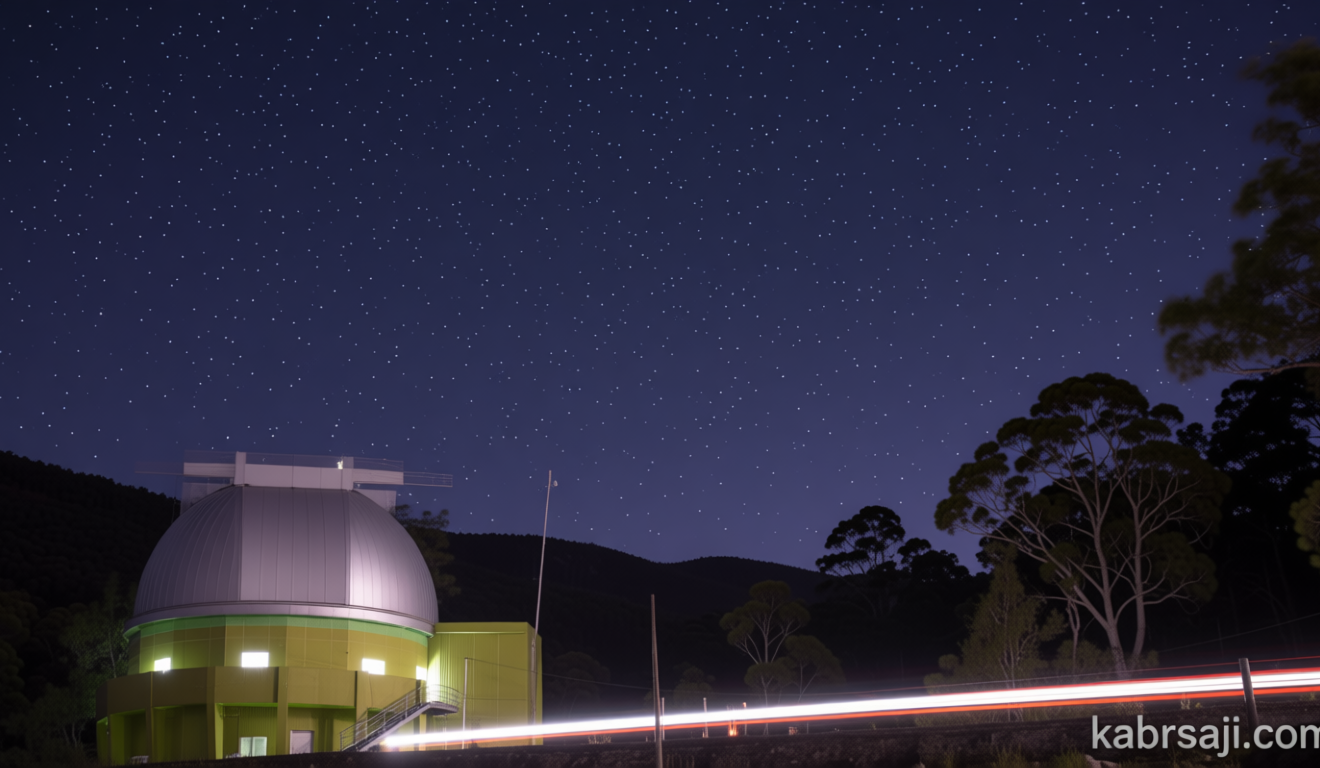
How a BRIN Scientist Captures Star – TEMPO.CO, Jakarta – Thomas Djamaluddin, an astronomer and astrophysics researcher affiliated with the National Research and Innovation Agency (BRIN), has successfully captured the star trail effect at Timau National Observatory in East Nusa Tenggara (NTT). The phenomenon, which reveals a circular pattern of starlight around the south celestial pole, was recorded during an extended night observation.
Photography Details
The process involved a 10-hour observation period, starting at 07:00 p.m. local time on Thursday, June 18, 2026, and ending at 05:00 a.m. local time the following day. While the entire duration was spent monitoring the skies, the camera itself captured the trails for approximately three hours.
Scientific Significance
Thomas explained that the resulting image showcased starlight creating concentric circles in the southern sky. “Not only is it visually stunning, but it also holds significant scientific value,” he said, as noted in a post from BRIN’s official page two days prior.
Observation Conditions
The Coordinator of the Astronomy and Observatory Research Group at the Space Research Center emphasized that the technique is not overly complex. However, it demands exceptional weather conditions throughout the night. “The sky must remain clear, and the location should have minimal light pollution and cloud cover,” the expert noted.
Location Advantages
Thomas highlighted that Timau’s position in the southern hemisphere makes it ideal for documenting such star movement. “The observatory’s location allows us to point the camera southward, capturing star trails that revolve around the south celestial pole,” he explained.
Light Pollution and Satellites
While dark skies are crucial, Thomas added that timing is equally important. Photographs were taken during the deepest hours of the night to avoid interference from satellite trails reflecting sunlight during twilight. “With increasing numbers of satellites in orbit, including constellations like Starlink, this becomes a key consideration,” he said.
Broader Implications
Thomas stated that the primary aim of the project was to illustrate the fundamental motion of Earth’s rotation. “Many people see the sun rise and set daily without realizing it’s due to the planet’s spin,” he pointed out. The image also serves as a testament to Timau’s low light pollution, a factor that influenced BRIN’s decision to establish the observatory as a modern center for astronomical research.
Read: BRIN Eyes US SMR Tech for Indonesia’s First Nuclear Plant | Click here to get the latest news updates from Tempo on Google News