Gal Gadot Calls Out DC Studios for Mishandling Henry Cavill’s Superman Departure
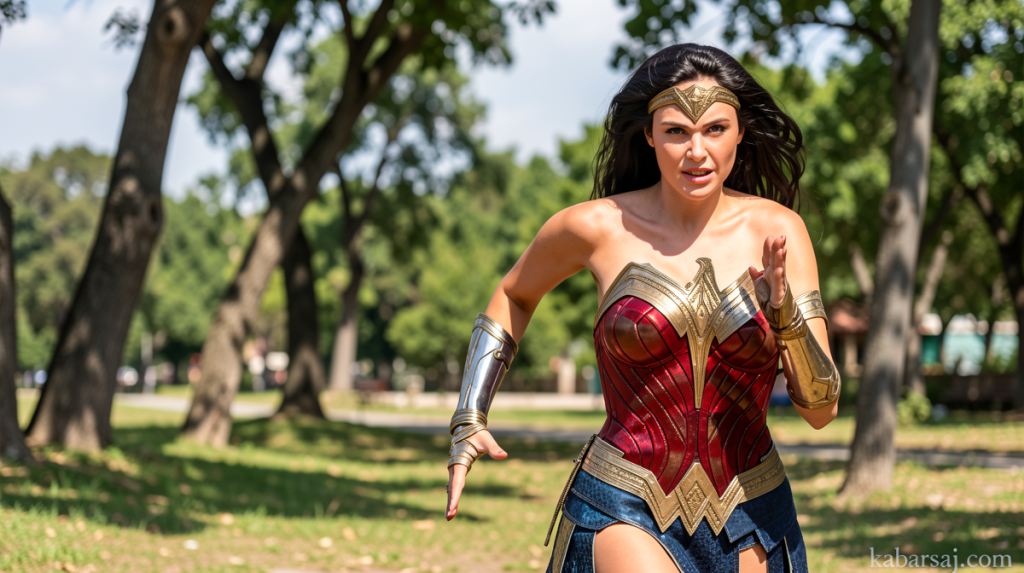
Kabarsaji.com – The shakeup at the top of DC Studios has left deep scars among the actors who built the franchise under its previous creative guardrails. Speaking publicly about the turbulent leadership transition that placed James Gunn and Peter Safran at the helm, Wonder Woman star Gal Gadot offered pointed criticism of how the studio managed the exit of Henry Cavill from the Superman role he had embodied since 2013. Her remarks, delivered during a recent interview cycle, landed with particular force because Gadot had been present in the studio’s orbit during the exact window when decisions were being made behind closed doors.
“The Henry situation was unfortunate. I was in the middle of that. The Henry situation was not handled elegantly, to say the least.”
Gadot’s intervention is notable not merely because of her own stature within the DC cinematic universe, but because she positioned herself as a witness rather than a distant commentator. She was, by her own account, embedded in the environment where the Cavill decision was being finalized, giving her testimony a weight that outside speculation cannot match.
The Timeline That Made the Reversal Unavoidable
To understand why the Cavill episode still reverberates, the sequence of events demands close attention. In the months preceding the Gunn-Safran appointment, DC had publicly confirmed that Cavill would reprise Superman. The announcement was reinforced by a post-credits appearance in Black Adam, a film that placed him squarely back in the shared universe and signaled to audiences that his tenure was continuing. For fans who had followed the character through Batman v Superman, Justice League, and the standalone Man of Steel sequel, that cameo read as a green light.
Then, roughly two months after Gunn and Safran took their executive seats, Gunn disclosed that the next Superman narrative would focus on the character’s formative years — a creative choice that, by its very premise, required a different actor. The recasting was never explicitly framed as a dismissal of Cavill, yet the practical effect was identical: the actor who had played Superman for over a decade was removed from the role without a transitional narrative that honored his contribution.
Cavill himself addressed the reversal with measured restraint, though the sting was audible beneath the politeness.
“After being told by the studio to announce my return back in October, prior to their hire, this news isn’t the easiest.”
Gunn later acknowledged that the sequencing was clumsy and suggested that the outgoing leadership had attempted to lock in a particular creative trajectory for the franchise, one that the new team then had to dismantle. He described Cavill as gracious and wonderful when the two eventually sat down to discuss the handover, a characterization that softens the optics without erasing the fact that the actor was told to promote his return only to have that return quietly rescinded.
Wonder Woman’s Director and the Broader Fallout
Gadot did not limit her critique to the Superman question. She also touched on the circumstances surrounding Patty Jenkins, the director attached to the Wonder Woman sequel, whose departure from the project compounded the sense of institutional instability. Jenkins had been brought aboard with considerable fanfare, and her eventual step-back left the franchise without a clear creative anchor at precisely the moment when continuity was most needed.
“I feel like we’re all adults and it’s all good. It’s not even about them. They are there and they’re there to do what they believe in, and it’s all good.”
The tone of that statement — conciliatory, almost conciliatory to the point of deflection — underscores how carefully Gadot navigated her remarks. She stopped short of naming names or assigning blame to specific executives, yet the cumulative effect of her comments made clear that she viewed the transition as poorly managed rather than merely unfortunate.
What Comes Next: Corenswet, Arjona, and an Unresolved Future
The practical consequence of the Cavill exit is that David Corenswet now occupies the Superman role for the upcoming feature, a project frequently referred to in development shorthand as Man of Tomorrow. Corenswet, previously known for his work in independent cinema and television, steps into a part that carries the weight of two decades of comic-book mythology and a live-action legacy stretching back to Christopher Reeve. The casting signals Gunn’s intent to reboot the character’s origin story rather than continue Cavill’s established timeline.
Adding another layer of speculation to the already crowded rumor mill, Adria Arjona has been cast in an undisclosed capacity within the same Superman project. Because the role has not been publicly identified, industry watchers and fan communities have circled the possibility that she may portray Wonder Woman — a pairing that would place Gadot’s character and Arjona’s in direct narrative proximity for the first time on screen. No studio confirmation of that pairing has been issued, and Gadot’s own future within the franchise remains officially unconfirmed.
Why the Transition Matters Beyond One Actor
The Cavill episode is, in a narrow sense, about one actor losing a role. In a broader sense, it is a case study in how a major studio can alienate both its talent and its audience when creative direction shifts without adequate communication. The October announcement, the Black Adam cameo, and the subsequent pivot within weeks created a window in which fans were told one thing, shown another, and then handed a third. That sequence eroded trust in a way that no amount of post-hoc goodwill from the new leadership can fully repair.
Gunn and Safran have signaled their desire to build a more integrated, character-driven DC universe, one that departs from the Snyder-era spectacle model. That ambition is not inherently flawed. What Gadot’s comments highlight is the execution gap: the difference between a bold creative reset and a reset that leaves its previous custodians — actors, directors, and audiences — feeling discarded rather than transitioned. As the Corenswet Superman moves through development and the Arjona casting question remains open, the studio will need to demonstrate that its new era values the people who built the old one, even as it builds something different.
Related Reading
Frequently Asked Questions
What is Gal Gadot Slams DC Studios over?
Gal Gadot Slams DC Studios over is the main topic of this guide. The article explains the context, practical details, and next steps readers should understand.
Why does Gal Gadot Slams DC Studios over matter?
Gal Gadot Slams DC Studios over matters because readers are looking for a useful answer, not just a short summary. Good content should match search intent and help them decide what to do next.