
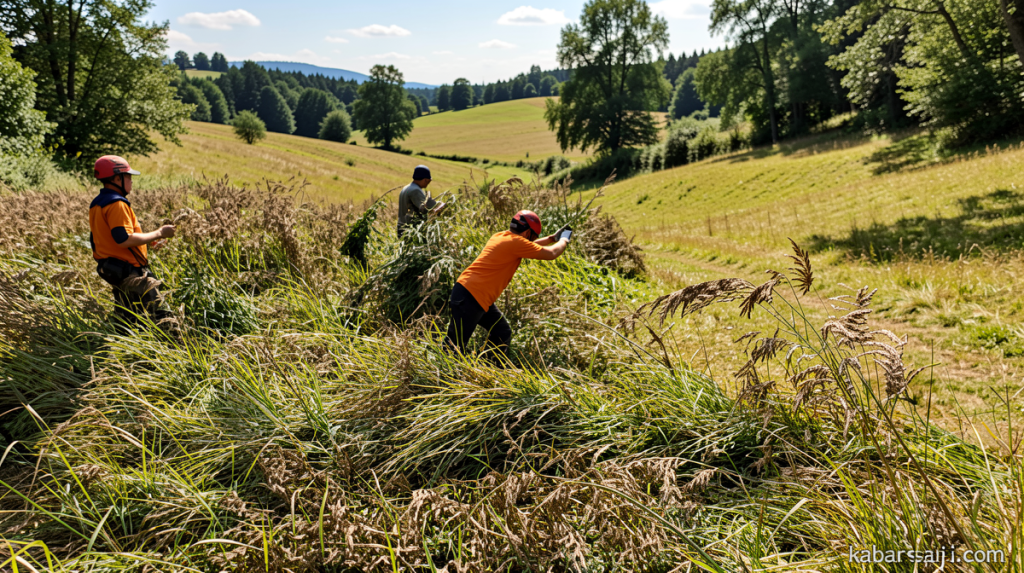
Blaze Consumes Over 3,000 Hectares in East Java’s Bromo Tengger Semeru Park as Containment Efforts Extend
Kabarsaji.com – The western reaches of Lumajang Regency, East Java, remain gripped by a sprawling forest fire that has scorched more than 3,000 hectares of woodland inside Bromo Tengger Semeru National Park (TN BTS). The conflagration, centered in Senduro Subdistrict, has forced local disaster-management crews into a prolonged, multi-team operation that authorities say will run at least through Thursday, September 3, 2026. The scale of the burn scar — particularly within the Ranu Kumbolo sector — marks one of the most extensive single-incident losses recorded in the park in recent years.
Scale of the TN BTS Burn
Figures compiled by the Lumajang Regency Regional Disaster Management Agency (BPBD) as of September 1, 2026, place the total damaged forest area at 3,072 hectares. Of that total, 1,887 hectares fall within the Ranu Kumbolo zone, a highland region known for its dense secondary growth and proximity to volcanic terrain. The western orientation of the affected tract means that prevailing dry-season winds have carried embers across ridgelines, complicating ground-based suppression and increasing the likelihood of spot fires downwind.
Isnugroho, who heads the Lumajang BPBD, confirmed that personnel will be split into multiple working groups through the remainder of the operation. Each team will maintain continuous surveillance of residual hotspots and intervene immediately if re-ignition is detected.
“Today, personnel will be divided into several teams, which will continue monitoring and handling if there are still any hotspots,” Isnugroho told Tempo on Thursday morning.
Secondary Fires in Northern and Southern Lumajang
The TN BTS blaze is not the only fire burdening the regency. In the northern sector, the Forest Management Resort (RPH) Ranupakis tract in Papringan Village, Klakah Subdistrict, sustained roughly three hectares of burn on Wednesday, August 2, 2026. Simultaneously, the Sengon area in southern Lumajang experienced its own ignition on the same date. Both of these smaller incidents have since been brought under control, according to Isnugroho, freeing additional crews to concentrate on the larger TN BTS operation.
Air and Ground Suppression Tactics
Water-bombing sorties over the Ranupane sector are being calibrated to prevailing weather windows and the intensity of ground-level heat signatures. As of September 2, crews had completed 21 aerial drops, delivering a cumulative 21,000 liters of water onto active and threatened zones. Complementing the air effort, ground teams deploy manual suppression tools — gepyok (fire-beating sticks), jet shooters, and blower units — to knock down surface flames and cool exposed fuel beds.
The East Java Regional Disaster Management Agency has committed a helicopter bearing registration PK-DAP, rated at 1,000 liters per sortie, to the operation. The aircraft’s capacity allows repeated bucket passes over steep terrain where ground access is limited, a critical advantage in the rugged topography surrounding Ranu Kumbolo.
National Advisory on Dry-Season Fire Risk
At the national level, Berton Panjaitan, Acting Head of the Data, Information, and Communication Center under the National Agency for Disaster Management (BNPB), has issued a public alert urging residents across low-rainfall regions to heighten vigilance against drought-driven ignition. Dry vegetation, combined with elevated temperatures typical of the late-summer dry season, creates conditions in which a small agricultural burn can escalate rapidly into an uncontrolled forest fire.
“Do not open or clear agricultural areas with fire, as it can easily spread and is difficult to control in dry conditions,” Panjaitan warned.
Broader Context: Indonesia’s Recurring Fire Season
Forest and land fires are a seasonal fixture across Indonesian archipelago, with the dry months from June through September regularly producing thousands of hectares of burn each year. Peatland fires in Sumatra and Kalimantan have historically generated transboundary haze, while upland and montane fires — such as the current TN BTS incident — tend to threaten biodiversity corridors, water-catchment integrity, and the livelihoods of communities dependent on forest products. The Lumajang event underscores how even relatively contained regional fires can accumulate into substantial ecological losses when dry winds sustain combustion across large tracts of contiguous woodland. Local authorities’ emphasis on sustained hotspot monitoring through September 3 reflects the recognition that smoldering peat and deep litter layers can re-ignite days after apparent extinguishment, particularly if rainfall does not arrive promptly.
Related Reading
Frequently Asked Questions
What is Forest Fires Rage Around East Java?
Forest Fires Rage Around East Java is the main topic of this guide. The article explains the context, practical details, and next steps readers should understand.
Why does Forest Fires Rage Around East Java matter?
Forest Fires Rage Around East Java matters because readers are looking for a useful answer, not just a short summary. Good content should match search intent and help them decide what to do next.