
Europe Prepares Diesel Reserve Release Amid Energy-Price Pressure
Kabarsaji.com – European countries are set to make diesel supplies available from their reserves after a request from US President Donald Trump, as energy markets face renewed strain from the Iran war, trade tensions and disrupted Russian exports.
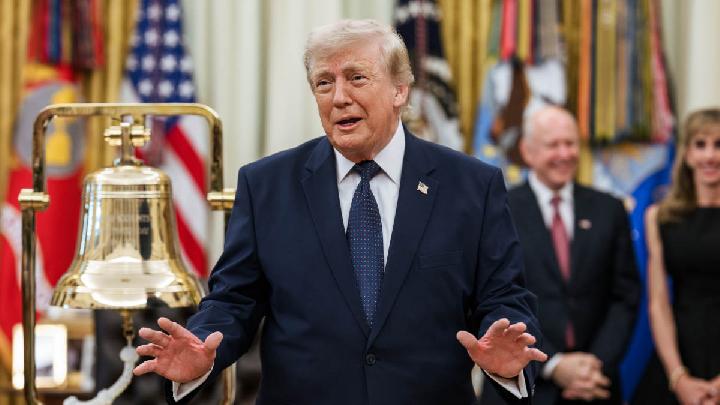
Trump said on Friday that Europe had agreed to act without delay. In a post on his Truth Social platform, he said the move would involve a substantial volume of fuel held in storage.
“Europe has just agreed to release a massive amount of their heavily stocked Diesel Oil,”
He added that the release would begin “immediately.” The announcement came as the White House confronts increasing domestic concern over the cost of fuel and other consumer goods. Diesel is especially important to freight transport, farming, construction and industrial activity, meaning higher prices can ripple through the broader economy.
G7 Plan Targets Up to 100 Million Barrels
French President Emmanuel Macron confirmed that the G7 intends to release as much as 100 million barrels during the next four months. Macron, who currently chairs the G7, also said partner countries would avoid measures that restrict trade in petroleum and energy products between one another.
In a joint statement shared by Macron, G7 leaders stressed that household concerns about energy costs remain central to their response.
“Our citizens’ concerns about energy prices remain a top priority,”
“We will monitor developments closely and stand ready to adjust measures as needed.”
The planned release follows overnight talks between Macron and Trump on the issue, the French Embassy in the United States said. The US had sought a faster and more concentrated response, pressing France, Germany and other European states to provide 100 million barrels of diesel from stockpiles over a 20-day period.
The four-month G7 framework signals a broader effort to manage supplies over time rather than rely solely on a single short release. Governments can use reserve stocks to ease immediate shortages, calm market expectations and provide refiners, distributors and consumers with additional supply while longer-term disruptions continue.
Why Diesel Has Become a Key Concern
Diesel differs from gasoline in the role it plays across the economy. It powers many trucks moving food, consumer goods and industrial materials, as well as equipment used in agriculture, mining and construction. When diesel becomes scarce or expensive, businesses may face higher operating costs that can ultimately affect prices paid by consumers.
In the United States, the average retail price for a gallon of diesel had reached US$6.37, or €5.65, figures that underline the political and economic pressure surrounding fuel costs. Trump has maintained that elevated prices are an acceptable consequence of efforts to prevent Iran from obtaining nuclear weapons. He has argued that prices should decline once the war ends.
However, the immediate challenge extends beyond the conflict with Iran. Russia’s export restrictions have also reduced global diesel availability. Those restrictions followed Ukrainian attacks on Russian refinery facilities, adding another supply problem to an already fragile international fuel market.
Refineries do not produce diesel in isolation. Their output depends on crude supplies, processing capacity, maintenance schedules, transport routes and trading conditions. A disruption at any point in that chain can affect availability far from the place where the original problem began. This is why governments often coordinate when fuel markets become volatile.
Reserves Offer Temporary Relief, Not a Permanent Solution
Releasing fuel from reserves can provide important short-term support, but it does not eliminate the underlying causes of a supply squeeze. Stockpiles are finite, and governments must weigh the benefit of lower near-term pressure against the need to retain emergency supplies for future disruptions.
The scale and pace of the European release will therefore matter. A large, rapid injection could help ease concerns over immediate availability, while a phased approach may be designed to maintain support for longer. The G7 statement leaves room for further changes if market conditions worsen or if prices fail to stabilize.
For European governments, the decision also carries a diplomatic dimension. The action demonstrates coordination with the United States while seeking to protect consumers and businesses from the effects of a wider energy shock. The commitment to avoid new barriers on petroleum and energy trade among partner nations reflects the importance of keeping fuel moving across borders during periods of stress.
Markets will now watch for details on how much diesel each country will release, when supplies will reach commercial channels and whether the combined effort is enough to offset losses linked to the war and Russia’s export ban. The response is likely to be judged not only by the number of barrels made available, but by whether it brings tangible relief to transport operators, businesses and households facing higher costs.
For now, the G7’s planned release represents one of the clearest attempts yet to contain a diesel shortage with coordinated action. Its effectiveness will depend on how the conflict develops, whether refinery disruptions persist and how quickly additional fuel can reach the markets that need it most.
Related Reading
Frequently Asked Questions
What is Europe to Release Diesel Reserves After?
Europe to Release Diesel Reserves After is the main topic of this guide. The article explains the context, practical details, and next steps readers should understand.
Why does Europe to Release Diesel Reserves After matter?
Europe to Release Diesel Reserves After matters because readers are looking for a useful answer, not just a short summary. Good content should match search intent and help them decide what to do next.