Ottawa Pivots Toward Brussels as Transatlantic Fractures Deepen
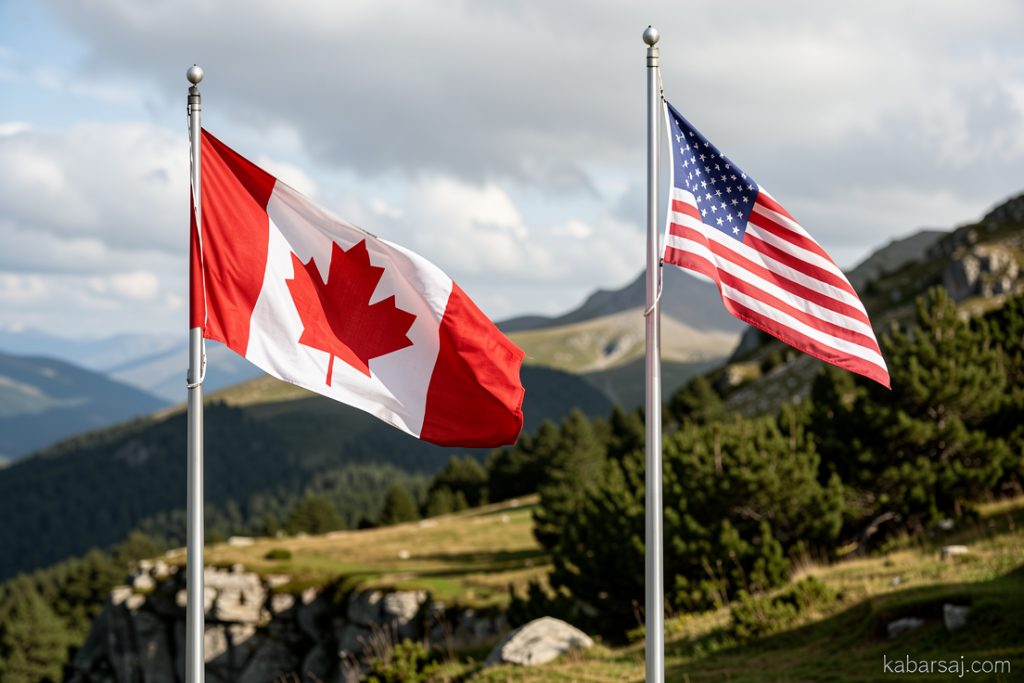
Kabarsaji.com – Canada is accelerating its diplomatic and economic alignment with the European Union in a calculated response to the breakdown of trade negotiations with its northern neighbor. The shift, announced by Global Affairs Canada on Monday, August 31, marks a notable recalibration of Ottawa’s foreign policy priorities — one that places European cooperation at the center of its strategic agenda while the Canada-U.S. relationship remains mired in tariff disputes and broken commitments.
At the heart of this pivot is a high-profile trip by Foreign Minister Anita Anand to Ireland, where she will become the first Canadian foreign minister ever to participate in a Gymnich gathering. The Gymnich meeting, an informal but consequential forum for EU foreign ministers, will take place September 1–2 in Wicklow, Ireland. It is being co-hosted by Irish Foreign and Defense Minister Helen McEntee alongside Kaja Kallas, the European Union’s foreign policy chief.
A New Seat at the European Table
Anand’s attendance signals more than ceremonial participation. In a public statement posted on X, she framed the trip as a milestone in deepening bilateral ties between Ottawa and Brussels.
“Tomorrow, I’ll travel to Ireland as the first Canadian foreign minister to join an EU Gymnich meeting,” Anand wrote.
She characterized the invitation as evidence that Canada’s strategic interests are converging with those of its European partners across multiple domains — from collective defense to economic resilience to sustained backing for Ukraine.
“The new seat at the table comes as our strategic interests increasingly converge, from economic security and collective defence to our steadfast support for Ukraine,” she stated.
Anand further described the trajectory as one of building “a more integrated partnership with Europe — one defined by greater ambition, greater influence and greater opportunity.” She noted that the partnership would receive additional momentum when Canada hosts the Canada-EU Leaders’ Summit scheduled for October 29–30 on Canadian soil.
The Gymnich Context
Gymnich meetings have long served as a backchannel for EU foreign ministers to exchange candid views outside the formal structures of the European Council. Held in a rotating host country, the gatherings allow ministers to discuss geopolitical developments in a less formal setting than Brussels or Luxembourg summits. For Canada, gaining access to this forum represents a symbolic and practical elevation of its standing within European diplomatic circles — a status previously reserved for member states.
Agenda items for the Wicklow session are expected to include the evolving situation in the Middle East, the ongoing war in Ukraine, and broader questions of European security architecture. Anand’s participation positions Canada to engage directly with EU counterparts on these files at a ministerial level, rather than routing communications through traditional multilateral channels.
Trade Tensions with Washington as the Driving Force
The outreach to Europe arrives against a backdrop of sharply deteriorated Canada-U.S. trade relations. Negotiations between the two countries have collapsed, and tariffs have been imposed on billions of dollars of goods flowing in both directions. Ottawa has responded with its own retaliatory measures, including tariffs on more than 700 American products, in an effort to pressure Washington back to the negotiating table.
For a country whose economy has historically been overwhelmingly oriented toward its largest neighbor, the disruption represents a structural shock. Canadian exporters in automotive, energy, agriculture, and manufacturing sectors face elevated costs and uncertain market access. The government’s response — diversifying trade partnerships toward Europe — is both a short-term hedge and a longer-term strategic reorientation.
The Canada-EU relationship already possesses substantial institutional infrastructure, including a Comprehensive Economic and Trade Agreement (CETA) that has been in force since 2017. However, the agreement’s full potential has never been realized, with implementation gaps and sectoral disputes persisting. The current diplomatic push appears designed to unlock dormant provisions and extend cooperation into areas previously treated as secondary, such as defense procurement, critical supply chains, and economic security coordination.
Ukraine: The Common Ground
The Russia-Ukraine war is anticipated to dominate discussions in Wicklow. Anand is expected to reaffirm Canada’s commitments across four pillars: continued military assistance, energy security cooperation, post-conflict reconstruction planning, and accountability mechanisms for war crimes. These positions align closely with the EU’s own policy framework, giving both sides a ready-made platform for coordinated action.
Canada has been among the more consistent Western donors of military aid to Kyiv since 2022, and its foreign ministry has framed sustained support as a core element of its post-2014 strategic identity. By coupling this commitment with deeper European integration, Ottawa seeks to ensure that its contributions are embedded within a broader multilateral architecture rather than standing as a bilateral gesture.
Strategic Implications
The October Leaders’ Summit in Canada will serve as the capstone of this diplomatic offensive. If preparations proceed as outlined, the summit is expected to produce concrete deliverables in trade diversification, joint economic-security initiatives, and defense cooperation. The timing — weeks after the Gymnich meeting — suggests a deliberate sequencing: ministerial-level groundwork in September, followed by head-of-state-level commitments in late October.
For European policymakers, the Canadian overture offers an opportunity to strengthen transatlantic cohesion at a moment when the traditional North American axis is under strain. For Ottawa, the engagement reduces dependence on a single trading partner and embeds Canadian interests within European institutional frameworks. The result, if sustained, would represent the most significant reorientation of Canadian foreign economic policy in decades — a pivot from bilateral North American integration toward a more pluralistic, Europe-anchored strategic posture.
Related Reading
Frequently Asked Questions
What is Canada Turns to Europe as Trade?
Canada Turns to Europe as Trade is the main topic of this guide. The article explains the context, practical details, and next steps readers should understand.
Why does Canada Turns to Europe as Trade matter?
Canada Turns to Europe as Trade matters because readers are looking for a useful answer, not just a short summary. Good content should match search intent and help them decide what to do next.