
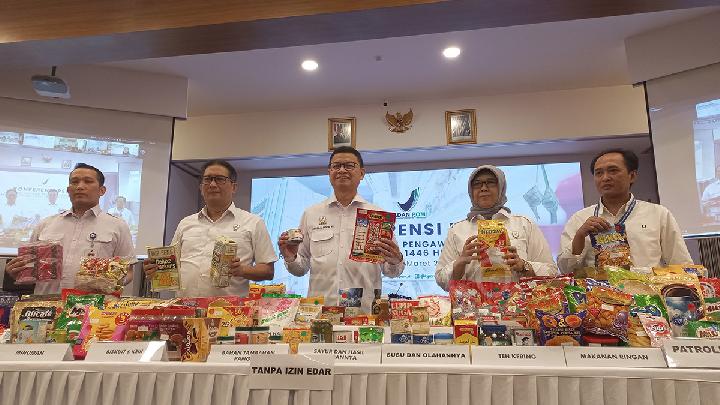
BPOM Receives Rp509 Billion for Free Nutritious Meal Program Oversight
Kabarsaji.com – Indonesia’s Food and Drug Authority, BPOM, will receive Rp509 billion to support oversight of the Free Nutritious Meal Program, known as MBG, after budget deliberations with the House of Representatives’ Commission IX on Thursday, September 17, 2026.
The funding is below the amount BPOM initially sought for its role in monitoring the nationwide food program. BPOM Head Taruna Ikrar said the authority had proposed a Rp4.7 trillion budget in total, including more than Rp1 trillion intended specifically for MBG supervision.
“So the conclusion is that the Rp509 billion provided for BPOM’s oversight is the result of our proposal, but it was not fully approved,”
The Rp509 billion allocation is intended to support safeguards across the program’s food chain, from ingredients and kitchen operations to distribution and responses to health incidents. The scale of the assignment reflects the large number of food-service units expected to participate in the program.
Testing and prevention priorities
BPOM has estimated that it needs to examine 41,150 samples from roughly 27,000 nutritious food fulfillment service units, or SPPG. The testing plan is meant to identify areas that may be vulnerable to food-safety problems before they affect recipients.
Oversight will follow Presidential Regulation Number 115 on the governance of Free Nutritious Meals. Its scope includes monitoring raw materials, providing education, supervising food management and delivery, and preparing mitigation measures for extraordinary events, including suspected poisoning cases.
Taruna said BPOM remains committed to carrying out that responsibility despite the funding gap. The agency’s usual budget for its broader duties and functions had reached Rp1.6 trillion, but only Rp115 billion was approved for that component during the discussions.
“And in that specific context, Badan POM is committed to thoroughly overseeing the free nutritious food program regardless of what happens,”
The distinction between the MBG allocation and BPOM’s wider operational funding is significant. BPOM’s routine work covers oversight of drugs and food, while its MBG role adds a major program-specific monitoring responsibility involving a large network of kitchens, suppliers, and distribution points.
BGN tightens kitchen compliance
Sudaryono, head of the National Nutrition Agency, or BGN, welcomed BPOM’s participation in the program. He said the agencies had coordinated their supervisory approach with an emphasis on prevention.
“The goal is to prioritize the preventive nature of the nutritious food program we provide. Because indeed, prevention is better than cure,”
BGN has continued to improve governance at MBG kitchens. Around 1,200 kitchens that failed to meet requirements for a Hygiene and Sanitation Eligibility Certificate, known as SLHS, have been closed. The agency has also introduced stricter standard operating procedures.
Kitchen compliance is central to the program because meals must be prepared, handled, and distributed safely at scale. The review process is not limited to facilities already operating: BGN is also inspecting kitchens that have not yet met the required standards and suspending those that fail the assessment.
“It means that out of the kitchens that have met the standards, around 13,000-something, the rest, about half, we are inspecting. If they do not meet the requirements, we have suspended them,”
Sudaryono also said BGN is seeking to reduce the use of raw materials that carry a greater risk of causing health disturbances, particularly animal protein. At the same time, the agency is developing a marketplace system designed to help maintain the quality of ingredients supplied to provider kitchens.
The program’s safety framework therefore extends beyond inspections after a meal has been prepared. It also involves supplier quality, ingredient selection, kitchen certification, operational procedures, distribution controls, and rapid action if a health problem emerges.
2027 budget ceiling and reallocation plan
During the same meeting, Commission IX approved BPOM’s 2027 fiscal-year budget ceiling at Rp1.939 trillion. The House also endorsed a request for BPOM to seek an additional Rp2.465 trillion in funding for 2027.
The proposed extra funding is intended to reinforce BPOM’s drug and food monitoring functions that were not covered by the initial budget ceiling. Commission IX and BPOM also agreed to coordinate with the Ministry of Finance and the Ministry of National Development Planning, or Bappenas, on moving Rp509.50 billion in funding.
That amount had initially been earmarked for MBG support and is set to be redirected to BPOM’s broader operational work overseeing drugs and food. The arrangement highlights the need to balance the specialized supervision required for the nutrition program with the authority’s continuing regulatory responsibilities.
For families and schools served by the Free Nutritious Meal Program, the oversight effort has practical importance: safe meals depend on controls that begin before food reaches a kitchen and continue through preparation, delivery, and follow-up. The planned testing, certification checks, supplier reviews, and incident-response measures form the core of the government’s effort to make prevention a central part of the program’s implementation.
Related Reading
Frequently Asked Questions
What is BPOM Secures Rp509 Billion Budget for MBG?
BPOM Secures Rp509 Billion Budget for MBG is the main topic of this guide. The article explains the context, practical details, and next steps readers should understand.
Why does BPOM Secures Rp509 Billion Budget for MBG matter?
BPOM Secures Rp509 Billion Budget for MBG matters because readers are looking for a useful answer, not just a short summary. Good content should match search intent and help them decide what to do next.