
Airlangga Optimistic Indonesia Can Match China in AI
Airlangga Expresses Confidence in Indonesia’s AI Potential Airlangga Optimistic Indonesia Can Match China - During a pivotal visit to the 2026 World
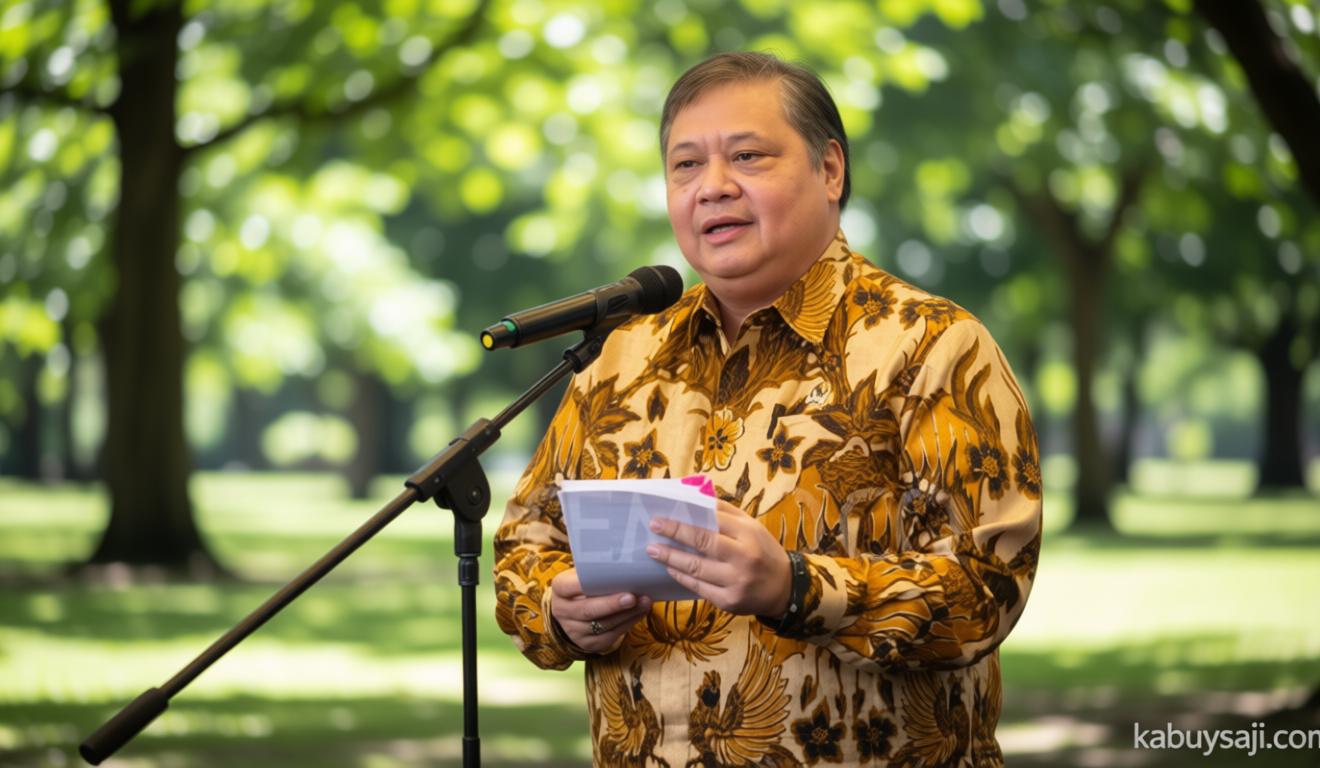
Airlangga Expresses Confidence in Indonesia’s AI Potential
Airlangga Optimistic Indonesia Can Match China – During a pivotal visit to the 2026 World Artificial Intelligence Conference (WAIC) in Shanghai, Indonesia’s Coordinating Minister for Economic Affairs, Airlangga Hartarto, highlighted the nation’s ambition to compete with China in artificial intelligence and robotics. His remarks, reported by Antara, underscored Indonesia’s strategic approach to emerging technologies, emphasizing the importance of aligning with global advancements to secure a leading position in the AI-driven future. As a key player in Southeast Asia, Indonesia aims to leverage its growing tech ecosystem to match China’s rapid progress, particularly in automation and renewable energy integration.
WAIC 2026: A Platform for Global AI Collaboration
The 2026 WAIC, held at the Shanghai World Expo Exhibition and Convention Center from July 17 to 20, brought together a diverse array of stakeholders from across the world. This annual event, which began in 2018, has evolved into a critical forum for exchanging ideas on AI innovation, intelligent computing, and embodied intelligence. With three exhibition venues, the conference attracted over 1,400 speakers, including nine Nobel laureates and Turing Award recipients, while more than 1,100 companies displayed cutting-edge products and technologies. Notably, 300 global innovations made their debut, showcasing the event’s role as a catalyst for technological breakthroughs.
“China’s AI and robotics advancements are remarkable, and Indonesia is determined to close the gap,” Airlangga stated during his engagement at the WAIC.
His comments reflect a broader vision for Indonesia’s tech sector, which seeks to balance domestic growth with international collaboration. By engaging directly with Chinese experts and industry leaders, Airlangga aims to identify actionable strategies for Indonesia to accelerate its AI development and maintain relevance in a competitive global landscape.
Indonesia’s Strategic Blueprint for AI Integration
Airlangga’s participation in the WAIC was part of a larger initiative to position Indonesia as a hub for AI-driven solutions. Following his discussions with Chinese officials, he plans to present his findings to President Prabowo Subianto, highlighting the need for targeted investment in robotics and renewable energy. His focus on these sectors aligns with Indonesia’s long-term goal of enhancing productivity through automation while addressing energy challenges with sustainable technologies. This strategic pivot underscores the government’s commitment to fostering innovation that meets both economic and environmental priorities.
The minister’s visit also included site inspections of key exhibitors, offering insights into China’s industrial and academic robotics capabilities. These observations are expected to inform Indonesia’s national AI roadmap, which includes partnerships with international firms and educational institutions. By learning from China’s successes, Indonesia aims to fast-track its own progress in AI, ensuring that its technological advancements are both impactful and sustainable.
Unitree Robotics: A Leader in Consumer and Industrial Innovation
Unitree Robotics, a Hangzhou-based firm established in 2016, emerged as a standout exhibitor at the 2026 WAIC. The company’s focus on high-performance legged and humanoid robots has positioned it at the forefront of both consumer and industrial automation. Its product lineup includes the Go, A, and B series of quadruped robots, alongside advanced humanoid models like the H1, G1, and H2. Notably, Unitree gained international acclaim for its performance during the CCTV Spring Festival Gala in 2026, where its G1 and H2 robots demonstrated autonomous kung fu routines, including complex backflips and parkour movements.
Such innovations highlight the potential of AI-driven robotics to transform industries, and Airlangga’s engagement with Unitree exemplifies Indonesia’s desire to adopt similar technologies. By studying the company’s applications in manufacturing and logistics, the minister hopes to replicate its success within Indonesia’s own market, fostering a new era of automation that supports economic growth and job creation.
Deep Robotics: Advancing Industrial Automation
Deep Robotics, another Hangzhou-based entity founded in 2017, specializes in industrial automation and academic research, contributing significantly to China’s robotic advancements. Its Jueying robot series is designed for high-risk tasks such as power grid inspections, search and rescue operations, and monitoring hazardous environments. The firm’s emphasis on core robotic components and system engineering has made it a vital player in enhancing China’s industrial robotics infrastructure, offering scalable solutions for sectors like energy and infrastructure.
Deep Robotics’ expertise aligns with Airlangga’s vision for Indonesia’s AI development. By integrating such technologies into domestic industries, the minister aims to strengthen the country’s manufacturing capabilities and reduce reliance on foreign imports. This approach reflects a broader goal of using AI to drive efficiency, precision, and innovation across multiple sectors.
Connected and Intelligent Technologies (CICT): Pioneering Smart Mobility
Connected and Intelligent Technologies (CICT), a state-owned enterprise under the China Information Technology Group, showcased its role in developing smart mobility solutions. Established in 2012, CICT has been instrumental in advancing intelligent connected vehicles and smart transportation systems. Its work on vehicle-to-everything (V2X) technology supports seamless vehicle-to-infrastructure collaboration, enabling autonomous driving and real-time traffic optimization. These innovations are critical for reducing congestion and improving urban transportation efficiency in rapidly growing cities.
CICT’s integration of AI into transportation systems provides a blueprint for Indonesia’s own smart city initiatives. Airlangga’s exposure to such technologies during the WAIC has reinforced the need for Indonesia to prioritize AI-driven infrastructure projects. By adopting similar solutions, the country can enhance its urban mobility and create a more connected, efficient, and sustainable future.
Read: Minister Says AI a ‘Game Changer’ for Indonesia: What Does It Mean? Click here to get the latest news updates from Tempo on Google News