
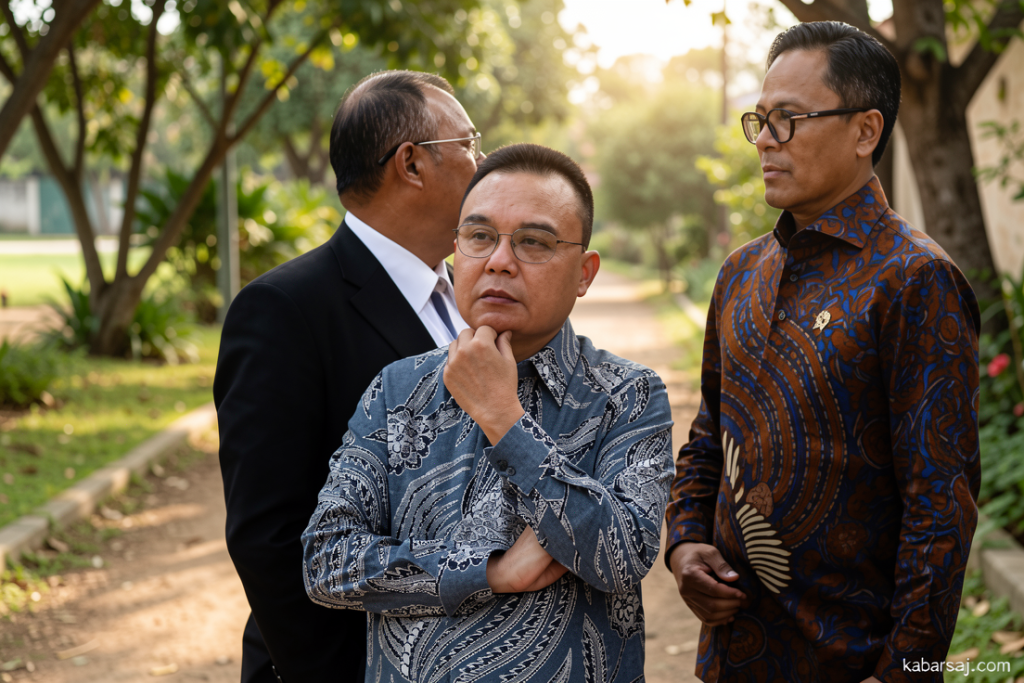
Indonesian Parliament Reacts After Ukrainian Intel Exposes Mercenary Recruitment of Eight Citizens
Kabarsaji.com – The revelation that eight people believed to hold Indonesian passports may have been funneled into Russian military ranks has sent ripples through Jakarta’s political corridors. The disclosure, which surfaced through Ukrainian intelligence channels in late August 2026, has forced the country’s legislative and diplomatic institutions to confront a question many Indonesians had hoped would never apply to them: how did ordinary citizens end up in a foreign war zone under conditions they likely never fully understood?
How the Scheme Came to Light
The Foreign Intelligence Service of Ukraine (FISU) published a statement on August 27 identifying the eight individuals and explaining how their recruitment was uncovered. Ukrainian analysts obtained copies of correspondence between the Russian Ministry of Foreign Affairs and its embassies dealing specifically with the visa processing of the Indonesians. Those documents revealed a pattern: the candidates had been approached not as prospective soldiers, but as applicants for positions in security detail units or administrative support roles. The promised compensation was substantial, and the paperwork suggested a straightforward posting abroad.
Once the visas were issued and the eight departed for Russia, the administrative framing dissolved. They were deployed as combat personnel. The FISU characterized the operation as part of a broader recruitment architecture that Moscow has refined and tested across dozens of nations over recent years.
“The lure of high salaries, non-combat duties, rapid Russian citizenship, and attractive social benefits has drawn the interest of individuals who often don’t know where they are actually being sent,” the FISU stated on its official website.
Parliamentary Response and Government Coordination
Deputy House Speaker Sufmi Dasco Ahmad addressed the matter directly on the floor of the Indonesian Parliament complex in Jakarta on Tuesday, September 1, 2026. Dasco told reporters that he had received intelligence indicating a third country had recruited Indonesian nationals under the guise of civilian employment. He described the bait-and-switch mechanism in blunt terms: candidates were enticed with promises of lucrative pay and non-combat assignments, only to find themselves registered as soldiers and dispatched to active duty.
“Subsequently, these Indonesian citizens registered and eventually were deployed as soldiers,” Dasco said.
He confirmed that Indonesia’s intelligence services and the Ministry of Foreign Affairs have entered a coordinated response phase. Representatives have been dispatched to the relevant countries to verify the status of the eight individuals, assess their working conditions, and explore avenues for repatriation or consular protection. The DPR’s foreign affairs committee is expected to press for regular briefings as the situation develops.
A Pattern Repeated Across Borders
The FISU emphasized that the Indonesian case is not an isolated incident. The same recruitment template—civilian job listings, inflated salary figures, promises of expedited citizenship, and social welfare perks—has been applied to nationals of Nepal, Cuba, Kenya, and India, among others. In each documented instance, the majority of recruits arrived at their posting with little or no formal military training. Many were pushed onto front lines within weeks of arrival. The FISU noted that some of these individuals died within their first few weeks of service, before they had completed even basic orientation.
For Indonesia, a nation of roughly 280 million people with a large diaspora working across Southeast Asia, the Middle East, and increasingly in post-Soviet labor markets, the episode raises practical anxieties. Indonesian citizens abroad number in the millions, and while most work in construction, manufacturing, or domestic service, the prospect of being drawn into a conflict through a seemingly routine job offer is one that families and labor agencies now find difficult to dismiss.
What Happens Next
The immediate diplomatic task is to confirm the exact locations of the eight, determine whether they remain under Russian military command, and negotiate access for consular visits. Indonesia’s Ministry of Foreign Affairs has historically handled repatriation cases with relative speed when bilateral channels are open, but the current geopolitical climate surrounding the Russia-Ukraine conflict complicates any direct engagement with Moscow.
Domestically, the DPR is likely to call for a review of how Indonesian citizens are vetted and informed before accepting overseas employment offers that carry military-adjacent language. Labor export agencies, which already manage flows to Gulf states and East Asia, may face pressure to extend their protective frameworks to postings in Eastern Europe and Central Asia, regions where Indonesian worker numbers have grown steadily over the past decade.
Until the eight are accounted for and their circumstances fully clarified, the episode will remain a live issue in Jakarta’s legislative calendar—a reminder that in an era of fluid borders and aggressive foreign recruitment, the distance between a job advertisement and a war zone can be thinner than most citizens realize.
Related Reading
Frequently Asked Questions
What is 8 Indonesians Allegedly Serving as Russian?
8 Indonesians Allegedly Serving as Russian is the main topic of this guide. The article explains the context, practical details, and next steps readers should understand.
Why does 8 Indonesians Allegedly Serving as Russian matter?
8 Indonesians Allegedly Serving as Russian matters because readers are looking for a useful answer, not just a short summary. Good content should match search intent and help them decide what to do next.