Kim Jong Un Sees Less Need for a Breakthrough With Washington
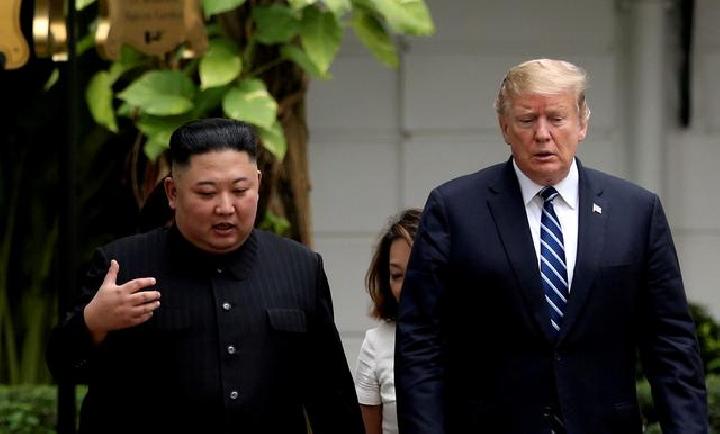
Kabarsaji.com – North Korea is showing little sign that it feels compelled to return to major negotiations with the United States, even as President Donald Trump renews his effort to engage Kim Jong Un. Pyongyang’s expanding military capacity and closer ties with Russia and China have given its leader more room to resist diplomatic pressure from Washington.
In August, Trump reduced the scale of joint military exercises involving the United States and South Korea while again speaking warmly about Kim. Trump said the North Korean leader had “always treated me with great respect,” presenting the move as part of a renewed attempt to open a channel with Pyongyang.
North Korea’s reaction has been notably restrained. It has launched multiple missiles and rejected Trump’s assertion that Kim had responded favorably to an invitation for talks. As the United States, South Korea and Japan began a five-day military exercise this week, there was no visible indication of a further U.S. concession or a meaningful diplomatic opening.
Military Strength Remains Central to Kim’s Message
Rather than highlighting dialogue, Kim used a naval event on Monday to underline North Korea’s determination to strengthen its defenses. He commissioned a destroyer and repeated the need for what he called a “powerful and reliable nuclear war deterrent,” while also stressing the importance of maritime security.
Kim said the country would soon reveal a significant advance in naval capability. The message was consistent with North Korea’s broader strategy: maintain and develop military power while treating negotiations with the United States as an option rather than an urgent necessity.
That calculation differs sharply from the atmosphere surrounding Trump and Kim’s summit diplomacy during Trump’s first term. At that time, international sanctions, economic constraints and questions about North Korea’s future made high-level diplomacy appear more pressing for both sides. Today, Pyongyang has additional sources of political, military and economic support.
“For Kim, the stakes are simply lower than they were in 2019. There is no longer the same sense of urgency in Pyongyang to get back to the negotiating table with Washington,” Joon Ha Park, a correspondent at Korea Risk Group in Seoul, told DW.
Park said North Korea’s treaty-based relationship with Moscow, its growing proximity to Beijing and its enlarged military capabilities mean that a reduction in South Korea-U.S. drills alone is unlikely to change Pyongyang’s position.
“North Korea now has a treaty-based alliance with Moscow and is drawing closer to Beijing, while its military capabilities have expanded significantly. That’s why a single reduction in ROK-U.S. military exercises is not enough for Pyongyang to be swayed,” Park added.
Economic and Diplomatic Conditions Have Shifted
Kim is widely seen as operating from a stronger position than at many earlier points in his rule. He took power in 2011, and only six years ago faced severe sanctions pressure as well as the effects of the coronavirus pandemic. At the 75th anniversary of the Korean Workers’ Party, an emotional Kim expressed regret over his failure to adequately serve the North Korean people.
The picture now appears less precarious. South Korea’s central bank estimated that North Korea’s economy grew 3.7 percent in 2024, the fastest expansion in eight years. Although reliable data on North Korea remain difficult to obtain because of the country’s isolation, the figure suggested improved economic conditions compared with the difficult pandemic period.
Relations with Russia have become especially important since Kim met Vladimir Putin in Russia’s Far East in 2023. That meeting created an opening for North Korea to provide weapons for Russia’s war in Ukraine, while Moscow supplied assistance in return. The relationship has also supported a sharp rise in North Korean military-industrial production, aided by financing that has helped bypass international sanctions.
“The war in Ukraine has opened up a crucial lifeline for the [North Korean] regime, delivering weapons, ammunitions and soldiers to Russia in return for cash, foodstuffs and ostensibly advanced military technology,” Alexander Lipke, policy fellow with the Asia Program at the European Council on Foreign Relations, told DW.
For Kim, this partnership reduces dependence on an agreement with the United States. It does not eliminate the impact of sanctions or erase North Korea’s longstanding economic problems, but it gives the regime alternatives that were less available during earlier rounds of diplomacy.
China Reasserts Its Role
China, North Korea’s traditional backer, initially appeared cautious as Moscow and Pyongyang moved closer. Russia’s growing influence raised the prospect that Beijing could lose some of its long-established leverage over North Korea.
“These warming ties with Russia have also alarmed China, which is also actively attempting to cement its position as Pyongyang’s preeminent partner,” Lipke said.
By 2025, Beijing had moved to demonstrate its importance within the emerging relationship among China, Russia and North Korea. Kim attended Beijing’s Victory Day commemorations in September that year and appeared publicly with Chinese President Xi Jinping and Putin. For a state that has long defined itself through isolation and self-reliance, the image of Kim standing beside the leaders of both major powers carried considerable symbolic weight.
The trend continued in June 2026, when Xi made Pyongyang the destination of his first overseas trip of the year. Messages from Moscow and Beijing this week, marking North Korea’s 78th founding anniversary, also praised the strategic value of their expanding partnerships with Pyongyang.
One of the clearest implications is the declining prominence of denuclearization in high-level diplomacy involving North Korea. References to the “denuclearization of the Korean Peninsula,” once a familiar feature of official statements, have been absent from communiques after recent meetings. That omission suggests that North Korea’s nuclear status is increasingly treated as a reality by its closest partners, even if the United States and its allies continue to reject it.
Trump’s personal outreach may still preserve a possibility of future contact. But Kim’s current posture indicates that praise, limited adjustments to military exercises and invitations to talk are unlikely to produce a rapid return to summit diplomacy. With Russia offering strategic cooperation and China reinforcing political ties, Pyongyang appears prepared to wait for terms it considers more favorable.
Related Reading
Frequently Asked Questions
What is Why North Korea s Kim Jong?
Why North Korea s Kim Jong is the main topic of this guide. The article explains the context, practical details, and next steps readers should understand.
Why does Why North Korea s Kim Jong matter?
Why North Korea s Kim Jong matters because readers are looking for a useful answer, not just a short summary. Good content should match search intent and help them decide what to do next.