Indonesia’s Nutrition Agency Seeks Rp240 Trillion to Feed 72 Million Through Free Meal Program in 2027
Kabarsaji.com – Indonesia’s National Nutrition Agency (BGN) has put forward a budget request of Rp240.20 trillion for its Free Nutritious Meals (MBG) initiative, aiming to deliver prepared meals to approximately 72.5 million recipients across the archipelago in fiscal year 2027. The proposal, presented to the House of Representatives (DPR) Commission IX on September 3, 2026, represents one of the largest single-program allocations in the country’s annual budget cycle and signals the government’s intent to scale universal school-meal coverage and maternal-child nutrition support to a previously unprecedented level.
From Rp270 Trillion to Rp240 Trillion
The final figure was not reached without negotiation between spending agencies and the fiscal authorities. The Ministry of Finance and the National Development Planning Agency initially set an indicative target of Rp270 trillion on May 7, 2026. Through what BGN head Sudaryono described as efficiency gains in government-aid components, the total was trimmed by Rp30 trillion. The underlying government-aid portion dropped from Rp265.5 trillion to Rp232.5 trillion, while the consolidated envelope ultimately landed at Rp240.20 trillion.
The budget was formalized through the Joint Budget Allocation Letter dated August 9, 2026, which serves as the coordinating document between the finance ministry, the planning agency, and individual spending agencies. Sudaryono stated that this letter constitutes the operative framework within which BGN must operate its 2027 program.
Two Programs, One Mission
The Rp240.20 trillion allocation splits into two distinct program lines. The first, the National Nutrition Fulfillment Program, accounts for Rp232.88 trillion, or 96.95 percent of the total. The second, the Management Support Program, carries Rp7.33 trillion, representing 3.05 percent.
Within the nutrition fulfillment line, Rp198.96 trillion is earmarked specifically for preparing and delivering MBG meals to students, teachers, and education-sector personnel. A further Rp33.54 trillion targets what the agency designates “group 3B” — pregnant women, breastfeeding mothers, and toddlers. The student beneficiary count stands at 60,599,777, spanning early childhood education centers, kindergartens, elementary and secondary schools, vocational institutions, special-needs schools, and Quranic schools. Group 3B adds another 11,865,109 recipients, bringing the combined total to 72,464,886 people.
Where the Money Actually Goes
Sudaryono stressed that the overwhelming majority of the budget converts directly into food on plates rather than administrative overhead.
“The majority of our large budget composition, more than 97 percent, is indeed used and converted into MBG meals served to beneficiaries, both students and non-student beneficiaries such as 3B.”
Beyond meal production, the Rp232 trillion nutrition line also funds information-system management, educational outreach, partnership coordination, community empowerment activities, monitoring and supervision, and governance-strengthening measures. A smaller slice — Rp373.3 billion, or 0.13 percent — covers non-MBG technical work such as kitchen standardization, training of food servers, supply-chain reinforcement, and quality-and-food-safety monitoring across all provinces.
Administrative Overhead
The Rp7.33 trillion management support allocation breaks into three categories. Employee salaries and allowances account for Rp7.08 trillion. Office operations and maintenance carry Rp81.7 billion. Non-operational management support, at Rp160 billion, encompasses regulation development, legal assistance, public relations, organizational performance management, human-resource administration, financial management, and household administrative and protocol affairs.
Exceeding the RPJMN Target
Sudaryono noted that the 72.5 million targeted beneficiaries surpass the 64.94 million figure embedded in the 2027 National Medium-Term Development Plan (RPJMN). If approved, the program would therefore outpace the government’s own medium-term planning benchmark by roughly seven and a half million additional recipients, effectively stretching the nutrition mandate well beyond what was codified in the multi-year development framework.
“We kindly request the Chairperson and Members of the DPR Commission IX to approve the work plan and budget of the National Nutrition Agency for 2027 amounting to Rp240.20 trillion, so that the MBG program can continue to serve all the nation’s children optimally in 2027.”
Political Process and What Comes Next
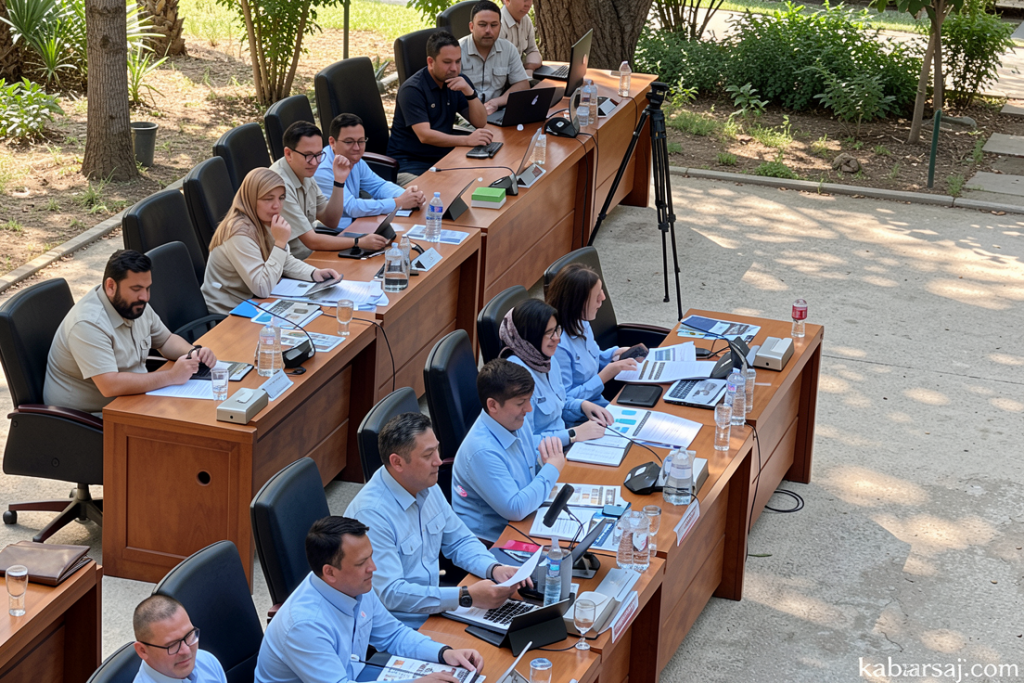
The working meeting between BGN and DPR Commission IX took place in Jakarta on Thursday, September 3, 2026. As of the close of that session, no formal decision had been rendered on the proposed allocation. Commission IX, which oversees social affairs including nutrition, education, and welfare, will now review the request before any vote takes place in the plenary chamber.
The MBG program, which began as a limited pilot, has expanded rapidly into one of Indonesia’s largest social-welfare expenditures. Its scale — feeding tens of millions of children and vulnerable adults on a daily basis — makes the 2027 budget request a bellwether for how far the government intends to push universal school-meal coverage and maternal-child nutrition support in the coming fiscal year. The outcome of the DPR deliberation will determine whether the program maintains its current trajectory or faces recalibration in the months ahead.
Related Reading
Frequently Asked Questions
What is BGN Proposes Rp240 Trillion Budget for MBG?
BGN Proposes Rp240 Trillion Budget for MBG is the main topic of this guide. The article explains the context, practical details, and next steps readers should understand.
Why does BGN Proposes Rp240 Trillion Budget for MBG matter?
BGN Proposes Rp240 Trillion Budget for MBG matters because readers are looking for a useful answer, not just a short summary. Good content should match search intent and help them decide what to do next.