
Estonia Says Russian Security Services Ordered Tallinn Arson
Kabarsaji.com – Estonia has accused Russia of directing an arson attack on a defense technology company in Tallinn, drawing public backing from NATO and European Union leaders who say the incident reflects a wider pattern of hostile pressure linked to Moscow’s war against Ukraine.
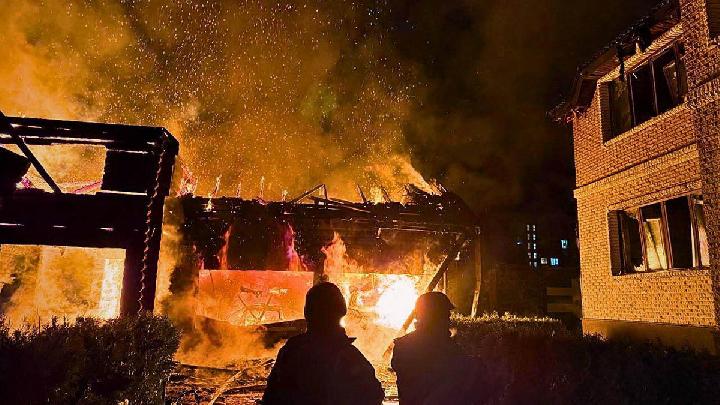
Foreign Minister Margus Tsahkna said an Estonian investigation concluded that the August 15 fire at premises used by Milrem Robotics was not an isolated criminal act. The company develops ground drones that are being used in Ukraine, making it part of the broader defense supply network supporting Kyiv.
“We can conclude with certainty that the arson attack… was an act of sabotage ordered by the special services of the Russian Federation,” Tsahkna said.
He said those believed to have carried out the attack had been detained and that Russia’s ambassador had been called in by Estonia. Three suspects were arrested in Latvia and transferred to Estonia this month in connection with the case.
Fire Caused No Reported Injuries
The blaze began overnight on August 15 at a Tallinn building used by Milrem Robotics. Emergency authorities responded immediately, and no injuries were reported.
The alleged sabotage case carries particular weight because Estonia is both an EU and NATO member and shares an eastern border with Russia. With a population of about 1.3 million, the Baltic state has been a prominent supporter of Ukraine since Russia launched its full-scale invasion in 2022.
Tsahkna described the attack as part of an effort extending beyond Estonia itself.
“This act of sabotage is part of Russia’s broader campaign across Europe, aimed at intimidating us and weakening our support for Ukraine,” he said.
The accusation places renewed attention on the vulnerability of companies involved in defense production, logistics, technology, and assistance for Ukraine. Estonia’s response also signals that attacks targeting such facilities are being treated as matters of national security, not simply as property crimes.
Kremlin Rejects the Allegation
Moscow denied any connection to the Tallinn fire. Kremlin spokesperson Dmitry Peskov dismissed Estonia’s findings as “baseless” and said they had “absolutely no relation to reality.”
“We cannot and will not take such statements seriously,” Peskov told reporters in Moscow.
The Kremlin’s rejection did not reduce the concern voiced by Estonia’s allies. NATO Secretary-General Mark Rutte said Russia was continuing what he called a reckless series of hostile actions against NATO countries.
Rutte said Moscow was failing both in its military aims in Ukraine and in attempts to fracture unity among NATO members. His statement emphasized the alliance’s view that pressure against individual member states will not weaken collective backing for Kyiv.
European Leaders Stress Unity
Germany, France, Lithuania, Latvia, Sweden, the EU and NATO all voiced support for Estonia after the accusation was made public.
German Foreign Minister Johann Wadephul promised Germany’s “full solidarity” with Estonia and argued that such actions would reinforce, rather than divide, allied cooperation.
“Russia’s reckless hostilities will not divide us. They only strengthen our resolve to bolster NATO deterrence and support Ukraine,” Wadephul wrote.
The European Union likewise said the arson would not alter its commitment to Ukraine. European Commission spokesperson Christian Wigand said Moscow was seeking to frighten Europe into reducing that support.
“Moscow is trying to scare Europe into winding down its support for Ukraine. This will not happen,” Wigand said.
French President Emmanuel Macron characterized the alleged attack as a dangerous escalation and placed it within a growing number of hostile acts attributed to Russia. He said European unity and continued aid for Ukraine would endure.
“Russia needs to know that it will not overcome our unity or our determination to continue supporting Ukraine,” Macron wrote.
Lithuanian Foreign Minister Kestutis Budrys said the case showed that Russian hostile activity reaches beyond Ukraine’s borders. Latvian President Edgars Rinkevics responded by calling for further assistance to Ukraine, while Swedish Prime Minister Ulf Kristersson said the attribution was exceptionally serious and concerned Europe as a whole.
A Wider Security Test for Europe
The Tallinn case illustrates how the conflict in Ukraine continues to shape security concerns far beyond the front lines. For Estonia and its partners, the issue is not only the fire itself but the allegation that a state-linked operation targeted a company connected to Ukraine’s defense effort.
Public demonstrations of support from NATO and EU leaders are intended to show that an attack or act of intimidation aimed at one member will be viewed through a collective security lens. Estonia’s accusation has therefore become another test of European resolve as the war in Ukraine continues.
Related Reading
Frequently Asked Questions
What is Estonia Blames Russia for Arson Attack?
Estonia Blames Russia for Arson Attack is the main topic of this guide. The article explains the context, practical details, and next steps readers should understand.
Why does Estonia Blames Russia for Arson Attack matter?
Estonia Blames Russia for Arson Attack matters because readers are looking for a useful answer, not just a short summary. Good content should match search intent and help them decide what to do next.