
Nagoya Launches the 20th Asian Games Amid Weather and Accommodation Challenges
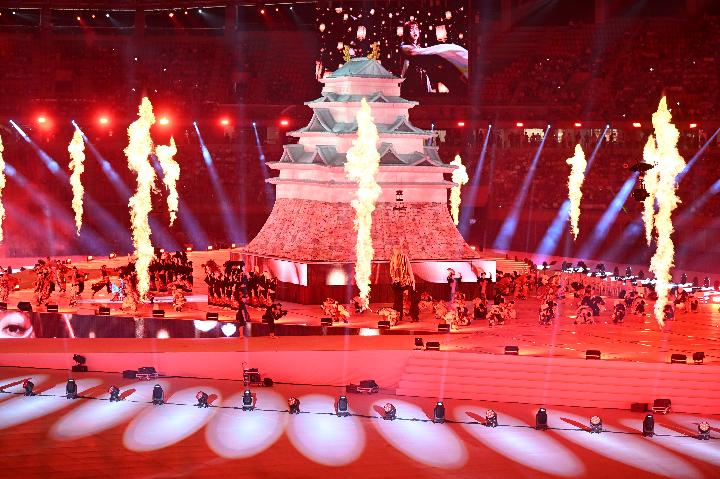
Kabarsaji.com – The 20th Asian Games began in Nagoya, Japan, on Saturday with an opening ceremony focused on solidarity, friendship, and the shared energy of competition across Asia. Held at Mizuho Park Athletic Stadium, the event marked the return of the Asian Games to Japan for the first time in more than 32 years.
Although the ceremony offered a celebratory beginning, the road to the Games had been difficult. Organizers and participating delegations faced a series of practical problems in the days leading up to the opening, including concerns about athlete accommodation and severe weather affecting the Aichi-Nagoya area.
A Different Approach to Athlete Housing
Rather than construct a permanent athletes village, Japanese organizers chose temporary accommodation arrangements as part of an effort to limit long-term costs. Thousands of athletes and officials are staying on a cruise ship and in wooden container-style housing during the Games.
The decision drew complaints from some residents, who expressed dissatisfaction with the living conditions. Yet organizers and sports officials have emphasized the financial reasoning behind the plan, arguing that a purpose-built village could become an underused facility once the event concludes.
“We don’t want to leave a white elephant after the games here,” Tayyab Ikram, deputy chairman of the Olympic Council of Asia athletes commission, said Friday.
Ikram acknowledged that agreeing on the accommodation solution had involved difficult conversations. Still, he described the result as an alternative model rather than a simple concession.
“So it was not easy discussions, but it was also not a compromise, because then we find a very unique kind of alternatives.”
The issue highlights a familiar challenge for major sporting events: how to welcome a large temporary population without creating costly infrastructure that has little practical use afterward. For Nagoya, the use of existing and temporary facilities is intended to answer that question, though the early complaints show that logistics remain just as important as cost control.
Rain Disrupts Early Competition
Weather has added another layer of uncertainty to the opening phase of the tournament. The region experienced record rainfall earlier this month and has also been preparing for the possibility of a typhoon approaching the Aichi-Nagoya coast.
Heavy rain forced the evacuation of hundreds of athletes last week. The disruption extended to the competition schedule when the women’s cricket match between Bangladesh and China, planned for Thursday, was abandoned because of the conditions.
Such interruptions can affect more than a single fixture. Rescheduled events may place added pressure on athletes, officials, transportation services, and venues. With competition running across dozens of sports, organizers will need to balance safety decisions with the demands of a packed calendar through the remainder of the Games.
Despite the unsettled build-up, the opening ceremony proceeded in a positive atmosphere at the 30,000-capacity Paloma Mizuho Stadium. A dance presentation opened the program, followed by a violin performance from Japanese musician Taro Hakase.
“Harmonic Heart Beat” Sets the Tone
The ceremony was built around the theme “Harmonic Heart Beat,” presenting the Games as an opportunity to strengthen mutual respect and connection among Asian nations and territories. Ohmura Hideaki, president of the Aichi-Nagoya Asian Games and Asian Para Games Organizing Committee, said the occasion was meant to reflect friendship as well as athletic achievement.
Ohmura expressed hope that competitors would perform at their highest level, produce memorable moments for spectators, and inspire younger people across Asia. The Games bring together elite athletes, but their impact is also intended to reach audiences watching athletes pursue national pride, personal goals, and international recognition.
For visitors, the event is also a chance to experience the host region beyond the stadiums and arenas. Ohmura encouraged participants and guests to explore Aichi-Nagoya’s historical locations, natural surroundings, fermented food, and traditional culture.
That invitation underlines the broader role of a multi-sport event. The Asian Games are designed around competition, but host cities also use them to introduce international visitors to local identity, cuisine, heritage, and community life. Nagoya’s program places those cultural elements alongside the sporting schedule.
A Major Continental Gathering
This year’s Asian Games feature approximately 11,000 athletes representing 45 countries and territories. Competitors will take part in 43 sports, creating one of the largest sporting gatherings in the region.
The scale of the event means that early concerns over rain and accommodation will remain under close attention. At the same time, the opening ceremony offered a clear signal that the Games are now underway, with athletes from across Asia set to take center stage.
The 20th Asian Games will continue until October 4. Over the coming weeks, Nagoya will host a wide range of contests while organizers work to manage the operational challenges that accompanied the event’s arrival.
Related Reading
Frequently Asked Questions
What is Asian Games Open in Nagoya After?
Asian Games Open in Nagoya After is the main topic of this guide. The article explains the context, practical details, and next steps readers should understand.
Why does Asian Games Open in Nagoya After matter?
Asian Games Open in Nagoya After matters because readers are looking for a useful answer, not just a short summary. Good content should match search intent and help them decide what to do next.