
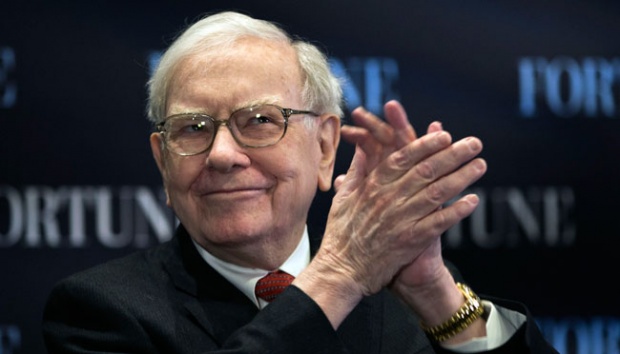
Warren Buffett Moves Into Chairman Emeritus Role at Berkshire Hathaway
Kabarsaji.com – Warren Buffett has ended his tenure as chair of Berkshire Hathaway, closing a leadership chapter that began more than 60 years ago. The 96-year-old investor will remain a director of the company and take the title of chairperson emeritus, while his son Howard Buffett, 71, assumes the chairmanship.
The board transition was announced on Friday, September 18, and follows another major handover completed less than a year earlier. Greg Abel succeeded Buffett as Berkshire Hathaway’s chief executive officer, placing him in charge of the group’s day-to-day operations while Howard Buffett takes on responsibility for protecting the company’s distinctive character and long-established principles.
“I have served Berkshire since 1965. Sixty-plus years in, I still have the best job in the world. This is not something many people my age can say, and I have never felt better about what comes next.”
Buffett’s departure from the chair role does not mean a complete break from the business he reshaped into one of the world’s largest corporations. His continuing place on the board provides continuity during a transition that has been planned around dividing operational leadership from stewardship of Berkshire’s culture.
A Split Between Operations and Culture
Abel will continue to lead the company’s businesses, investments and corporate operations as chief executive. Howard Buffett’s role is intended to safeguard the values that have been central to Berkshire Hathaway’s identity for decades: a long-term approach to ownership, decentralized management and careful capital allocation.
“Greg runs the company; Howard will guard its culture and values, both worth more than anything on our balance sheet.”
Buffett described his son’s purpose in unusually direct terms, emphasizing that the chairmanship is not simply ceremonial. He likened Howard Buffett to a form of protection for shareholders and the company’s defining principles.
“Think of Howard as a policy the shareholders own and hope never to claim against.”
The arrangement reflects the unusual nature of Berkshire Hathaway. Its many subsidiaries generally retain substantial autonomy, while the parent company has historically depended on a small headquarters team and a management philosophy closely associated with Buffett. Preserving that culture is a significant consideration as the conglomerate enters a post-Buffett era.
Abel said the leadership change would not alter the company’s core direction.
“The culture Warren built and the values he championed will remain at the heart of Berkshire, and Howard will be their guardian.”
From Textile Mill to Trillion-Dollar Conglomerate
Buffett took control of Berkshire Hathaway in 1965, when the business was still a textile manufacturer. Over the following decades, he turned it into a multinational conglomerate with a market capitalization exceeding US$1 trillion.
That transformation was built through a combination of acquisitions, retained earnings and a disciplined investment strategy. Berkshire now owns businesses spanning insurance, energy and consumer brands, including restaurant chain Dairy Queen. Its portfolio has also included major holdings in companies such as Apple, Coca-Cola, Chevron and Bank of America.
Insurance became especially important to Berkshire’s development because premiums collected before claims are paid can create investment funds known as float. Buffett used the company’s expanding financial resources to buy businesses and invest in publicly traded companies, while allowing many acquired firms to operate with considerable independence.
For readers and shareholders, the leadership succession matters because Berkshire is not a conventional single-industry company. Its performance depends on a broad collection of operating businesses as well as decisions about investments, acquisitions and capital deployment. Abel’s executive role and Howard Buffett’s chairmanship are designed to address those separate responsibilities without abandoning the framework established by Buffett.
An Investor With a Global Reputation
Buffett’s record made him one of the most recognizable investors in the world. Berkshire Hathaway outperformed the S&P 500 in 40 of the past 60 years, a long-term result that helped build his reputation for patient investing and an ability to identify businesses with durable strengths.
Often called the “Oracle of Omaha,” Buffett has remained closely connected to Omaha, Nebraska, where he grew up and where Berkshire Hathaway is headquartered. His public image has long been linked to the city, even as Berkshire expanded into a global enterprise with holdings and operating companies across numerous sectors.
His investment success also made him one of the world’s wealthiest people. Forbes places Buffett tenth on its global rich list, estimating his fortune at US$144.7 billion.
The transfer of the chairmanship marks a historic moment for Berkshire Hathaway, but it also formalizes a succession structure already taking shape. Abel has been positioned to manage the company, while Howard Buffett will serve as a guardian of the culture his father regards as one of Berkshire’s most valuable assets.
With Buffett staying on the board as chairperson emeritus, Berkshire retains a connection to the leader who guided it from a struggling textile operation into a corporate giant. The next phase will test how effectively its new leadership team can maintain that legacy while directing one of the world’s most closely watched conglomerates.
Related Reading
Frequently Asked Questions
What is Warren Buffett Steps Down as Berkshire?
Warren Buffett Steps Down as Berkshire is the main topic of this guide. The article explains the context, practical details, and next steps readers should understand.
Why does Warren Buffett Steps Down as Berkshire matter?
Warren Buffett Steps Down as Berkshire matters because readers are looking for a useful answer, not just a short summary. Good content should match search intent and help them decide what to do next.