
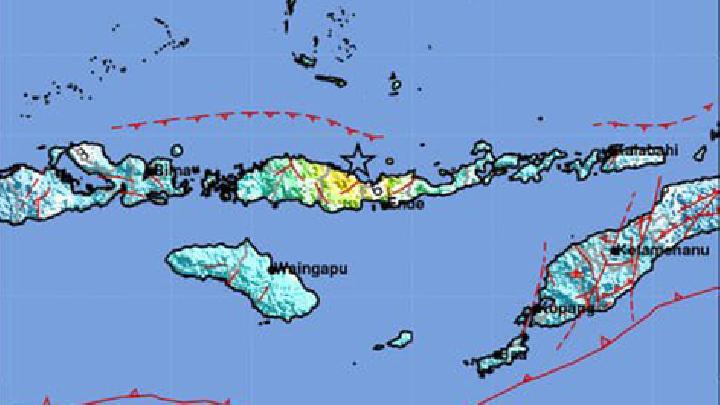
Flores Earthquake Aftershocks Pass 15,700 as Seismic Activity Gradually Eases
Kabarsaji.com – Thirty days after a magnitude 7.7 earthquake struck Flores in East Nusa Tenggara (NTT), Indonesia’s Meteorology, Climatology, and Geophysical Agency (BMKG) has detected 15,722 aftershocks. The events have ranged from magnitude 0.9 to 6.2, illustrating the prolonged adjustment of the region’s crust after the powerful mainshock on August 15, 2026.
While the volume of tremors remains substantial, BMKG monitoring shows that aftershock activity is trending downward. The decline is visible in both daily and weekly records, suggesting the sequence has moved into a natural decay phase rather than continuing at its initial intensity.
“BMKG has recorded 15,722 aftershocks ranging from magnitude 0.9 to 6.2. Of these, 190 were felt by residents,” BMKG Acting Deputy for Geophysics Ardhasena Sopaheluwakan said at a press conference in Jakarta on Tuesday.
Weekly Totals Show a Steady Reduction
The first week after the Flores earthquake produced 5,011 aftershocks. During the second week, the number fell to 4,267, followed by 3,158 in the third week and 2,421 in the fourth.
By 5 a.m. Jakarta time on September 15, 2026, BMKG had counted 864 additional aftershocks in the fifth week. The pattern does not mean seismic movement has stopped, but it indicates that the number of tremors is becoming less frequent over time.
Aftershocks occur when the area around a major earthquake continues to shift and settle. Many are too small for people to notice, even though sensitive instruments can register them. In a highly active seismic region such as NTT, monitoring these movements remains important because residents may still experience occasional shaking after the strongest event has passed.
Larger Tremors Are Now Rarer
BMKG Earthquake and Tsunami Director Wijayanto said only 26 aftershocks have reached magnitude 5.0 or higher. That represents 0.2 percent of all tremors recorded since the main earthquake.
Earthquakes at that level can be felt across a broader area and may pose a risk to vulnerable structures. However, their occurrence has become less common as the aftershock sequence declines. No tremor of magnitude 5.0 or greater was recorded during the most recent week of monitoring.
Another 476 aftershocks measured from magnitude 4.0 to below 5.0, equal to 3 percent of the total. BMKG noted that these mid-range events have also become less frequent between the fourth and fifth weeks following the August 15 earthquake.
For residents, the changing distribution matters as much as the overall total. A high count of very small events can appear alarming, yet most of those tremors are detected only by seismographs. The reduction in stronger aftershocks means that more widely felt shaking is occurring less often, even though the sequence is still continuing.
Most Events Remain Small and Unfelt
Aftershocks ranging from magnitude 3.0 to below 4.0 totaled 3,308 events, or 20.9 percent of the full count. These tremors are generally felt only near their epicenters and did not cause damage.
The largest share of activity came from earthquakes below magnitude 3.0. BMKG recorded 11,993 such events, making up 75.9 percent of all aftershocks. Most were not felt by residents and were identified through seismic monitoring equipment.
This breakdown shows why a large aftershock total should be read carefully. The overwhelming majority of events have been small. Even so, continued observation helps authorities track whether the sequence is maintaining its downward trajectory and provides communities with updated information about local seismic conditions.
Smaller Aftershocks May Continue for Months
Wijayanto said the weakening trend is a statistical indication of decaying earthquake activity, not a timetable for the exact end of the sequence. It also cannot determine when another earthquake might occur.
“This estimate reflects a statistical trend in the decay of earthquake activity. It is not an estimate of the exact date when the earthquake sequence will end, nor is it a prediction of when the next earthquake will occur. People are advised to remain alert given NTT’s naturally high level of seismic activity,” he said.
BMKG expects aftershocks between magnitude 3.0 and below 4.0 to continue for roughly another six to seven weeks, with their frequency expected to keep falling. Tremors below magnitude 3.0 may persist for several months.
The outlook underscores the need for residents to remain attentive without assuming that every recorded tremor will be felt or cause harm. Updates from official seismic monitoring remain especially useful for communities in areas that experienced the August 15 mainshock, as conditions can vary by location and the strength of individual aftershocks.
The Flores earthquake and the extensive sequence that followed are a reminder that a major seismic event can have effects long after the initial shaking. Although the latest figures point to a gradual easing of activity, NTT’s seismic setting means preparedness and reliable information remain essential in the weeks ahead.
Related Reading
Frequently Asked Questions
What is 15 722 Aftershocks Recorded in 30 Days?
15 722 Aftershocks Recorded in 30 Days is the main topic of this guide. The article explains the context, practical details, and next steps readers should understand.
Why does 15 722 Aftershocks Recorded in 30 Days matter?
15 722 Aftershocks Recorded in 30 Days matters because readers are looking for a useful answer, not just a short summary. Good content should match search intent and help them decide what to do next.