
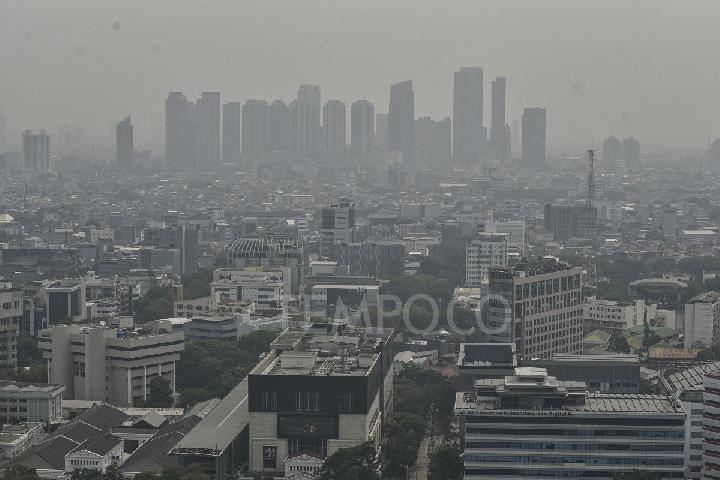
Singapore Haze Pushes Central Air Quality Back Into Unhealthy Zone
Kabarsaji.com – Singapore’s central region moved back into the unhealthy air-quality category on Monday, September 14, as haze-producing hotspots continued to affect parts of Indonesia and dry weather persisted across much of the southern ASEAN region.
The 24-hour Pollutant Standards Index, or PSI, for the central region reached 102 at noon. It climbed further to 108 by 2 p.m. Readings in Singapore’s remaining four regions ranged from 83 to 96 during the afternoon, placing them in the moderate category but close to the unhealthy threshold in several areas.
Under Singapore’s PSI scale, a reading from 101 to 200 is classified as unhealthy. Values between 201 and 300 are considered very unhealthy, while readings above 300 fall into the hazardous range. The index is intended to help residents understand the possible health effects of air pollution and adjust outdoor activity where needed.
Dry Conditions and Regional Hotspots
Weather conditions on Monday remained dry across large areas of southern ASEAN, although some parts of Sumatra received showers. The National Environment Agency continued to track local conditions as well as the wider regional situation that can influence Singapore’s air quality.
Hotspots were identified in southern Sumatra and in western, central and southern Kalimantan. Smaller numbers of hotspots were also found in Java and Peninsular Malaysia. Such hotspots can be linked to fires that generate smoke and fine particles, which may be carried across borders when wind and atmospheric conditions allow.
Moderate to dense haze covered parts of central and southern Sumatra, along with western and central Kalimantan. Haze crossing national boundaries was also observed in sections of Sarawak, Peninsular Malaysia and southern Vietnam. Air-monitoring stations in those areas registered conditions ranging from moderate to unhealthy.
The regional nature of haze means that Singapore’s air quality can change even when local weather appears relatively stable. Rainfall, wind direction, the scale of burning activity and the movement of smoke plumes can all affect the concentration of pollutants measured across the island.
A Return to Unhealthy Readings
The latest rise follows four straight days in which Singapore recorded moderate PSI readings. Earlier this month, the central region crossed into the unhealthy category on September 4, its first unhealthy reading since 2023. That development led the National Environment Agency to begin issuing daily haze advisories.
Daily advisories provide residents with updated information as conditions evolve. A PSI figure represents the air-quality situation over a 24-hour period, so people should pay attention to the latest official reading rather than relying only on how clear or hazy the sky appears at a particular moment.
For many residents, the practical concern is exposure to fine airborne particles during periods of haze. People who are more sensitive to air pollution, including those with existing heart or lung conditions, may wish to take additional care when readings enter the unhealthy range. Reducing prolonged outdoor exertion can be a sensible precaution when air quality worsens.
Parents, older adults and individuals who experience respiratory discomfort may also find it useful to monitor local updates throughout the day. Symptoms such as eye irritation, coughing or breathing discomfort can become more noticeable when haze intensifies, though individual responses vary.
Why the PSI Matters
The PSI offers a shared reference point for comparing conditions across Singapore’s regions. Monday’s central-region reading of 108 placed it above the unhealthy threshold, while readings of 83 to 96 elsewhere showed that pollution levels were not identical across the island. Regional differences can arise from localized weather patterns and the way haze moves through the atmosphere.
A change from moderate to unhealthy does not necessarily mean conditions will remain elevated for an extended period. Air quality can improve or deteriorate as rain develops, winds shift, or smoke from regional hotspots changes in intensity. That uncertainty makes regular monitoring especially important during a haze episode.
The continued detection of hotspots in Sumatra and Kalimantan underscores the cross-border challenge posed by haze in Southeast Asia. Smoke generated in one location can affect communities far beyond the immediate fire area, placing pressure on public-health systems, transport operations and daily outdoor routines across the region.
Singapore’s renewed unhealthy reading highlights how quickly the balance can shift during dry conditions. With haze still visible over several parts of the region, residents have reason to remain attentive to official air-quality updates and to make activity choices that reflect the most current PSI information.
Related Reading
Frequently Asked Questions
What is Singapore s Air Quality Returns to Unhealthy?
Singapore s Air Quality Returns to Unhealthy is the main topic of this guide. The article explains the context, practical details, and next steps readers should understand.
Why does Singapore s Air Quality Returns to Unhealthy matter?
Singapore s Air Quality Returns to Unhealthy matters because readers are looking for a useful answer, not just a short summary. Good content should match search intent and help them decide what to do next.