
Electoral Threshold Debate Tests Unity Inside Prabowo’s Coalition
Kabarsaji.com – Debate over changes to Indonesia’s election rules is emerging as an important issue for political parties preparing for the 2029 General Election, with the National Mandate Party (PAN) placing particular attention on the future of parliamentary and presidential nomination thresholds.
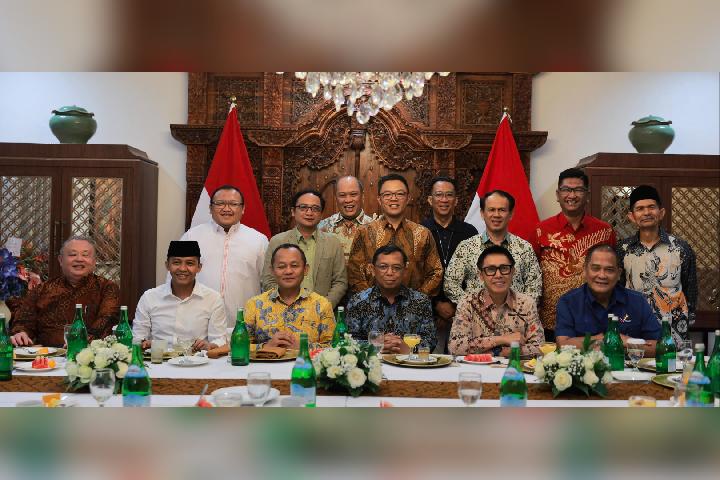
The discussion surfaced during a meeting at the official residence of PAN General Chair Zulkifli Hasan in Widya Chandra, South Jakarta. Zulkifli, who also serves as Coordinating Minister for Food Affairs, spoke with Viva Yoga Mauladi on a range of matters that included the proposed revision of the General Election Law.
Although the next electoral process is scheduled to begin next year, the legal framework governing key elements of the contest has yet to be finalized. That uncertainty matters because threshold rules can directly affect which parties secure seats in the House of Representatives, or DPR, and how presidential coalitions are assembled.
PAN Keeps Focus on Election-Law Revision
Viva Yoga Mauladi said Zulkifli had instructed senior PAN figures to keep examining developments surrounding the amendment of the General Election Law. The party’s attention is centered especially on two provisions: the minimum vote requirement for parliamentary representation and the threshold for nominating presidential candidates.
For PAN, these questions are not merely technical details. A parliamentary threshold determines the share of votes a political party must obtain before it can enter the DPR. Any adjustment could alter the prospects of smaller and mid-sized parties, while also influencing the range of voices represented in the national legislature.
The Constitutional Court has directed lawmakers to revise the parliamentary threshold, which had stood at 4 percent. The Court has also established a 0 percent threshold for presidential nominations. Together, the decisions carry consequences for the structure of future electoral competition and for the alliances that parties may seek before the 2029 race.
PAN is advocating a lower parliamentary requirement than the old 4 percent benchmark. Viva, who is Deputy Minister of Transmigration, said the party would prefer the threshold to be eliminated altogether.
“If possible, 0 percent, because even the 4 percent threshold has been ruled out by the Constitutional Court,” he said.
Why Thresholds Matter for Political Parties
The parliamentary threshold has long been one of the most consequential features of Indonesia’s electoral system. It is intended to determine which parties can convert their national vote totals into representation at the DPR level. A higher threshold can limit the number of parties entering parliament, while a lower one can create greater opportunities for parties with more modest vote shares.
For parties preparing their 2029 strategies, the eventual rule will shape decisions made well before voting day. Campaign planning, candidate recruitment, fundraising priorities, regional organization, and cooperation with other parties can all be affected by the expected electoral landscape. A party that sees a stronger chance of clearing the threshold may pursue a more independent path, while uncertainty can encourage early alliance-building.
The issue also has broader implications for voters. Threshold rules can influence whether votes cast for a particular party result in representation in the DPR. The final revision will therefore be closely watched not only by party leaders, but also by candidates and citizens assessing how their political preferences may be reflected in parliament.
Coalition Calculations Ahead of 2029
The presidential nomination threshold is equally significant because it relates to who can take part in the presidential contest. With the Constitutional Court setting that threshold at 0 percent, the political calculations behind presidential nominations may change substantially. Parties will still need to consider their electoral strength and their relationships with potential partners, but the formal barrier that previously shaped those discussions has been removed.
That development could affect the balance of power among parties within broader governing and opposition blocs. Coalition partners may share national priorities while taking different positions on election rules that could determine their long-term political influence. The threshold debate therefore has the potential to expose differing interests inside alliances as parties look beyond current cooperation toward the next election cycle.
PAN’s position reflects an effort to ensure that the revised law responds to the Constitutional Court’s rulings while preserving room for political participation. The party’s preference for a 0 percent parliamentary threshold places it at the more open end of the debate, favoring a model in which every participating party has the possibility of gaining DPR representation through the votes it receives.
Lawmakers now face the task of translating the Court’s decisions into revised legislation before the electoral timetable advances further. The result will help define the rules under which parties compete in 2029, determine how votes are converted into parliamentary seats, and influence the coalition map that will develop in the years ahead.
For now, the discussion at Zulkifli Hasan’s residence illustrates how early the political maneuvering has begun. Even before the voting process starts, disagreements over the basic rules of competition are becoming part of the larger contest over representation, influence, and the future composition of Indonesia’s political alliances.
Related Reading
Frequently Asked Questions
What is Fractures Within Prabowo s Coalition?
Fractures Within Prabowo s Coalition is the main topic of this guide. The article explains the context, practical details, and next steps readers should understand.
Why does Fractures Within Prabowo s Coalition matter?
Fractures Within Prabowo s Coalition matters because readers are looking for a useful answer, not just a short summary. Good content should match search intent and help them decide what to do next.