
Marcos Urges ASEAN to Deepen Unity During BRICS Summit Address
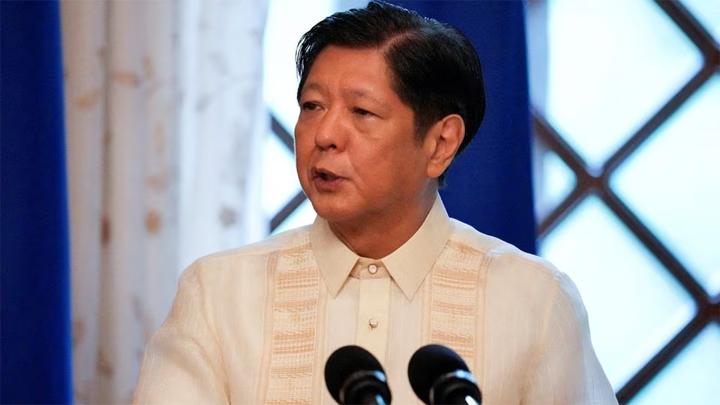
Kabarsaji.com – Philippine President Ferdinand R. Marcos Jr. used his appearance at the 18th BRICS Summit in New Delhi to call for a more united, resilient and outward-facing ASEAN amid mounting geopolitical and economic pressures.
Speaking on Sunday, September 13, 2026, at the Bharat Mandapam Convention Center, Marcos addressed the summit’s Open Session as the Philippines prepared to take up the ASEAN chairmanship for 2026. He presented the bloc as a community of 11 member states with almost 700 million people, stressing its continued commitment to openness, inclusion and engagement with the wider world.
“We reaffirm that regional stability—and indeed global stability—hinges on our commitment to ASEAN centrality, sustained dialogue, and steadfast adherence to a rules-based order grounded in international law,” Marcos said.
His remarks placed ASEAN centrality at the heart of the Philippines’ approach. The principle broadly reflects the idea that Southeast Asian countries should retain a leading role in shaping the region’s diplomatic and economic agenda, even as larger powers increase their influence across the Indo-Pacific.
Three priorities for the Philippine chairmanship
Marcos outlined three broad areas that will guide the Philippines’ ASEAN leadership: peace and security, pathways to prosperity, and the empowerment of communities. Together, the priorities combine regional stability with practical concerns that directly affect households, businesses and vulnerable groups.
On security, he said ASEAN is continuing work on maritime cooperation, disaster readiness and climate security. These efforts are intended to help member countries respond more effectively to natural disasters, climate-related risks and shocks arising from regional tensions or economic disruption.
The emphasis on resilience also recognizes the interconnected nature of Southeast Asian economies. A disruption in transport, energy supplies, agricultural output or trade can affect countries across the region, making coordination a central part of ASEAN’s long-term planning.
Energy, food and supply-chain resilience
Economic cooperation featured prominently in Marcos’s address. He said ASEAN is reinforcing supply chains while pursuing greater energy and food security through regional initiatives.
Among the measures cited were the ASEAN Common Shared Power Grid, the ASEAN Petroleum Security Agreement and a regional mechanism for rice reserves. These initiatives are designed to encourage cooperation when energy markets are strained or food supplies face pressure, while supporting greater stability across the bloc.
For consumers and businesses, such cooperation can matter beyond high-level diplomacy. More dependable regional supply networks and stronger energy planning can help economies manage sudden disruptions, while food-security arrangements are especially significant in a region where rice remains a staple for millions of people.
The Philippines is also seeking progress on a Digital Economy Framework Agreement during its chairmanship. Marcos highlighted the need for digital growth that reaches smaller enterprises as well as larger companies, with attention to the responsible use of artificial intelligence.
He said the Philippines is promoting the safe and ethical adoption of AI, particularly for micro, small and medium enterprises and businesses led by women. The focus reflects the growing role of digital tools in commerce, public services and everyday work, while recognizing the need to ensure that technological change is inclusive.
Climate action and stronger communities
Marcos said ASEAN is developing green investment initiatives and a joint regional plan for agriculture that can withstand climate pressures. The goal is to protect food production while advancing sustainability over the long term.
Climate-resilient agriculture is increasingly important for Southeast Asia, where changing weather patterns, severe storms, flooding and drought can place pressure on farms and food systems. Regional planning can support countries facing similar challenges while allowing them to share approaches suited to different local conditions.
Community empowerment formed the third pillar of the agenda presented in New Delhi. Marcos said ASEAN is investing in young people, digital literacy and resilient families, while seeking to strengthen protection for vulnerable groups.
“ASEAN’s enduring strength lies in consensus, bridge-building, and constructive engagement across various regions,” Marcos said.
The message underscored ASEAN’s longstanding reliance on dialogue and consensus-building among countries with different political systems, economic conditions and national priorities. Marcos presented those habits of engagement as an asset at a time when international divisions have become more pronounced.
Philippines joins BRICS discussion as outreach country
The Philippines attended the BRICS Summit as an Outreach Country, giving Marcos an opportunity to present ASEAN’s regional priorities before BRICS members and partner nations.
BRICS began with Brazil, Russia, India and China, later adding South Africa. Its membership has expanded in recent years, and the group now includes four ASEAN member states. The Philippines has said it will follow developments within BRICS while engaging constructively where appropriate.
Marcos also congratulated Indian Prime Minister Narendra Modi and India for hosting the BRICS chairmanship in 2026. His participation reflected the Philippines’ effort to maintain dialogue with a range of international groupings while preparing to lead ASEAN through a period shaped by economic competition, technological change and regional security concerns.
For ASEAN, the challenge will be to turn these broad priorities into cooperation that delivers visible benefits: stronger preparedness for crises, more reliable access to food and energy, digital opportunities for smaller businesses, and safeguards for communities most exposed to disruption. Marcos’s address framed unity and engagement as essential tools for meeting that task.
Related Reading
Frequently Asked Questions
What is Philippines Marcos Calls for Stronger ASEAN?
Philippines Marcos Calls for Stronger ASEAN is the main topic of this guide. The article explains the context, practical details, and next steps readers should understand.
Why does Philippines Marcos Calls for Stronger ASEAN matter?
Philippines Marcos Calls for Stronger ASEAN matters because readers are looking for a useful answer, not just a short summary. Good content should match search intent and help them decide what to do next.