Singapore Prime Minister Lawrence Wong Set for Major Pay Increase
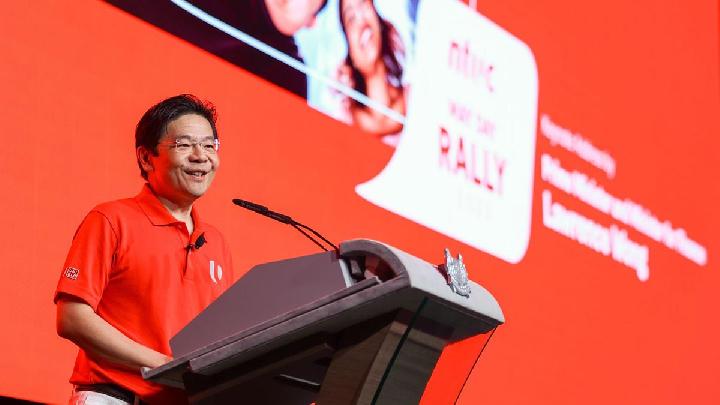
Kabarsaji.com – Singapore Prime Minister Lawrence Wong is expected to receive an annual pay increase of S$1.4 million, taking his total remuneration package to S$3.6 million, or roughly US$2.8 million, a year. The planned adjustment would further reinforce his position as the highest-paid political leader in the world.
Wong has said that he will give the additional income to charitable causes over the coming five years. The change is part of a broader government plan to revise the salaries of ministers and other political office holders.
His current annual package is about S$2.2 million. Once the new arrangement is implemented, the increase alone will amount to approximately US$1.1 million each year.
Government Says Higher Salaries Help Attract Talent
Wong has defended the decision by arguing that Singapore needs competitive compensation to persuade capable people to enter public service. He said the government has found it difficult to convince successful business figures and senior civil servants to leave well-paid careers for political office.
Overall, I believe this will give me and future prime ministers a better chance of persuading capable Singaporeans to step forward, and of building the strongest possible team for Singapore.
Singapore’s longstanding position is that strong ministerial salaries make public office more attractive to qualified candidates while reducing the temptation for officials to accept bribes. The government has often linked this approach to the country’s reputation for low corruption.
Singapore regularly appears among the least corrupt countries in Transparency International’s Corruption Perceptions Index. Supporters of the remuneration model argue that well-paid political leaders can help safeguard public institutions and ensure that government roles remain competitive with senior private-sector positions.
How the New Compensation Plan Would Work
Under the proposed scheme, ministers’ base salaries would rise from roughly S$1.1 million to about S$1.2 million. Wong expects that most ministers will receive around S$1.35 million annually by the end of the present government term, with further increases depending on performance.
Not all of a minister’s compensation is fixed. A portion is tied to national outcomes, including unemployment levels, income growth and gross domestic product growth. The structure is intended to connect part of ministers’ earnings with Singapore’s broader economic performance.
Wong’s total package remains substantially higher than those received by other leaders internationally. Hong Kong Chief Executive John Lee is the next highest-paid leader, with annual earnings of about US$719,000. Swiss President Guy Parmelin follows at approximately US$606,000 a year.
For comparison, U.S. President Donald Trump earns US$400,000 annually, while British Prime Minister Andy Burnham receives about US$230,000. The differences highlight the exceptional scale of Singapore’s political-pay model, particularly at the level of prime minister.
Cost-of-Living Concerns Fuel Public Debate
The announcement has revived criticism from Singaporeans concerned about employment security, inflation and rising living costs. Online reaction included accusations that the increase was “tone deaf,” especially while the country faces worries over retrenchments and job prospects for new graduates.
Government figures showed that retrenchments reached their highest point in more than five years during the latest quarter. That backdrop has made the size and timing of the proposed pay rise especially sensitive for many residents.
Wong acknowledged that ministerial compensation draws scrutiny because it sits far above the income earned by most Singaporeans. The country’s median monthly income stands at S$5,775, a figure that illustrates the large gap between typical earnings and the compensation available to senior political office holders.
The debate is not new. Pay for ministers has long been a politically charged subject for the ruling People’s Action Party, which has governed Singapore since the country became independent.
During the 2011 general election, the PAP recorded its lowest share of the popular vote in decades. Dissatisfaction over ministerial pay and immigration policies was among the concerns raised by voters at that time. The government later reduced ministerial salaries in 2012.
A Familiar Pledge to Donate the Increase
Wong’s commitment to give the extra earnings to charity echoes an earlier move by his predecessor, Lee Hsien Loong. In 2007, Lee also said he would donate his salary increase to charitable causes for several years.
For Wong, the pledge may soften some public reaction, but it does not remove the wider question facing Singapore: whether exceptionally high political salaries are justified when many households remain focused on daily costs, job stability and economic uncertainty.
Those backing the change say the country must recruit the “best of the best” to lead a complex and globally connected economy. Critics, meanwhile, see the increase as difficult to reconcile with the financial pressures confronting ordinary residents.
The planned rise therefore represents more than a change to executive compensation. It has reopened a longstanding national discussion about merit, public service, accountability and the relationship between political leadership and the people it is meant to serve.
Related Reading
Frequently Asked Questions
What is Singapore PM Lawrence Wong to Get 1?
Singapore PM Lawrence Wong to Get 1 is the main topic of this guide. The article explains the context, practical details, and next steps readers should understand.
Why does Singapore PM Lawrence Wong to Get 1 matter?
Singapore PM Lawrence Wong to Get 1 matters because readers are looking for a useful answer, not just a short summary. Good content should match search intent and help them decide what to do next.