
Five Indonesian Airports Resume Flights After Anak Krakatau Ash Clouds Disperse
Kabarsaji.com – Volcanic ash drifting from Mount Anak Krakatau forced temporary closures at five Indonesian airfields earlier this week, but state air-navigation authority AirNav Indonesia confirmed on Tuesday, September 8, 2026, that all five facilities have returned to normal operations. The reopening follows a shift in ash-cloud trajectories that cleared the affected flight corridors, allowing controllers to issue updated notices to pilots and airlines.
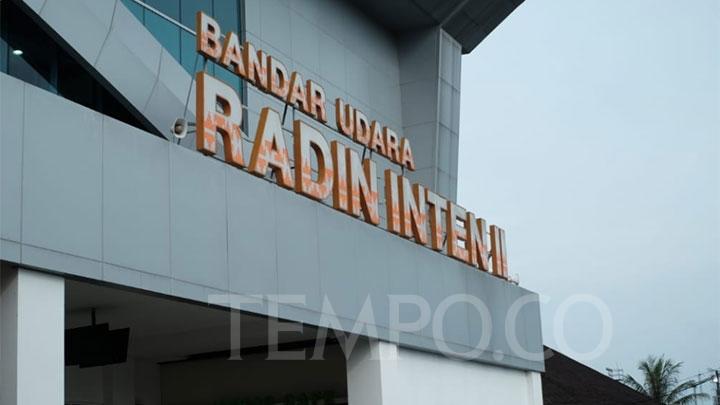
The most prominent among the affected sites is Radin Inten II Airport in Lampung province, which serves as a key gateway to the island’s southern coast. Four additional airfields were also grounded during the ash event: Muhammad Taufiq Kiemas Airport in Lampung, Budiarto Airport in Tangerang, Pondok Cabe Airport in South Tangerang, and Salakanagara Tanjung Lesung Airport in Pandeglang, Banten. Together, these airports handle a mix of domestic passenger traffic, cargo operations, and general-aviation movements across the Java–Sumatra corridor.
NOTAM-Driven Clearance and Operational Window
Radin Inten II Airport officially resumed service under NOTAM B1159/26, a formal aeronautical notice declaring the aerodrome open and operational from 9:45 a.m. through 11:59 p.m. on September 8, 2026. The remaining four airfields likewise received updated NOTAM clearances once their respective flight sectors were confirmed free of hazardous ash concentrations. Each notice was issued after AirNav Indonesia’s safety-evaluation teams assessed real-time dispersion data and confirmed that residual ash levels fell below thresholds that could impair jet-engine performance or reduce visibility during approach.
Hermana Soegijantoro, Executive Vice President of Corporate Secretary at AirNav Indonesia, explained that the timing of each clearance was dictated by observable changes in how the ash plume was spreading across the airspace. Rather than applying a blanket reopening schedule, controllers evaluated each airport’s exposure individually before authorizing the return to service.
Ongoing Vigilance Despite the Green Light
Although the closures have ended, AirNav Indonesia emphasized that the five airports remain under active surveillance. Ash particles from Anak Krakatau were still being detected in certain flight sectors at the time of the announcement, meaning conditions could deteriorate again if wind patterns shift.
“Pilots are also reminded to remain cautious during arrival and departure procedures,” Hermana said on Tuesday, September 8, 2026.
Field-level checks continue at each affected site. Among these are periodic volcanic ash paper tests—small strips of chemically treated paper placed on tarmac surfaces to detect microscopic ash deposits invisible to the naked eye. As of the announcement, all such tests had returned negative results, confirming that no hazardous accumulation had occurred on runways or taxiways.
“Monitoring and updating aeronautical information are carried out continuously to ensure that flight operations proceed with a focus on safety,” Hermana concluded.
Why Volcanic Ash Is a Serious Aviation Hazard
For readers unfamiliar with the mechanics of ash-related closures, the risk is not merely reduced visibility. Fine volcanic particles, composed largely of silicate glass fragments, are abrasive enough to erode turbine blades within seconds of ingestion. They can also melt inside jet engines at high temperatures, forming a glassy coating that disrupts airflow and may cause flameout. Even concentrations far below what a pilot would perceive as “smoke” can degrade engine performance over sustained exposure.
Indonesia sits along the Pacific Ring of Fire, and its archipelago hosts more than 120 active volcanoes. Anak Krakatau, located in the Sunda Strait between Java and Sumatra, has a history of explosive eruptions that send ash plumes hundreds of kilometers downwind. Because prevailing winds in the region can carry particles over major flight corridors linking Jakarta, Lampung, and Banten, even moderate eruptions occasionally trigger multi-airport groundings. Airlines typically reroute flights around ash zones, but when plumes overlap with departure or arrival paths, temporary closures become the safest option.
What Travelers Should Expect
Passengers with flights scheduled through the affected airports on September 8 and into the following days should monitor their airline’s operational updates and airport information desks. While the NOTAM clearances indicate normal service has resumed, airlines may still apply conservative scheduling margins during the first 24 to 48 hours after an ash event. Cargo operators and general-aviation pilots should verify current NOTAM status before filing flight plans through the Lampung, Tangerang, South Tangerang, or Pandeglang sectors.
AirNav Indonesia stated it will continue tracking Anak Krakatau’s activity in coordination with meteorological agencies, volcanic observatories, and airline operations centers. Additional NOTAMs will be issued promptly should ash concentrations rise again above operational limits. Until the volcano enters a confirmed quiescent phase, the five airports will remain on an elevated monitoring footing, with ash-paper tests and satellite-based plume tracking conducted at regular intervals.
Related Reading
Frequently Asked Questions
What is Lampung s Radin Inten II Airport?
Lampung s Radin Inten II Airport is the main topic of this guide. The article explains the context, practical details, and next steps readers should understand.
Why does Lampung s Radin Inten II Airport matter?
Lampung s Radin Inten II Airport matters because readers are looking for a useful answer, not just a short summary. Good content should match search intent and help them decide what to do next.