
Volcanic Ashfall and the Fragile Balance of Crop Health
Kabarsaji.com – When a volcano erupts and blankets surrounding farmland in a fine grey coating, the immediate concern is often human safety and air quality. Yet beneath the visible dust lies a quieter agricultural crisis: the slow strangulation of photosynthesis, the choking of root systems, and the potential collapse of an entire growing season. Understanding how volcanic ash interacts with living plants is essential for farmers, extension workers, and policymakers in eruption-prone regions, particularly in archipelagic nations where volcanic activity intersects densely with smallholder agriculture.
Duration of Exposure as the Deciding Factor
The severity of ash-induced crop damage is not uniform. It scales almost entirely with how long the particles remain in contact with foliage and soil. Iskandar, a professor of agrogeology at the Faculty of Agriculture, IPB University, and an active member of the Department of Soil Science and Land Resources, emphasized this point in a written statement issued on Tuesday, September 8, 2026.
“If the disturbance lasts for days or even weeks, the impact will be severe.”
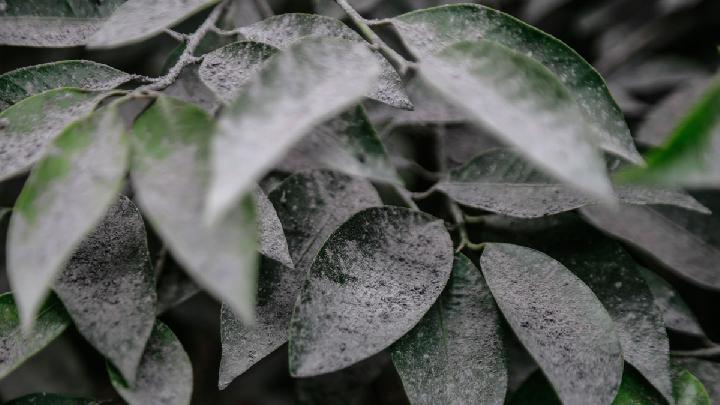
In practical terms, a brief shower of ash that clears within a day or two may cause little more than temporary leaf discoloration. But when deposition persists for extended periods, the physiological consequences compound rapidly. Leaves and stems become coated in a dense mineral film that blocks light penetration and seals the stomata — the microscopic pores through which plants exchange gases. With stomata closed, carbon dioxide uptake halts, transpiration drops, and the photosynthetic machinery effectively idles. Over time, this suppression cascades into stunted vegetative growth, delayed or aborted flowering, and ultimately a failure to set fruit.
Proximity to the Eruption Center Changes the Threat Profile
Distance from the vent matters enormously, and it alters both the physical and thermal character of the falling material. Close to the eruption center, ejecta arrives still hot — sometimes near or above temperatures that can scorch tender tissue outright. Plants in this zone tend to wilt within hours and may die before any recovery strategy can be applied. The particles themselves are coarser: sand-sized grains, gravel fragments, and occasionally chunks of rock rather than the fine dust associated with more distant fallout.
Farther from the vent, the ash becomes progressively finer and lighter. These micron-scale particles travel farther on prevailing winds, settle more slowly, and coat surfaces in a uniform, powdery layer. While thermally less aggressive, this fine fraction is precisely what adheres to leaf surfaces and clogs stomata over prolonged periods, making the biological damage pathway dominant over the thermal one.
Rainfall: The Natural Reset Mechanism
How long ash persists on the ground and on plant surfaces is governed largely by rainfall. Thin deposits — the kind typical of areas tens to hundreds of kilometres from the vent — are relatively easy for even moderate rain to wash away, restoring gas exchange and light interception within a single storm event. Thick accumulations near the eruption center, however, can resist washing for weeks, prolonging the period of physiological stress.
Iskandar noted that the ash deposited on soil should not be hauled away or discarded. Instead, once rainfall has percolated through the layer, the mineral content begins to leach into the upper soil profile, releasing elements that crops require.
“This will release various beneficial nutrients for plants, such as calcium (Ca), magnesium (Mg), potassium (K), and others.”
In certain geological settings, volcanic debris can therefore act as a natural amendment, partially replenishing degraded or nutrient-depleted soils. The caveat is that this benefit is conditional: the ash must first be wetted and biologically processed before its nutrients become plant-available, and the initial alkaline pulse can temporarily shift soil chemistry in ways that stress acid-tolerant species.
Practical Guidance for Post-Eruption Land Management
Iskandar’s primary operational advice to affected communities is straightforward: resume cultivation as soon as safety conditions permit, and do so without delay. Soil that has been buried under thick ash becomes progressively harder to till as the material compacts and begins to cement with moisture. The longer the delay, the greater the mechanical resistance and the higher the fuel or labour cost of breaking that crust.
Before replanting, however, a basic soil assessment is warranted. Iskandar specifically recommends measuring soil pH and electrical conductivity (EC) to gauge whether the ash deposit has pushed alkalinity or salinity beyond thresholds compatible with the intended crop. Where readings fall within acceptable ranges, the ash can be incorporated into the topsoil as a mineral amendment. Where they do not, targeted liming, gypsum application, or organic-matter additions may be necessary to rebalance the system before seeds go in.
Broader Context: Why This Matters for Island Agriculture
For nations where volcanic activity and intensive smallholder farming occupy overlapping geographic space, each ashfall event carries economic stakes that extend well beyond the immediate blast zone. A single eruption can reduce photosynthetic output across thousands of hectares, suppress fruiting in orchards for an entire season, and elevate the cost of soil remediation for communities with limited mechanisation. The Anak Krakatau ashfall that prompted this advisory underscores how quickly a geophysical event translates into an agricultural one, and why extension services need pre-positioned protocols for soil testing, tillage scheduling, and nutrient management in the aftermath.
The message from the agrogeology community is clear: volcanic ash is neither uniformly toxic nor uniformly benign. Its effect is a function of particle size, thermal state, deposition thickness, duration of contact, and subsequent rainfall. Farmers who understand these variables can convert a destructive event into a manageable setback — and, in some cases, into a modest mineral gain for the soil beneath.
Related Reading
Frequently Asked Questions
What is How Harmful Is Volcanic Ash to Plants?
How Harmful Is Volcanic Ash to Plants is the main topic of this guide. The article explains the context, practical details, and next steps readers should understand.
Why does How Harmful Is Volcanic Ash to Plants matter?
How Harmful Is Volcanic Ash to Plants matters because readers are looking for a useful answer, not just a short summary. Good content should match search intent and help them decide what to do next.