Recurring Food Poisoning Under Indonesia’s Free Meals Scheme Draws Human Rights Alarm
Kabarsaji.com – What began as isolated complaints about spoiled meals in school cafeterias has hardened into something far more troubling: a recognizable pattern of foodborne illness striking children across multiple provinces. Indonesia’s National Human Rights Commission, known by its acronym Komnas HAM, issued a formal written statement on Monday, September 7, 2026, declaring that repeated contamination events tied to the government’s Free Nutritious Meals (MBG) initiative now threaten the fundamental right to life of schoolchildren who depend on the program for daily nutrition.
The MBG scheme, launched under President Prabowo Subianto as a centerpiece of his administration’s social-welfare agenda, was designed to guarantee that every enrolled student receives a safe, balanced meal each school day. In practice, however, the program’s rapid rollout across thousands of kitchens has outpaced the sanitation infrastructure needed to keep food safe at scale. The commission’s intervention marks a sharp escalation: this is no longer a matter of logistical hiccups or isolated kitchen lapses, but a systemic governance failure with direct consequences for minors.
A Pattern Across Provinces
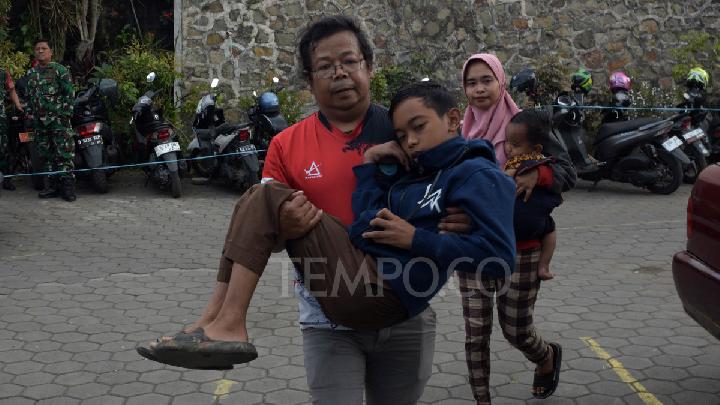
Komnas HAM documented hundreds of students—many enrolled in Islamic boarding schools (pesantren) as well as conventional public and private institutions—who fell ill after consuming MBG meals in September 2026. Affected locations spanned Sidoarjo Regency, Rembang Regency, Jombang Regency, and the city of Surakarta, locally known as Solo. These September cases compounded an earlier wave in August 2026, when suspected MBG-linked poisoning was recorded in Jayapura, Papua, and in Semarang, Central Java.
The geographic spread is significant. It suggests that the problem is not confined to a single under-resourced region or a single kitchen operator. Rather, it points to gaps in oversight, training, and quality-control protocols that recur wherever the program operates at scale without adequate daily inspection.
The Human Rights Framing
Uli Parulian Sihombing, the Komnas HAM commissioner responsible for research and assessment, framed the issue explicitly in rights language. In her written statement she warned that the state’s nutritional ambitions could lose their moral legitimacy if sanitation standards were not enforced rigorously on a day-to-day basis.
“The incidents have continued to occur and are almost becoming a pattern,” Uli said.
She went further, arguing that without a human rights-based food governance architecture—meaning transparent accountability, victim-centered remedies, and structural prevention—the program risks inverting its own purpose. A scheme meant to fulfill children’s right to adequate nutrition could, in its current operational state, become a direct threat to their physical safety and dignity.
“The recurrence of food poisoning incidents endangers the right to life of MBG beneficiaries, particularly schoolchildren,” Uli said.
Four Recommendations to Halt the Cycle
In its statement, the commission laid out at least four concrete demands directed primarily at the National Nutrition Agency (BGN), the body tasked with administering the MBG program:
First, BGN must immediately suspend operations at every kitchen serving meals at locations where poisoning has occurred, until a full safety audit is completed. Second, the agency is to carry out a comprehensive causal evaluation—tracing contamination from sourcing through preparation to distribution—and implement verified corrective measures before any kitchen resumes service. Third, victims must receive effective remedies that go well beyond public apologies or assurances of non-repetition; the commission stressed that the government bears full responsibility for both physical recovery and mental-health support for affected children and their families. Fourth, BGN is to coordinate closely with provincial and municipal governments, the Ministry of Health, and the Food and Drug Authority (BPOM) to tighten oversight at every stage of the food chain.
“This should not be limited to apologies and guarantees that the incidents will not happen again,” Uli said.
Independent Enforcement and Broader Accountability
Beyond the nutrition agency, Komnas HAM called on the national police and BPOM to pursue transparent, independent, and fair law-enforcement action against every party implicated in MBG-related contamination—whether that means kitchen operators, logistics contractors, or supervisory officials who failed to inspect. The commission emphasized that sanctions must be proportionate, publicly documented, and accompanied by guarantees that the same failure will not recur.
The commission also underscored the need for a transparent epidemiological investigation in each incident: identifying the specific pathogen or contaminant, mapping the supply chain, and publishing findings so that communities can trust the corrective process.
Why This Matters Beyond the Cafeteria
The MBG program represents one of the largest single-recipient food-distribution operations in Southeast Asia. Its scale—meant to reach millions of schoolchildren daily—makes even a small percentage of contaminated meals translate into hundreds or thousands of sick children in a given week. For families in lower-income communities, where a school meal may be the only reliable hot food a child receives, a poisoning event is not merely an inconvenience; it can mean lost school days, medical costs, and lasting anxiety about returning to the classroom.
The commission’s intervention also signals a broader governance question: how does a government balance the speed of welfare delivery against the non-negotiable requirement of food safety? Prabowo’s administration has positioned MBG as a flagship achievement, and any suggestion that the program is structurally unsafe carries political weight. Yet the commission’s position is clear—nutrition policy that compromises the right to life is not a policy success, however well intentioned.
Whether BGN heeds the suspension orders, whether BPOM and police open independent probes, and whether affected families receive meaningful compensation will determine whether the September 2026 cases become a turning point or simply another entry in a growing ledger of preventable harm.
Related Reading
Frequently Asked Questions
What is Komnas HAM?
Komnas HAM is the main topic of this guide. The article explains the context, practical details, and next steps readers should understand.
Why does Komnas HAM matter?
Komnas HAM matters because readers are looking for a useful answer, not just a short summary. Good content should match search intent and help them decide what to do next.