
Volcanic Ash From Anak Krakatau Forces Temporary Shutdown of Jakarta’s Main Airport Airspace
Kabarsaji.com – Passengers and airlines operating through Indonesia’s busiest gateway faced disruptions on Sunday morning as volcanic ash drifting from Mount Anak Krakatau prompted a temporary closure of the airspace above Soekarno-Hatta International Airport. The eruption’s plume, carried by prevailing winds toward the capital region, triggered an emergency airspace restriction that grounded departures and arrivals until conditions were confirmed safe.
The closure, codified under NOTAM A3344/26, remained in effect until an estimated 09:30 WIB (Western Indonesian Time) on Sunday, September 6, 2026. It superseded an earlier notice, NOTAM A3341/26, which had already flagged deteriorating conditions at the airport. The updated bulletin was designed to give pilots, dispatchers, and airport operators the most current picture of what was happening overhead.
Official Response and Communication
Hermana Soegijantoro, Executive Vice President of Corporate Secretary at AirNav Indonesia (Perum LPPNPI), confirmed the measures in a written statement received in Tangerang on Sunday. He emphasized that the layered issuance of notices was not bureaucratic redundancy but a deliberate protocol to keep every stakeholder synchronized with rapidly shifting conditions.
“In light of recent developments and for the sake of flight safety, AirNav Indonesia has issued NOTAM A3344/26 regarding the temporary closure of the airspace around Soekarno-Hatta International Airport (WIII) due to volcanic ash from Mount Krakatau, effective until an estimated time of 09:30 WIB (Western Indonesian Time) on Sunday, September 6, 2026.”
Soegijantoro stressed that the updated notice ensures “that airspace users and aviation stakeholders receive the latest information regarding airspace conditions and flight operations.” The phrasing underscores a core principle of air traffic management: information currency is itself a safety instrument. A pilot flying into an ash-affected corridor without current data faces risks that no amount of training can fully offset.
Halim Perdanakusuma Returns to Normal Service
While the primary international gateway remained restricted, the secondary airport serving Jakarta’s eastern districts fared better. Halim Perdanakusuma Airport (WIHH) saw its runway 06/24 resume standard operations at 02:28 WIB on September 6, 2026, under the authority of NOTAM A3342/26. The early-morning clearance allowed domestic and regional carriers to begin recovering schedules before the full extent of the ash drift became apparent over the western approach corridors.
“Meanwhile, operations at Halim Perdanakusuma Airport (WIHH) have returned to normal. Based on NOTAM A3342/26, runway 06/24 (RWY 06/24) resumed normal operations effective at 02:28 WIB on September 6, 2026.”
How AirNav Tracks the Ash Plume
Air navigation in Indonesia is not a static service. It adapts in real time to whatever hazards present themselves—weather systems, volcanic activity, temporary military exercises, or construction overflight restrictions. In the case of volcanic ash, the critical variables are the plume’s lateral spread, its altitude ceiling, and the concentration of particulate matter at cruising levels. These factors are monitored continuously while air traffic control services remain active.
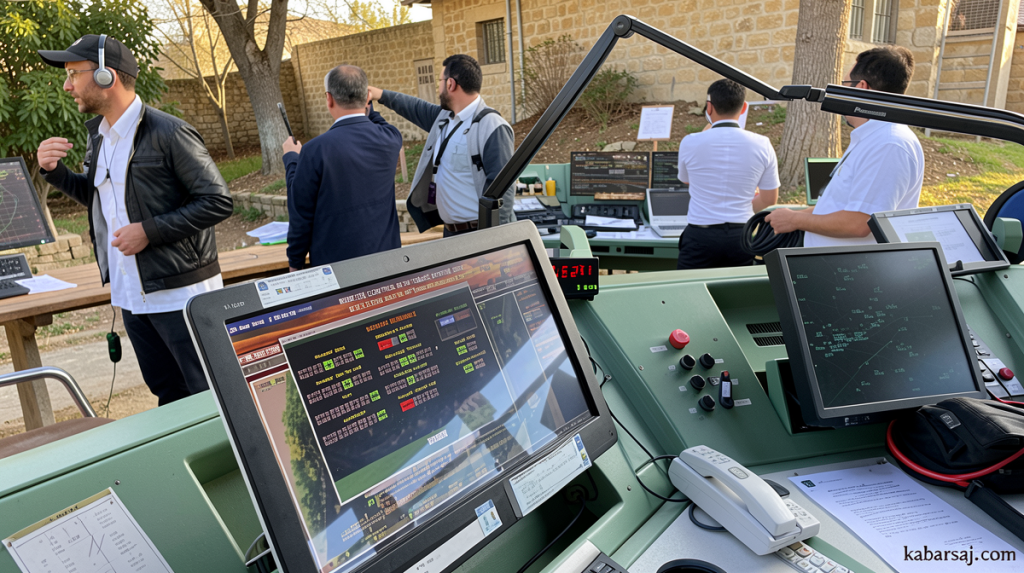
The operational nerve center for this monitoring is the Indonesia Network Management Center (INMC), through which AirNav Indonesia aggregates radar returns, satellite imagery, pilot reports, and meteorological data to build a live picture of the ash distribution. Soegijantoro explained that the center’s role during the Anak Krakatau event was to sustain uninterrupted surveillance of both the plume’s trajectory and the resulting airspace constraints.
“Through the Indonesia Network Management Center (INMC), AirNav Indonesia is intensifying its monitoring of airspace conditions and the spread of volcanic ash from Mount Anak Krakatau.”
Continuous observation of this kind supports two simultaneous objectives: keeping air traffic management informed enough to route aircraft safely around affected volumes, and ensuring that flight-safety information reaches operators before they commit to a flight plan that intersects the hazard.
What Pilots and Airlines Must Watch
The dissemination of airspace status information flows through established aeronautical channels—chiefly the issuance and revision of Notices to Airmen. Because volcanic events can evolve over minutes rather than hours, these notices are inherently provisional. A clearance issued at 02:00 may be superseded by a restriction at 04:00 if the plume shifts. Soegijantoro reminded all operators that aeronautical information is dynamic and that planning a flight without checking the latest NOTAM cycle is equivalent to navigating blind.
“Information regarding airspace conditions and flight operations is disseminated through aeronautical information service mechanisms, including the issuance and updating of Notices to Airmen (NOTAMs) as conditions change.”
AirNav Indonesia also maintains standing coordination lines with airlines, airport authorities, meteorological agencies, and the volcanic observatory tracking Anak Krakatau. The purpose is to compress the interval between a change on the ground and its communication to every affected party.
“This coordination is part of the effort to maintain the continuity of air navigation services while taking into account actual conditions in the airspace.”
Broader Context: Anak Krakatau and Jakarta’s Aviation Exposure
Mount Anak Krakatau, the youngest member of the Krakatau volcanic complex in the Sunda Strait, has a history of explosive eruptions that send ash columns tens of kilometers into the troposphere. Because the strait lies roughly 30 to 40 kilometers south-southeast of Jakarta’s main airport, prevailing southerly and southeasterly winds can carry fine particulate directly into the approach and departure corridors of Soekarno-Hatta within a matter of hours. Volcanic ash is particularly hazardous to jet engines: at temperatures above roughly 1,000 °C the silica in the particles melts and re-solidifies on turbine blades, causing loss of thrust or complete engine failure. The 1982 KLM Flight 867 incident over the North Sea remains the canonical cautionary tale, and Indonesian authorities treat any Anak Krakatau eruption as a first-order aviation risk until proven otherwise.
For Jakarta’s residents and travelers, the practical implication of a NOTAM-driven closure is cascading: delayed departures, rebooked connections, cargo schedule disruptions, and, in prolonged events, temporary rerouting of international traffic to Surabaya or Bali. Airlines are advised to monitor NOTAM feeds continuously during active volcanic periods and to build contingency time into schedules when transiting the western Java corridor.
AirNav Indonesia stated that its intensified monitoring posture will persist for as long as Anak Krakatau’s activity warrants, with flight safety designated as the overriding priority in every operational decision.
“AirNav Indonesia will continue to intensify monitoring of airspace conditions related to the activity of Mount Anak Krakatau and update flight information in line with developments, with flight safety remaining the top priority.”
Related Reading
Frequently Asked Questions
What is AirNav Intensifies Jakarta Airspace Monitoring Amid?
AirNav Intensifies Jakarta Airspace Monitoring Amid is the main topic of this guide. The article explains the context, practical details, and next steps readers should understand.
Why does AirNav Intensifies Jakarta Airspace Monitoring Amid matter?
AirNav Intensifies Jakarta Airspace Monitoring Amid matters because readers are looking for a useful answer, not just a short summary. Good content should match search intent and help them decide what to do next.