
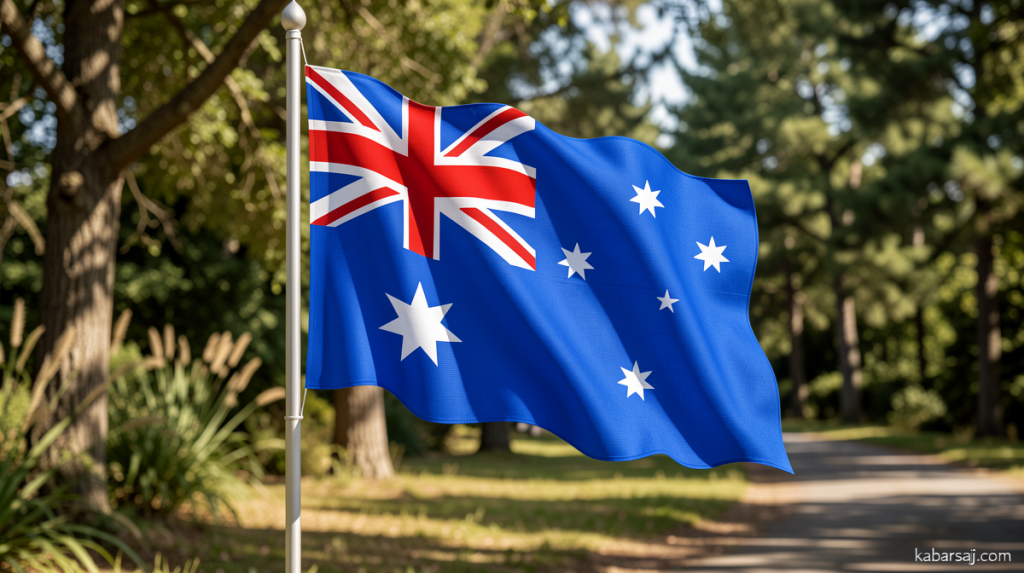
Washington and Canberra Tighten Pacific Defense Architecture as Beijing Expands Its Naval Footprint
Kabarsaji.com – The strategic calculus governing the Indo-Pacific has shifted decisively in recent years, and the latest round of consultations between Washington and Canberra confirms that both capitals intend to accelerate their joint military architecture well before the next decade closes. U.S. Defense Secretary Pete Hegseth and Australian Deputy Prime Minister and Minister for Defence Richard Marles sat down in Washington on Wednesday to formalize a package of measures aimed at deepening force integration, logistics sharing, and interoperability across the vast maritime domain stretching from the Coral Sea to the South China Sea.
The backdrop is unmistakable. China’s People’s Liberation Army Navy has grown from a coastal force into the largest conventional fleet on Earth, adding hulls, submarines, and island-based missile batteries at a pace that regional planners describe as unprecedented since 1945. Simultaneously, Beijing has courted Pacific Island nations through infrastructure grants, fisheries agreements, and diplomatic overtures that have redrawn the political map of the region. For Australia, whose northern coastline faces directly onto contested waters, the pressure to harden its own deterrent posture has become a matter of national survival rather than abstract alliance management.
What the Two Governments Committed To
The Pentagon outlined three pillars of the new arrangement. First, both sides will accelerate existing force posture initiatives at Australian installations — agreements that permit American units to train on Australian soil, pre-position equipment, rotate aircraft, and receive logistics support for U.S. vessels transiting the region. Second, the two militaries will deepen combined logistics cooperation, ensuring that fuel, spare parts, and medical support can flow seamlessly between allied forces during a contingency. Third, joint exercises will be expanded in scope and frequency to build what the Pentagon called “greater interoperability” between American and Australian platforms.
A critical nuance remains: Australia has long maintained that it will not host permanent foreign military bases on its territory. What it does permit — and what the Darwin rotations already demonstrate — is the temporary presence of U.S. Marine units, aircraft squadrons, and logistics detachments. Whether the latest agreement will push beyond that established boundary toward a more permanent American footprint was left unspecified in official statements.
Quotes From the Meeting
Hegseth framed the encounter in terms of shared strategic purpose, telling reporters that Canberra understood
“the gravity of maintaining a favorable balance of power in the region.”
Marles, addressing the press outside the Pentagon, was more explicit about the threat he perceives. He described the current trajectory of American military presence on Australian soil as expanding and characterized the driver of that expansion as
“the biggest conventional military build-up by any country in the world since the Second World War in the form of China.”
He then articulated the operational logic behind the new measures:
“We need to be ensuring that we build deterrence, that we build balance, so that we can provide for the peace and stability of the region in which we live.”
Weapons Sharing and Next-Generation Capabilities
Beyond posture and logistics, the two delegations discussed progress toward shared production capacity for guided munitions and next-generation systems. The practical implication is that Australia would no longer be solely dependent on American or European supply chains for precision-guided weapons; instead, joint manufacturing lines could shorten replenishment cycles and reduce vulnerability to disruption. Hegseth emphasized what he called
“strong alignment”
between the two nations’ defense strategies, while urging allied partners to invest in their own sovereign security and to
“both plan together but also ensure our capabilities match and are complementary.”
That language signals a shift from the older model in which smaller allies simply purchased finished systems from larger partners, toward a model in which design, production, and sustainment are shared from the outset.
The AUKUS Dimension and China’s Reaction
The broader framework within which these bilateral steps sit is the AUKUS pact — the trilateral security arrangement linking Australia, the United States, and Britain. Under that compact, American defense personnel are already embedded at HMAS Stirling, a naval base under construction in Western Australia’s shipbuilding heartland. From 2027 onward, the facility is slated to host a rotating complement of U.S.-commanded nuclear submarines, giving Australia access to quiet, long-endurance undersea platforms without bearing the full cost of building its own fleet.
Beijing has consistently characterized AUKUS as destabilizing. Chinese officials have warned that the pact could trigger a regional arms race, particularly among Pacific Island states and Southeast Asian neighbors watching the submarine rotation with close attention. Canberra’s own defense white papers in recent years have echoed that anxiety in reverse, prioritizing missile strike capability, hypersonic research, and deeper entanglement with Washington and London precisely to offset the perception that the region’s security architecture is tilting toward Beijing.
Why It Matters for the Region
For the Pacific Island nations that sit between the two great powers, the accelerated U.S.-Australian posture is simultaneously reassuring and complicating. It offers a credible deterrent against coercion, yet it also entrenches a bipolar security environment in which every fisheries dispute or seabed-mining concession becomes a potential flashpoint. The Darwin rotations, the Stirling submarine basing, and the new logistics pipelines together create a web of forward presence that no single Pacific Island state can ignore. Whether that web ultimately stabilizes the region or hardens the lines of competition remains the central question the next decade will answer.
Related Reading
Frequently Asked Questions
What is US Australia to Boost Defense Ties?
US Australia to Boost Defense Ties is the main topic of this guide. The article explains the context, practical details, and next steps readers should understand.
Why does US Australia to Boost Defense Ties matter?
US Australia to Boost Defense Ties matters because readers are looking for a useful answer, not just a short summary. Good content should match search intent and help them decide what to do next.